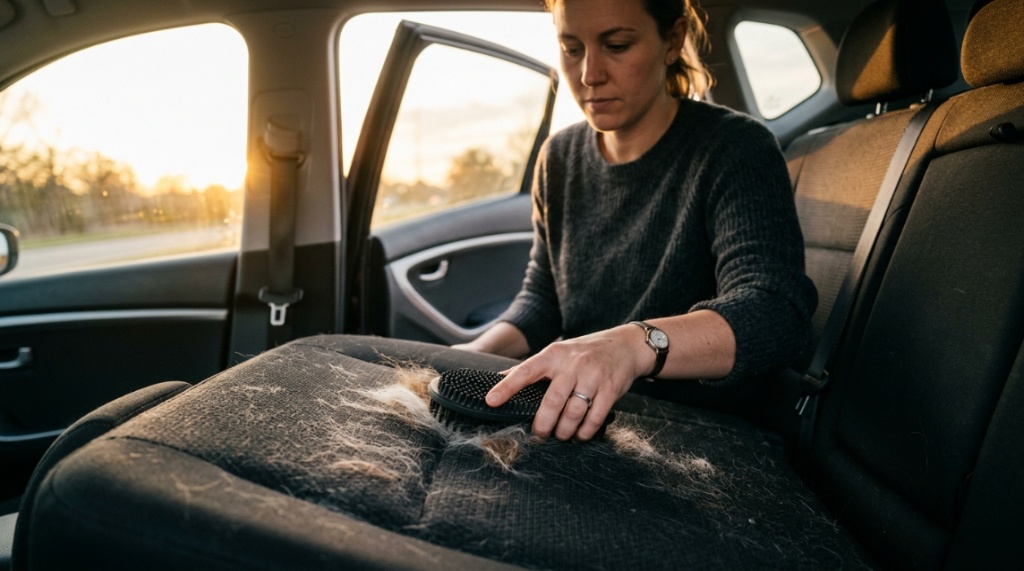
You love your dog or cat, but you do not love the fur explosion that happens every time they jump into your car. Pet hair embeds itself into fabric seats, floats into the air vents, and clings to everything with static electricity. Worse, standard vacuum cleaners often struggle to remove the deeply embedded undercoat. The frustration is real, and simply brushing your pet before a ride is rarely enough. To truly reclaim your interior, you need a strategy that addresses adhesion, static cling, and deep fibers. Using the right tool, such as a clean pet hair car seats cordless vacuum in Arizona, can dramatically change your results, but technique matters just as much as the tool.
Why Does Pet Hair Stick to Car Seats So Badly?
The Science of Static and Fiber Grip
Pet hair, particularly from double-coated breeds, has microscopic barbs along the hair shaft. When your pet shifts on the seat, these barbs grab onto fabric loops like tiny hooks. Modern car upholstery, often made of polyester or nylon, generates significant static electricity during dry conditions. The static charge pulls the lightweight hair toward the fabric and holds it in place. This combination of mechanical grip and electrostatic adhesion is why a simple wave of a vacuum wand often leaves hair behind.
Why Standard Vacuums Fail on Pet Hair
Most household vacuums lack the suction power and specialized attachments needed for automotive pet hair removal. They work well on loose dust on hardwood floors, but car seats present tight crevices and deep fibers. A standard upright vacuum also lacks the portability to reach between seats and under the dashboard. This is where a cordless hand vacuum designed for pet hair changes the game, offering targeted suction and specialized rubber bristles that agitate the fibers.
What Tools Do You Actually Need to Remove Pet Hair from Seats?
The Essential Tool: A High-Suction Cordless Hand Vacuum
A clean pet hair car seats cordless vacuum Arizona should be your primary tool. Look for a model with at least 10,000 Pa of suction, a rubberized dust brush, and a crevice tool. The rubber bristles create friction that lifts hair without scratching leather or damaging fabric. Lithium-ion batteries ensure consistent power until the battery dies, avoiding the performance drop of NiCad batteries.
Secondary Tools That Make a Huge Difference
- Lint rollers (heavy-duty): Great for spot-cleaning after a short trip.
- Pumice stone: Works on carpeted seats by scraping hair into a pile.
- Rubber gloves (damp): The rubber creates static that attracts hair when you sweep your hand across the seat.
- Microfiber cloths: For wiping down leather seats after vacuuming.
Dryer Sheets: Myth or Miracle?
Dryer sheets are not a myth. Rubbing a dryer sheet over fabric seats reduces static electricity, which loosens the hair temporarily. However, this is a pre-treatment, not a removal method. Use a dryer sheet before vacuuming to neutralize the charge, then vacuum immediately. Do not use this on leather seats, as the chemicals can damage the finish.
How Do You Remove Embedded Pet Hair from Fabric Seats?
Step 1: Loosen the Hair with a Rubber Squeegee
Before you turn on any vacuum, use a rubber squeegee or a specialized pet hair removal brush. Push the squeegee in one direction (toward you) using medium pressure. The rubber edge catches the hair and lifts it to the surface. Work in small sections, about one square foot at a time. You will see hair clump together in rolls, making it easy to pick up.
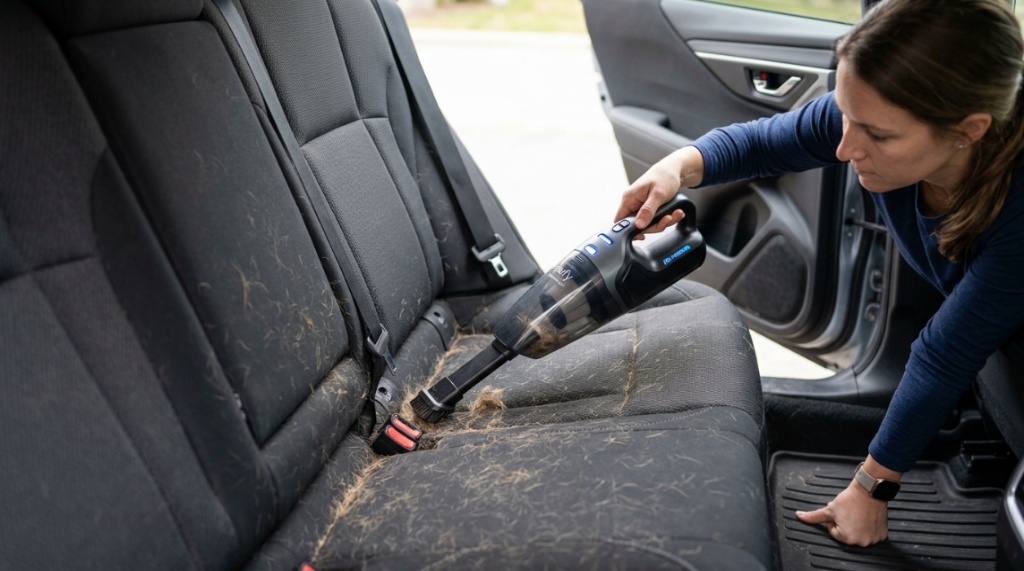
Step 2: Vacuum with a Rubber Brush Attachment
Attach the rubber dusting brush to your cordless vacuum. Use a back-and-forth motion, going against the grain of the fabric. The rubber bristles will dig into the fibers and pull up the loosened hair. Go over each section at least three times, changing direction each time. For crevices between the seat and the center console, switch to the crevice tool and run it along the edge.
Step 3: Use a Pumice Stone for Stubborn Areas
For areas where hair is matted into the fabric, a pumice stone is surprisingly effective. Gently scrape the stone across the fabric in one direction. The porous surface grabs the hair and pulls it out. Be careful not to press too hard, as pumice can scrape delicate fabric. This works best on thick carpet-like seat material.
Can You Clean Pet Hair from Leather Seats Without Scratching?
Why Leather Requires a Different Approach
Leather seats do not trap hair in fibers like fabric does, but hair still sticks due to static and sweat from your pet. Scraping with a pumice stone or a hard brush will scratch the leather surface. You need a gentle but effective method that protects the finish.
The Best Method for Leather: Suction and Cloth
First, use your cordless vacuum with the soft brush attachment to remove loose hair. Next, dampen a microfiber cloth with warm water and a drop of mild leather cleaner. Wipe the seat in straight lines, following the grain of the leather. The moisture helps break static, and the cloth traps the hair. Finish by wiping with a dry microfiber cloth. For crevices where hair collects, use the crevice tool with suction, never poke with a hard object.
What to Avoid on Leather Seats
- Never use a pumice stone or abrasive pad.
- Avoid adhesive lint rollers that might leave residue.
- Do not use alcohol-based cleaners that dry out leather.
How Do You Keep Pet Hair from Building Up in the First Place?
Use a Seat Cover as Your First Line of Defense
A simple canvas or rubber-backed seat cover catches the majority of hair before it reaches the seat. Choose a cover that is machine washable and has a non-slip backing. When you arrive at your destination, simply take the cover out and shake it. This reduces the hair load on your seats by 70–80%, making your monthly deep clean much easier.
Brush Your Pet Before Every Car Ride
Spend two minutes brushing your dog or cat outside the car before they jump in. Use a slicker brush or a shedding blade to remove loose undercoat. This simple habit removes the loose hair before it has a chance to transfer to your seats. Pairing this with a quick vacuum of the floor mats keeps the interior much cleaner,
If you are also exploring alternative living arrangements for animals or families, you might find our guide on six types of foster care helpful.
Regular Maintenance Vacuuming
Do not wait until hair piles up. Keep your cordless hand vacuum in the car or garage. After every two or three pet rides, do a quick 30-second vacuum of the seats and floor. This prevents hair from embedding deep into the fibers and reduces the static buildup that makes hair cling.
Which Cordless Vacuum Features Matter Most for Pet Hair in Arizona?
Suction Power and Battery Life in Hot Climates
Arizona heat is brutal on batteries. When choosing a cordless vacuum, look for one with a lithium-ion battery rated for high temperatures. Suction power should be at least 12,000 Pa to handle deep fibers. A vacuum with a removable battery is ideal, as you can keep a spare charged and swap it out if the battery drains during a clean.
Filtration Systems for Dust and Dander
Pet dander is a major allergen. A vacuum with a HEPA filter traps fine particles and prevents them from being blown back into the air. In a closed car environment, this is critical for anyone with allergies. Check that the filter is washable to save money on replacements.
Rubberized vs. Bristle Brushes
Rubberized brushes are vastly superior to standard bristle brushes for pet hair. Bristles can bend and lose effectiveness over time, while rubber maintains its shape and creates the friction needed to lift hair. Rubber also does not scratch surfaces, making it safe for both fabric and leather.
How Often Should You Deep Clean Car Seats for Pet Hair?
Low Shedding Breeds: Every 4 to 6 Weeks
If you have a single short-haired dog or cat that does not shed heavily, a deep clean every four to six weeks is sufficient. Maintain with a quick vacuum and a lint roller between deep cleans. This schedule prevents buildup that becomes difficult to remove.
High Shedding Breeds: Every 2 to 3 Weeks
Breeds like Golden Retrievers, German Shepherds, and Huskies shed heavily year-round. You should deep clean your seats every two to three weeks. Use a rubber squeegee and your cordless vacuum during each session. You will notice a significant reduction in hair in the air and on your clothes.
Seasonal Blowing Coat: Monthly During Shedding Season
Many double-coated breeds blow their coat twice a year, typically in spring and fall. During these periods, increase your deep cleaning frequency to once a week. Use a pumice stone or rubber brush for the first pass, then vacuum thoroughly. The hair volume during shedding season is immense, and regular cleaning prevents it from matting into the carpet.
Is It Worth Hiring a Professional Detailer for Pet Hair?
When DIY Cleaning Is Not Enough
If you have let pet hair accumulate for months or years, it can become embedded deep into the foam padding of the seats. A standard vacuum cannot extract hair from the foam. In these cases, a professional detailer uses a specialized vacuum with high CFM (cubic feet per minute) airflow and an upholstery tool that vibrates to loosen deep debris. They also use enzyme cleaners to remove pet odors that attract more hair.
When You Can DIY Effectively
If you clean regularly and use the right tools, you rarely need a professional. A quality cordless hand vacuum with a rubber brush, combined with a squeegee and pumice stone, handles 90% of pet hair situations. The key is consistency. If you let it go too long, you pay for a detailer. If you stay on top of it, you save money and keep your car fresh.
Frequently Asked Questions
What is the best vacuum attachment for pet hair on car seats?
A rubberized dust brush is the best attachment for pet hair on car seats. The rubber bristles create friction that lifts hair from fabric without damaging the fibers. Use it with a strong cordless hand vacuum for the best results.
Can I use a lint roller to clean pet hair from car seats?
Yes, but only for light, surface-level hair. Lint rollers are effective for quick touch-ups between deep cleans. For heavily embedded hair, you need a vacuum with suction and a rubber brush attachment to remove hair from deep in the fabric.
How do I remove pet hair from car seats without a vacuum?
A damp rubber glove works well. Put on the glove, dampen it slightly, and run your hand across the seat in long strokes. The rubber creates static that attracts hair. You can also use a squeegee or a pumice stone for manual removal.
Does baking soda help remove pet hair from car seats?
Baking soda does not directly remove hair. However, sprinkling baking soda on the seat before vacuuming can help neutralize odors and reduce static cling slightly. Vacuum thoroughly afterward. It is more effective for odor control than hair removal.
How do I get pet hair out of leather car seats without damaging them?
Use a soft brush attachment on your vacuum to remove loose hair. Then, wipe the seats with a damp microfiber cloth. Avoid pumice stones, abrasive sponges, or harsh chemicals. A gentle approach protects the leather finish while removing hair effectively.
Why does my vacuum leave pet hair behind?
Your vacuum likely lacks sufficient suction power or uses a bristle brush that cannot agitate the fibers. Pet hair embeds deeply, and a low-power vacuum simply blows air over it. Upgrade to a cordless hand vacuum with rubber brush attachments and at least 10,000 Pa of suction.
How do I prevent pet hair from sticking to car seats?
Use a seat cover and brush your pet before every ride. Reduce static by rubbing a dryer sheet over the seats before your pet enters. Regular vacuuming also prevents hair from embedding into the fabric over time.

You May Like

How to Improve Back Comfort with Your Office Chair in WA