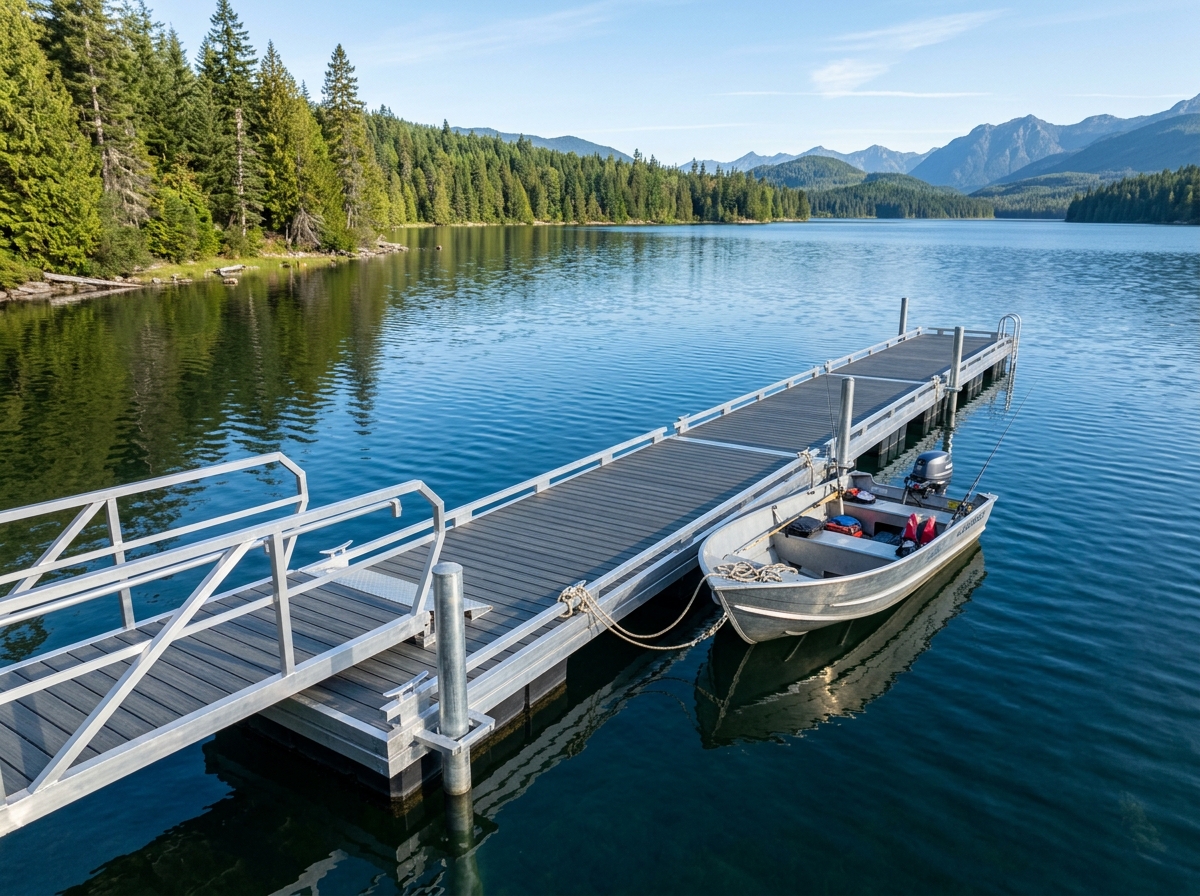
A good dock should feel easy to use from the start. There should be room to walk, board the boat, carry gear, and move around without squeezing past things. Aluminum docks can be planned around those everyday needs. That usually matters more than adding extra features that end up taking up space.
Easy Water Access Starts With the Right Dock Height and Layout
The height of the dock affects how easy it is to step into a boat, get out of the water, or move between shore and deck. If the surface sits too high or too low, even simple tasks can become awkward.
Water levels can also change through the year. An aluminum floating dock can help in places where those changes are common because the dock rises and falls with the water. The gangway still needs to be planned carefully so the transition from shore stays comfortable.
Layout matters just as much. A direct path from land to the main deck usually works better than forcing people around storage boxes, lift equipment, or tight corners.
Wide Walkways Make Daily Dock Use More Comfortable
A dock can feel cramped quickly once people start carrying coolers, fishing rods, bags, or water toys. Narrow walkways may look fine on a drawing but become frustrating during regular use.
A little extra width gives people room to pass each other without stepping around equipment. It also makes moving larger items easier. Floating dock builders often look at where the heaviest foot traffic will be and add space there rather than making the entire structure oversized.
Good Slip Placement Makes Boarding and Launching Much Easier
Slip placement should work with the way the boat approaches the dock. Wind, current, nearby structures, and turning room can all affect which side makes the most sense.
A boat dock builder may also look at where passengers usually step aboard. That area should have clear footing and enough room for people to handle lines without being squeezed between the boat and nearby furniture.
For larger boats, a poorly placed slip can make docking harder than it needs to be. Buyers comparing aluminum docks should think about approach angle and clearance, not just slip dimensions.
Stable Decking Helps With Fishing, Swimming, and Everyday Foot Traffic
Decking takes a lot of abuse. Wet feet, fishing gear, lake water, coolers, and regular foot traffic all leave their mark.
A good walking surface should provide reliable footing and drain well after rain or splashing. It should also fit the way the dock is used. Fishing areas may need open edges and easy cleanup, while swimming areas benefit from clear ladder access and uncluttered deck space.
Aluminum decking is one option because it does not rot like untreated wood. Other materials may offer a different feel or appearance. Buyers should compare surface texture, maintenance, heat exposure, and how the decking is attached to the frame.
Practical Dock Designs Leave Room for Gear Without Getting Crowded
Storage is useful until it starts blocking the walking path. Dock boxes, life jackets, ropes, fishing gear, and water toys can take up more space than expected.
A practical layout places storage along less-used edges or in areas that do not interfere with boarding. Seating works the same way. Benches and chairs should have a place to go without narrowing the route between shore and the boat.
Owners looking at aluminum boat docks for sale may also want to think about future accessories before the dock is built. Planning space for ladders, lifts, or another slip now can be easier than trying to squeeze them in later.
Strong Connections Help the Dock Stay Reliable Through Daily Use
Everyday movement puts repeated stress on hinges, fasteners, brackets, and frame connections. Boat wakes and shifting weight add more motion, especially on a floating system.
Those small parts deserve attention because they affect how solid the dock feels. Good alignment and properly fitted hardware can reduce unwanted looseness between sections. Anchoring matters too. Floating dock builders need to balance stability with enough movement for the dock to rise and fall naturally.
For property owners who want a dock centered on practical use, Flotation Systems designs high-quality aluminum docks specifically to deliver hassle-free, dependable waterfront access for everyday use. Built with lightweight yet structurally superior aluminum frames, these docks require virtually zero maintenance compared to traditional wood, completely eliminating concerns over rot, warping, or splinters. They feature patented LockDry® aluminum decking, which creates a gapless, cool-to-the-touch surface that remains safe for bare feet while double-functioning as a watertight roof for lower slips. With customizable configurations, heavy-duty ramps, and slip-resistant finishes, they ensure a safe, effortless transition from the shoreline to the water for family and guests of all ages.