Georgia’s climate is a gift and a challenge for anyone who loves plants. Mild winters let you grow an impressive range of species, but humid summers, heavy clay soils, and sudden ice storms can punish trees and shrubs that are not maintained with intention. If you have ever watched a prized crape myrtle send up weak, tangled shoots after a hard freeze, you already know that maintenance here is not a copy-and-paste job from a national gardening book. The right tools matter almost as much as the right timing, and many Georgia homeowners find that a compact cordless option such as BestUSATools makes light pruning work faster and less intimidating. This guide walks through what actually works in Georgia backyards, season by season.
Quick Answer
Maintain Georgia trees and shrubs by watering deeply but infrequently, mulching 2–3 inches without touching the trunk, pruning at the correct time for each species, and matching plants to your soil and light conditions. The biggest mistakes are overwatering, planting too deep, and pruning spring-blooming shrubs in winter. Most established landscape plants need far less intervention than homeowners assume.
Key Takeaways
- Georgia’s clay soils drain slowly, so overwatering kills more landscape plants here than drought does.
- Prune spring bloomers right after flowering, and summer bloomers in late winter—getting this backward removes the next season’s flowers.
- Mulch should be 2–3 inches deep and pulled back from the trunk; “volcano” mounds cause rot and pest problems.
- Georgia’s USDA zones range roughly from 6b in the north Georgia mountains to 9a along the coast, so plant selection must match your specific region.
- Sharp, clean pruning tools produce faster-healing cuts than dull ones, which crush tissue and invite disease.
Why Georgia’s Climate Changes Everything
Georgia sits in a transition zone where subtropical humidity meets occasional hard freezes. That combination creates conditions most national gardening advice does not fully account for. Summer heat and moisture drive rapid fungal growth, while winter temperature swings can split bark and kill marginally hardy plants.
The state spans several USDA hardiness zones. North Georgia around Blue Ridge and Blairsville sits closer to zone 6b–7a, while Savannah and the coastal islands reach zone 9a. A plant that thrives in Valdosta may die in Dahlonega. Before you buy anything, confirm your zone and your soil type, because both determine what maintenance will actually be needed.
Most Georgia backyards sit on red clay. It holds nutrients well but drains poorly and compacts easily. Trees and shrubs planted into unamended clay often struggle for years, not because of neglect but because their roots suffocate. Amending the planting hole generously—or better, planting slightly high and letting the root flare sit above grade—solves most of this before it starts.
Watering: The Skill Most Georgia Gardeners Get Wrong
Water deeply and infrequently rather than lightly and often. A slow soak that reaches 8–12 inches down encourages deep roots. Daily light sprinkling trains roots to stay near the surface, where they dry out fast and stay vulnerable.
For established trees and large shrubs, one thorough watering per week during hot, dry spells is usually enough. Newly planted material needs more attention for the first one to two years. Check soil moisture by pushing a finger or trowel down a few inches; if it is soggy, skip the watering entirely. Georgia’s humidity means fungal problems flourish when foliage stays wet, so water at the base, in the morning, and keep leaves dry whenever possible.
Drought stress and overwatering can look similar—both cause yellowing and leaf drop. The difference is in the soil. If the ground is consistently wet and smells sour, you are overwatering. If it is dry several inches down, you are underwatering.
Mulching Without Smothering Your Plants
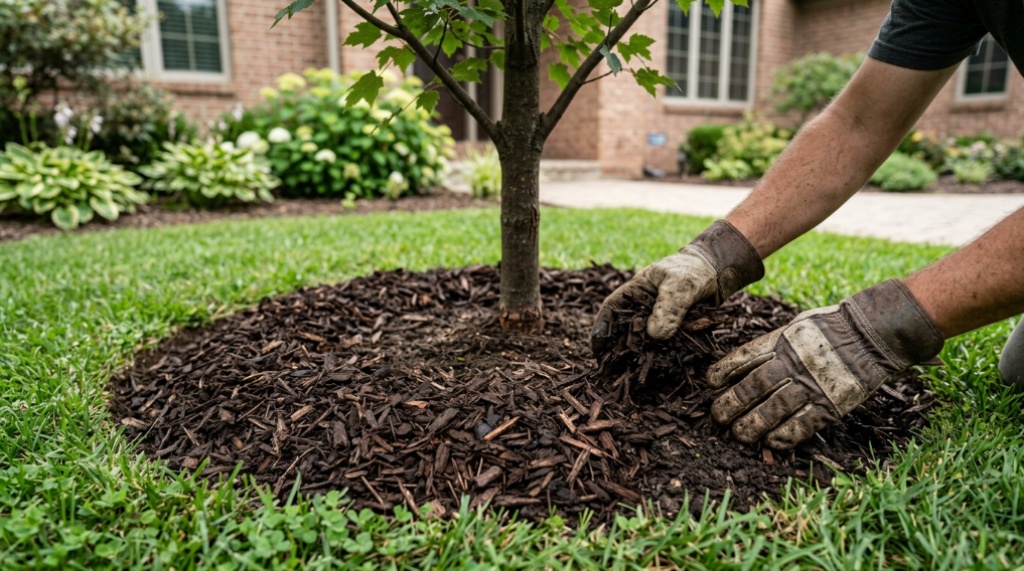
Apply mulch 2–3 inches deep, spread in a ring that extends to the drip line, and pulled back at least 2–3 inches from the trunk. Pine straw, pine bark, and aged hardwood mulch all work well in Georgia.
The common mistake is piling mulch against the trunk in a cone shape. This traps moisture against the bark, encourages rot, and gives rodents a place to chew. It also causes surface roots to grow up into the mulch instead of down into the soil. A flat, even layer with a visible root flare does far more good.
Pruning: Timing and Technique
Prune dead, damaged, or diseased wood any time of year. Beyond that, timing depends on when the plant blooms.
Spring-Blooming Shrubs
Azaleas, forsythia, oakleaf hydrangea, and most native rhododendrons set their flower buds the previous year. Prune them right after they finish blooming, typically late spring. Cutting them in winter removes every flower bud and leaves you with a leafy but bloomless shrub for an entire season.
Summer-Blooming Shrubs
Crape myrtle, panicle hydrangea, abelia, and rose of Sharon bloom on new growth. Prune these in late winter or early spring before bud break. This is also when you shape them, remove crossing branches, and thin out crowded interior growth, Protecting your landscape goes beyond plant care discover expert tips on improve the security in your garden to keep your outdoor space safe.
Making the Cut
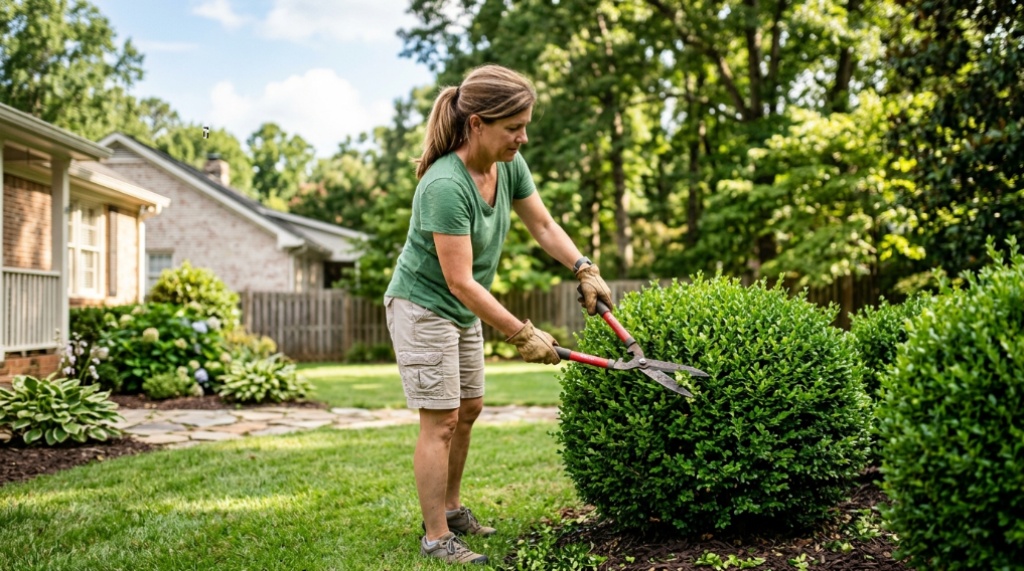
Use bypass pruners for branches under about half an inch and a lopper or small saw for anything larger. Make cuts just outside the branch collar—the slightly swollen ring where a branch meets the trunk—rather than flush against the trunk. That collar is the tree’s natural healing zone.
Do not apply wound paint or sealant. Research has consistently shown it traps moisture and slows the tree’s own compartmentalization process. Clean cuts and proper timing do the work.
For thin branches and small ornamental shrubs, a compact cordless tool can speed up cleanup considerably. Matching the tool to the job—pruners for detail work, a small saw for limbs—keeps cuts clean and reduces the strain that leads to sloppy technique.
Dealing With Georgia-Specific Problems
Georgia’s pests and diseases are shaped by its long, humid growing season. Recognizing them early saves plants that would otherwise decline for years.
- Crape myrtle bark scale: Look for white, waxy crust on trunks and branches, plus black sooty mold. Treat with horticultural oil in late winter and follow up as directed.
- Japanese beetles: Skeletonized leaves on roses, crape myrtles, and lindens signal these pests. Hand removal in small plantings is often more effective than traps, which can attract more beetles.
- Powdery mildew: Common on dogwoods, roses, and crape myrtles in humid shade. Improve airflow and water at the base rather than spraying the foliage.
- Root rot: Usually a symptom of poor drainage and overwatering, not a disease that appears on its own. Fix the soil and watering first.
- Ice and storm damage: Georgia’s occasional ice storms snap weak-wooded trees. Remove broken limbs promptly and prune cleanly just outside the branch collar.
Fertilize sparingly. Overfeeding pushes soft, lush growth that pests and fungi attack first. A soil test through your county extension office tells you what your yard actually needs rather than what a bag label assumes.
A Simple Seasonal Maintenance Calendar
Georgia’s mild climate means garden tasks spread across more of the year than in colder states. This is a practical rhythm rather than a rigid schedule:
- Late winter (February–early March): Prune summer bloomers, remove dead wood, refresh mulch, and apply horticultural oil to dormant plants if scale or mites were a problem last year.
- Spring (March–May): Prune spring bloomers immediately after flowering, water newly planted material, watch for aphids on tender new growth.
- Summer (June–August): Water deeply during dry spells, monitor for Japanese beetles and fungal issues, avoid heavy pruning in peak heat.
- Fall (September–November): Plant new trees and shrubs—this is the best planting window in Georgia—and reduce watering as growth slows.
- Winter (December–January): Inspect for damaged limbs, plan spring pruning, and clean and sharpen tools.
Frequently Asked Questions
When is the best time to plant trees and shrubs in Georgia?
Fall, roughly October through early December, is ideal. Soil stays warm while air temperatures cool, so roots establish before summer heat arrives. Spring planting works but demands more watering attention through the first summer.
How often should I water established trees in Georgia?
During dry spells, one deep watering per week is usually sufficient for established trees. Newly planted trees need more frequent attention for the first year or two. Always check soil moisture before watering rather than following a fixed schedule.
Can I prune crape myrtles in winter?
Yes, late winter is the correct time. Avoid the severe “crape murder” practice of cutting trunks back to thick stubs, which weakens the tree and produces weak, sprawling regrowth. Light structural pruning is enough.
Why are my azalea leaves turning yellow?
Yellowing can indicate poor drainage, nutrient deficiency, or lace bug damage. Check soil moisture first—soggy clay is the most common culprit in Georgia yards. If the undersides of leaves look dusty or speckled, lace bugs are likely the cause.
Do I need to fertilize every year?
Not necessarily. A soil test is the only reliable way to know. Many established Georgia landscape plants perform well with no supplemental fertilizer, and overfeeding creates more problems than it solves.
How do I protect shrubs from a Georgia ice storm?
Before the storm, avoid late-season pruning that produces tender growth. Afterward, remove broken limbs cleanly and resist the urge to shake ice off branches—that often causes more breakage. Let ice melt naturally when possible.
Conclusion
Maintaining trees and shrubs in Georgia comes down to working with the climate rather than against it. Match plants to your zone and soil, water deeply but rarely, mulch correctly, and prune on the schedule each species actually needs. The payoff is a landscape that survives humidity, heat, and the occasional ice storm without constant intervention. Start with one season of careful attention, and the habits become second nature—along with a yard that looks better every year.

You May Like