
Finding the right window treatments for a child’s room in New York City is a different challenge than decorating a suburban space. Between the constant street noise, the lack of square footage, the intensity of morning light, and the need for privacy in close-quartered buildings, the decision goes far beyond picking a cute pattern. You need curtains that balance light control, warmth, durability, and style—all while fitting the practical realities of city living. This guide breaks down exactly how to choose curtains for girls bedroom in New York, covering fabric choices, sizing, hardware, and the specific lifestyle factors that matter most in an urban setting.
Key Takeaways
- Prioritize blackout or room-darkening linings for better sleep in NYC’s bright, unpredictable light conditions.
- Choose thermal or insulated curtains to combat drafty older apartment windows and reduce heating costs.
- Measure your window dimensions carefully, accounting for radiators, air conditioners, and shallow window wells common in city apartments.
- Select durable, washable fabrics that can handle NYC dust, pollution, and frequent cleaning without fading.
- Balance style preferences with practical factors like noise reduction and privacy from neighboring buildings.
Start with the City’s Unique Challenges
Before you look at fabric swatches or color palettes, understand what your curtains are actually up against in New York. Apartments here have a distinct set of environmental factors that should drive your purchasing decisions.
First, there is the light situation. Depending on which way your windows face, you might deal with blinding morning sun that wakes your daughter at 5:30 AM in the summer, or you might have an eastern exposure that makes the room feel dark and gloomy by mid-afternoon. Streetlights and neon signs from nearby storefronts can also flood a room at night, making quality blackout lining essential for consistent sleep.
Then there is the noise. In Manhattan especially, traffic, sirens, and general city hum are unavoidable through single-pane windows. Heavy, tightly woven fabrics offer a modest but noticeable reduction in sound transmission. While no curtain will completely soundproof a room, layering thicker panels over your windows helps muffle the worst of the late-night noise.
Space is another critical factor. Bedrooms in New York are often small, and the window area may share wall space with a bed, a desk, or a bookshelf. The way you mount your curtains—inside the frame versus outside on the wall—can significantly affect how open and spacious the room feels.
Selecting the Right Fabric and Lining
Fabric choice is the single most important decision you will make. The material determines not just the look, but how well the curtains perform in your specific environment.
Blackout and Room-Darkening Options
For most NYC bedrooms, a blackout or room-darkening lining is non-negotiable. Children are more sensitive to light disturbances during sleep, and the ambient glow of the city at night can disrupt melatonin production. True blackout curtains made with thick, triple-weave polyester or coated backings block nearly all external light. These are ideal if your daughter needs complete darkness to fall asleep or if she has an early bedtime during long summer evenings.
Room-darkening curtains, as opposed to full blackout, block about 95% of light. These are often a better choice if you want the flexibility of soft daylight in the room during the day but need the darkness at night. They are usually available in more fabric options, including natural cotton blends, which some parents prefer over the plastic-like feel of fully coated polyester.
Thermal and Insulated Fabrics
New York apartments are notorious for drafty windows, especially in pre-war buildings. In the winter, cold air seeps in around the frames, and in the summer, heat radiates through the glass. Thermal curtains, which feature a dense foam or flannel backing, act as an additional barrier. They help keep the room warmer in the winter and cooler in the summer, potentially reducing your energy bills and keeping the room at a more consistent temperature.
Look for thermally insulated curtains in heavier materials like velvet, suede, or thick twill. Velvet, in particular, is an excellent choice for NYC bedrooms. It is heavy, absorbs sound, blocks light effectively, and adds a sense of coziness that feels luxurious in a small space. Just be aware that velvet is high-maintenance and can be prone to collecting dust, so check the care label for dry-cleaning requirements,
To maximize your room’s layout efficiency while updating your window treatments, check out these clever Space-Saving Ideas for a Small Bedroom to optimize every square foot.
Washable and Durable Fabrics
Let’s be realistic: children’s rooms get messy. Crayons, sticky fingers, and the inevitable dust that accumulates in a city apartment mean your curtains will need cleaning. Unless you are prepared to spend money on dry cleaning, choose fabrics that are machine washable. Cotton, polyester blends, and linen blends are your best options.
Pure linen is beautiful and light, but it stains easily and can shrink if washed incorrectly. A linen-cotton blend gives you the natural texture of linen with greater durability and easier care. Microfiber polyester is another strong contender—it is affordable, resists wrinkles, holds color well, and washes beautifully without fading, which matters given that NYC sunlight can be surprisingly intense through reflective glass from neighboring skyscrapers.
Decorative Considerations for a Girl’s Bedroom
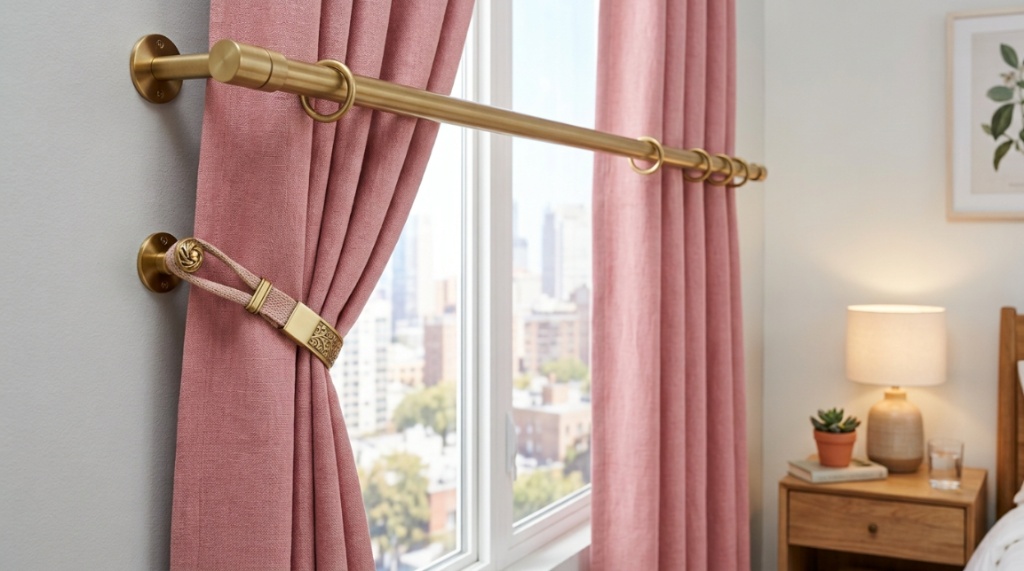
Once the practical hurdles are addressed, you can focus on making the space feel personal and inviting. The style of the curtain should complement the room’s existing decor without overwhelming it.
Color and Pattern Choices
In a small city bedroom, lighter colors make the space feel larger and more airy. Soft pastels, white, cream, or light gray reflect whatever natural light you have, making the room feel brighter. However, if your daughter prefers bold patterns, do not shy away. A vibrant floral, a geometric print, or a playful animal motif can serve as the room’s focal point and tie together the color scheme.
If you choose a bold pattern, balance it with solid-colored bedding and furniture. If the room already has a busy wallpaper or patterned rug, opt for solid curtains in a complementary shade to avoid visual chaos.
Curtain Length and Style
Standard curtain lengths are 63, 84, 96, or 108 inches. For a polished look, curtains should either just kiss the floor or hang about half an inch above it. Puddling—where the fabric extends onto the floor—looks elegant but is impractical in a child’s room where it will trap dust and be constantly stepped on.
For a classic, feminine look, consider grommet-top curtains, which slide easily on a rod and create soft, even folds. Rod-pocket curtains offer a more traditional, gathered appearance but are harder to open and close. Back-tab panels give a clean, modern look. For the most flexibility and a professional appearance, use clip rings on a standard rod—this makes it easy for your daughter to open and close them herself.
Hardware and Mounting for NYC Windows
How you hang the curtains matters as much as the fabric itself. The right mounting can make a small room feel larger, hide ugly window frames, and ensure the curtains function correctly.
Inside vs. Outside Mount
Inside mounts—where the rod and curtain fit within the window frame—look clean and modern but let in light around the edges. This is acceptable for room-darkening but not ideal for full blackout. They work best with wooden blinds or cellular shades underneath, with the curtain acting as a soft decorative layer.
Outside mounts—where the rod is installed on the wall above and outside the frame—are superior for light blocking. They create the illusion of a larger window by extending the rod past the edges of the frame. When mounting outside the frame, the rod should be installed 4 to 6 inches above the window top and extend 3 to 4 inches beyond each side to allow the curtains to stack back and fully expose the glass.
Dealing with Radiators and AC Units
Many NYC apartments have radiators directly beneath or beside the windows. In this case, floor-length curtains are a fire hazard and will obstruct the heat. Use sill-length curtains (ending just below the window sill) or valances paired with blinds instead. For window air conditioners, ensure the curtains do not block the vents. Tie them back during the day to allow airflow and give the room a more open feel.
Noise Reduction and Privacy
Privacy in New York is often a matter of proximity. If your window faces a building only a few feet away, you may feel exposed. Heavier, thicker curtains provide a physical and visual barrier. For maximum privacy, choose curtain liners—detachable white liners that protect the fabric from sun damage and make the curtains look fuller from the outside while providing an extra layer of opacity.
While acoustics are not the primary function of curtains, the thicker the fabric and the more layers you have, the more sound absorption you get. Velvet, heavy cotton, and double-lined panels are the best choices for muffling street noise. Pairing curtains with cellular shades (which have a honeycomb structure that traps air) is the most effective DIY strategy for both noise reduction and thermal insulation.
Budgeting and Maintenance
Curtains are an investment, but there are options at every price point. A single panel for a standard window ranges from $30 at budget retailers to over $200 for high-end designer fabrics. For growing children, you do not need to spend a fortune, but you should prioritize structural quality. Look for reinforced hems, proper grommets, and fabric with a good weight to it.
Regarding maintenance, create a routine. Vacuum your curtains monthly using a brush attachment to remove the black urban dust that settles on the fibers. Washable panels should be laundered every three to four months to keep allergens at bay. Always follow the manufacturer’s care instructions, as the thermal or blackout coatings can degrade if exposed to high heat in the dryer.
Frequently Asked Questions
What is the best curtain material for a child’s bedroom?
Polyester blends or cotton-polyester blends are the best choices. They are durable, machine washable, resist fading, and are available in a wide range of blackout and thermal options. They offer superior light control and are easier to maintain than delicate fabrics like silk or pure linen.
Are blackout curtains necessary for a city kid’s bedroom?
While not strictly necessary, they are highly recommended. New York has significant light pollution from street lamps, commercial signs, and neighboring buildings. Blackout curtains help regulate sleep cycles, especially during summer months when daylight extends into bedtime, and they also provide a buffer against early morning light.
How do I choose the right curtain length?
For the most classic and polished look, choose floor-length curtains that hang to within half an inch of the floor. Avoid floor-puddling styles in a child’s room. If you have a radiator or need to maintain clear airflow, use sill-length curtains that end just below the window trim.
Can curtains help with NYC street noise?
Heavy, dense fabrics like velvet or thick twill can slightly dampen high-frequency street noise, but they will not block it. For meaningful noise reduction, you need acoustic panels or double-glazed windows. Using a cellular shade under a thick curtain is the most practical way to achieve noticeable noise absorption.
Should I choose a white curtain or a colored one?
White and light neutral colors make a small room feel larger and brighter, but they show dirt easily. If your daughter is prone to touching the curtains or if you are concerned about smudges, choose a mid-tone color or a patterned fabric that hides stains better while still offering personality.
Conclusion
Choosing the right curtains for a girl’s bedroom in New York requires thinking beyond aesthetics to address the functional realities of city living. Prioritize light blocking for restful sleep, thermal layers to combat drafty windows, and machine-washable fabrics to handle urban dust and daily wear. Measure your windows carefully, choose a mounting style that maximizes natural light and privacy, and select a design that feels personal and joyful for your child.
Start by measuring your windows and identifying your top priority—whether it is blackout, warmth, or noise reduction—and then select a fabric that meets those needs while reflecting your daughter’s unique style. The right curtains will transform her room into a cozy, private retreat in the middle of the bustling city.

You May Like

How to Maintain Trees and Shrubs in Georgia Backyards