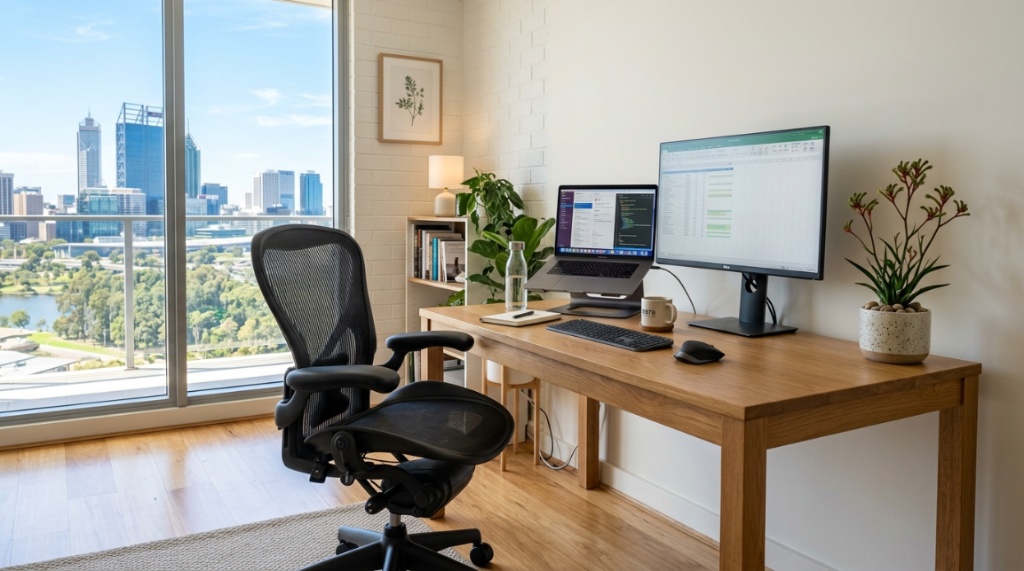
If you work at a desk in Washington, you’ve likely felt it: that familiar ache in your lower back by mid-afternoon. The reality is that long hours of sitting put significant pressure on your spine, and the wrong chair can make the problem far worse. The goal isn’t just to feel less pain at work; it’s to protect your long-term spinal health. The good news is that you don’t necessarily need to spend a fortune on a luxury ergonomic model to find relief. This guide will walk you through practical adjustments, key features to look for, and smart strategies to significantly improve back comfort with your office chair in WA, whether you are upgrading your home setup or outfitting a corporate workspace in Seattle, Bellevue, or anywhere else in the state.
Key Takeaways
- Your chair’s lumbar support must align with your natural spine curve; a rolled-up towel or a small cushion can work well until you invest in an adjustable chair.
- Proper seat height and depth are non-negotiable—your feet should rest flat on the floor with knees at a 90-degree angle.
- Seat depth matters just as much as height—aim for 2–4 inches of space between the back of your knees and the edge of the seat.
- Frequent posture changes, including using a standing desk or taking micro-breaks, are just as important as the chair itself for preventing back pain.
- When shopping for a long-term solution, prioritize chairs with adjustable lumbar support, seat depth, and armrests over aesthetic appeal.
Why Your Current Chair Might Be Causing Back Pain
The typical office chair is designed for a “one-size-fits-all” body type, which rarely matches your actual proportions. When you sit for extended periods without proper support, the natural inward curve of your lower spine (the lumbar lordosis) flattens. This increases pressure on your intervertebral discs and stretches the ligaments in your back. Over time, this leads to fatigue, muscle strain, and sometimes chronic pain.
Furthermore, many people tend to slouch when tired. A chair without adequate support allows this slouching to become your default posture. This isn’t just about comfort; it’s about biomechanics. An improper fit reduces circulation to the muscles and puts uneven stress on the hip joints. To truly improve back comfort office chair WA residents rely on a combination of the right equipment and the right habits. The chair is the foundation, but the adjustments are the structure built on top of it.
How to Adjust Your Current Office Chair for Better Comfort
Before you buy a new chair, look at what you have. Most standard office chairs have several adjustments that people rarely touch or don’t understand. Getting these settings right can resolve a surprising amount of back pain without any new purchases.
Setting the Correct Seat Height
This is the first step. Sit in your chair with your feet flat on the floor. Your knees should be roughly level with your hips, forming a 90-degree angle. If your feet don’t rest flat, you need a footrest. If your knees are higher than your hips, your weight shifts forward, forcing you to lean back excessively or slouch to find balance. This tilt places added strain on the lumbar discs.
Adjusting Seat Depth
Seat depth is the distance from the backrest to the front edge of the seat. Ideally, you should be able to fit 2 to 4 fingers between the back of your knees and the seat edge. If the seat is too long, the edge will press into the backs of your legs, restricting circulation and forcing your pelvis into a reclined position. If the seat is too short, it won’t support your thighs properly, increasing pressure on your sitting bones.
Finding Your Lumbar Support Position
Your lower back has a natural curve. The lumbar support mechanism on your chair should sit in the curve of that arch—usually between the top of your pelvis and the bottom of your ribs. It should be firm enough to prevent your back from flattening but soft enough not to poke. If your chair’s lumbar support is not adjustable, place a small rolled-up towel or a firm cushion horizontally across your lower back to replicate this curve.
Adjusting Armrests for Shoulder Relief
Shoulder tension often contributes to back pain. When armrests are too high, you shrug your shoulders; when too low, you lean forward. Set them so your shoulders are relaxed and your elbows rest at a 90-degree angle. If your armrests are in the way, remove them—it is better to have floating arms than to compromise your sitting position.
Key Features to Look For in a Back-Supporting Office Chair
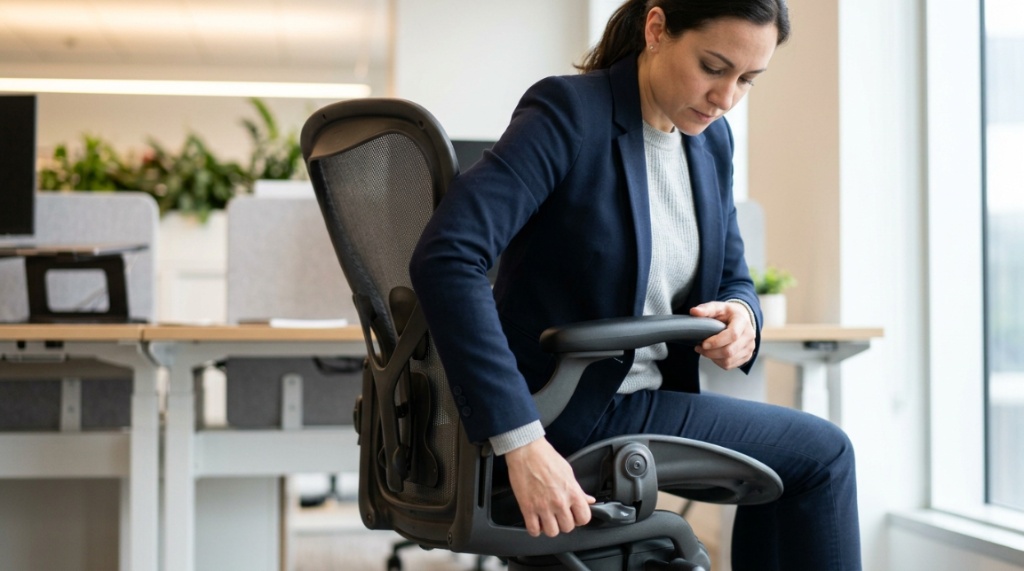
If you have exhausted the adjustment options on your current chair and still experience discomfort, it may be time to upgrade. Not all “ergonomic” chairs are created equal. Look for specific mechanisms that promote spinal alignment and dynamic movement.
Dynamic Lumbar Support
A static bump in the middle of the backrest is not sufficient. Look for a chair that allows you to adjust the depth and height of the lumbar support. Better yet, some chairs feature a “dynamic” lumbar system that moves with you as you shift positions, ensuring your spine maintains its natural S-shape throughout the day.
Synchronous Tilt Mechanism
In a synchronous tilt mechanism, the seat and backrest move together at a proportional ratio. This allows you to recline the chair while keeping your feet firmly planted and, more importantly, while keeping your natural eye level and spinal alignment. This is crucial because “reclining” doesn’t have to mean “slouching.” An ideal recline angle for working is between 100 and 110 degrees, which reduces disc pressure significantly compared to sitting upright at 90 degrees.
Adjustable Seat Pan Depth
As mentioned earlier, seat depth is critical. A high-quality chair will have a sliding seat pan that lets you move the seat forward or backward to fit your leg length. This ensures you can sit back fully against the backrest without straining your knees.
Headrest vs. No Headrest
For many people, a headrest is essential, especially if you find yourself leaning back to think or take calls. A supportive headrest can reduce tension in the neck and upper back, which often contributes to lower back fatigue. If the headrest is not adjustable or pushes your head forward, it will worsen your posture, so it is better to skip it in that case.
The Role of Posture and Movement in Back Comfort
Even the best chair in Washington—or anywhere else—cannot completely eliminate the negative effects of a sedentary lifestyle. The human body was designed to move. Sitting for long periods reduces blood flow and causes muscles to tire, which leads to slouching.
You should implement a “movement-first” approach. This means you get up and walk for two minutes every hour. More importantly, you should change your sitting position regularly. Lean forward slightly, lean back, shift your weight from side to side. These micro-movements pump blood into the spinal discs, providing them with oxygen and nutrients, which is how they stay healthy.
Why “Sitting Up Straight” Is Actually Wrong
You were likely told as a child to “sit up straight,” but holding a rigid military posture all day is actually counterproductive. A rigid posture leads to muscle fatigue. Instead, aim for “postural variability.” Use your chair’s tilt mechanism to frequently change your angle. The best posture is your next posture. A chair that allows for dynamic movement is better than one that locks you into a single perfect angle.
Seating Solutions for Specific Workspaces in WA
The type of chair that works for you depends on your environment. A person working from a home office in Spokane has different needs than a medical professional at a clinic or a coder in a tech startup in Redmond.
- Home Office: You likely have limited space and may be sharing the desk with a partner. A chair with a smaller footprint but high adjustability is ideal. Consider a chair with a mesh back for breathability, as Seattle’s climate can make padded chairs sweaty.
- Corporate/High-Tech: In a fast-paced environment, you need durability. Look for chairs with class-4 gas lifts and a 5-year warranty. You also need intuitive controls that you can adjust on the fly without reading a manual.
- Reception/Workstation: If you are at a reception desk, you are frequently turning and twisting to greet guests. A chair with a swivel base and armrests that flip up out of the way can be much more comfortable and prevent back strain,To create a healthier and more productive workspace beyond just your seating, check out our guide on how to Improve an Office Environment.
When to Replace Your Office Chair
If your chair is more than 8 years old, the gas cylinder may be worn out (causing the seat to sink), and the foam may have compressed to a hardened shell. These signs are significant because a chair that sinks forces your hips below your knees, tilting your pelvis and creating a “C” curve in your spine. If the padding has flattened, there is no pressure distribution left, and every sit becomes a weight-bearing point on your tailbone. In these cases, replacing the chair is a health investment, not just a furniture purchase.
If you are looking for durable models that are specifically engineered for back health and are available locally in Washington, you can find guidance on the best ergonomic options to improve back comfort office chair WA workflows.
Common Mistakes to Avoid When Choosing a Chair
Many people purchase based on looks or price, leading to disappointment and continued pain. Here are several pitfalls to watch out for:
- Ignoring Seat Pan Width: The seat should be wide enough to support your thighs without pressing against the sides of your hips. If it is too narrow, it restricts circulation and causes hip pain.
- Choosing “Racing” Bucket Seats: Chairs shaped like racing car seats look cool but are terrible for posture. They have high side bolsters that pin your legs together and push your shoulders forward, causing the exact slouch you are trying to avoid.
- Prioritizing Softness: A pillowy soft seat feels great for the first minute but offers no support. You sink in, and the frame underneath hits the back of your thighs, restricting blood flow. Firm, high-density foam or a tension-adjustable mesh is better.
- Assuming Price Equals Support: Some very expensive “designer” chairs are ergonomically poor. Conversely, some affordable models are excellent. Focus on the specs (adjustable lumbar, synchronous tilt) rather than the brand badge.
Frequently Asked Questions
Is a mesh back or a padded back better for back pain?
A mesh back is generally better for lumbar support in warmer climates or for people who sweat, as it keeps you cool and conforms to the spine’s shape. A padded back is better if you prefer a softer resting surface for reclining, but ensure the padding is firm enough to support your curve without letting your spine bow backward.
How often should I replace my office chair?
High-quality ergonomic chairs last between 7 and 10 years with daily use. However, if you notice the seat foam has compressed permanently, the gas lift no longer holds the height, or the materials are peeling and no longer comfortable, it’s time to replace it regardless of age.
Can a good chair fix my back pain completely?
No. A good chair reduces risk factors and alleviates pressure, but it cannot cure existing medical conditions. If you have persistent pain, you should combine the chair with regular exercise, stretching, and standing breaks. If the pain persists, consult a physical therapist or medical professional.
What is the ideal recline angle for an office chair?
For active work, keep your backrest angle between 90 and 100 degrees. For task work like reading or typing, a 100 to 110-degree angle is optimal as it reduces pressure on the lumbar discs by up to 50% compared to sitting straight up.
Do I need a chair with a headrest?
Only if your work involves looking away from the monitor frequently or you take phone calls where you lean back. If you type constantly and lean forward, a headrest can push your head into a forward position, causing neck strain. In that case, skip it.
Conclusion
Improving back comfort while working in Washington is a process of optimization, not just a purchase. Start by adjusting the chair you currently have—set the height, depth, and lumbar support to fit your body specifically. Integrate movement into your day to keep the spinal discs hydrated. And if your current chair simply cannot provide the support you need, prioritize features like adjustable lumbar support, a synchronous tilt mechanism, and a sliding seat pan over aesthetics or brand names. A comfortable back starts with a chair that adapts to you, not the other way around. Your spine will thank you for the effort, leading to more productive and focused workdays.

You May Like

How to Compare Top Marine Ropes for Boating in FL