You’ve dreamed of gliding across the glassy waters of Lake Washington or navigating the gentle currents of the Puget Sound, but the price tags on many paddle boards can feel like a tidal wave of disappointment. The problem is clear: you want to enjoy stand-up paddleboarding (SUP) without draining your savings. This guide is designed to help you find affordable inflatable paddle boards Washington residents actually trust for local conditions. We’ll walk you through what to look for, where to compromise, and how to get the best value for your dollar while staying safe on the water.
What Makes an Inflatable Paddle Board Affordable Without Being a Waste of Money?
An affordable inflatable paddle board balances a low price point with essential durability, stability, and performance. In Washington’s diverse waterways, this means paying for quality construction and materials while skipping unnecessary premium extras like high-end carbon fiber paddles or branded cosmetic finishes.
Understanding the Price Floor for Quality
In Washington, a genuinely affordable board that won’t fall apart after three uses typically starts around $300 to $500. Boards under $300 often use thinner PVC, have weak glue seams, and lack the rigidity needed to fight the wind chop found on places like Lake Chelan or the Columbia River. Look for boards made with double-layer or fusion PVC, which adds durability without a massive price jump.
What You Lose (and Gain) When You Choose an Affordable Board
When you choose a budget-friendly iSUP, you typically lose premium fin systems, super lightweight construction, and high-end accessories. However, you gain a lower barrier to entry, less anxiety about damaging expensive gear, and a board that still lets you enjoy 90% of the paddling experience. Most casual paddlers never need the top-tier performance of a $1,500 board.
The “Sweet Spot” for Washington Paddlers
For Washington’s mixed conditions—from calm lakes to choppy bays—the best value sits between $400 and $600. Boards in this range often include a decent pump, a three-piece paddle, and a basic fin. This price bracket gives you enough rigidity to handle mild chop and enough volume to remain stable for beginner and intermediate paddlers.
Which Features Are Non-Negotiable for Washington’s Water Conditions?
While chasing an affordable price, you cannot compromise on features that directly affect safety and performance in the Pacific Northwest. The most important factors are board volume, inflation pressure, and fin configuration, as these dictate how your board handles local weather and tides.
Volume and Weight Capacity
Volume, measured in liters, determines how much weight the board can float. For Washington paddlers who might wear a wetsuit or drysuit in cooler months, add 20–30 pounds to your body weight when calculating needed volume. A general rule: paddlers under 170 lbs need at least 200 liters; paddlers over 200 lbs should look for 250 liters or more. An under-volumed board will feel “boggy” and unstable, especially in wind.
Inflation Pressure (PSI) and Rigidity
A board that inflates to only 12 PSI will feel like a pool toy, flexing under your feet and losing speed. Washington’s choppy waters demand rigidity. Look for boards that can handle 15–20 PSI. A higher maximum PSI rating usually indicates better drop-stitch quality. Always use a digital pressure gauge to avoid damaging your board or pump.
Fin Box Compatibility
Washington waters often have currents, river mouths, and marine debris. A removable US fin box system is a huge advantage. It allows you to swap out a standard 4.5-inch fin for a longer, deeper fin for better tracking in currents, or a smaller fin for maneuverability in tight spots like urban lakes. Avoid boards with permanently attached, cheap plastic fins that can snap on a rocky beach.
How to Compare Inflatable Boards Without Getting Overwhelmed by Marketing
Paddle board marketing is filled with buzzwords like “military-grade PVC,” “ultra-light drop stitch,” and “composite bamboo top deck.” To cut through the noise and find an affordable inflatable paddle board in Washington, focus on three measurable aspects: material density, glue type, and warranty scope.
PVC Density: The Battle of Layers
Single-layer PVC is light and cheap but prone to dents and punctures. Double-layer or fusion-layered PVC is heavier but significantly more durable. For Washington’s gravel launch sites and rocky shorelines, a fusion PVC board offers the best balance of weight and strength. A board with a 1,000-denier PVC outer layer will outlast a 500-denier board by years,Once you’ve mastered flat-water cruising on your inflatable board, you might want to switch things up and test your skills on the ocean; if you are planning a tropical trip, check out this guide on finding the right surfboard for Hawaii’s different wave conditions to ensure you are fully prepared.
Glue and Seam Construction
The glue that bonds the PVC panels together is often the weakest point. High-quality boards use hot-melt or heat-welded seams. Affordable boards use cold-glue lamination, which is acceptable if the seams are taped on both sides. Ask the manufacturer about their seam “peel strength” rating; a rating of 50 pounds per inch or higher is a solid indicator of longevity.
Warranty as a Quality Signal
A company willing to offer a 2-year or 5-year warranty on an affordable board is signaling confidence in their build quality. Avoid brands that only offer 30-day warranties. A good warranty covers manufacturing defects, seam separation, and valve failures—common failure points on budget iSUPs.
Where Can You Find the Best Deals on Inflatable Boards in Washington?
Local outdoor gear retailers, seasonal sales, and online direct-to-consumer brands offer the best opportunities to find affordable inflatable paddle boards in Washington. Timing your purchase and knowing which retailers to trust can save you $100 or more.
End-of-Season Clearance (Labor Day to October)
Washington’s peak paddling season runs from June through September. Retailers like REI, Outdoor Emporium, and local surf shops often clear out inventory in late September to make room for winter gear. This is the prime time to buy last year’s model at a 20–40% discount. Check clearance racks both in-store and online.
Direct-to-Consumer Brands vs. Local Shops
Brands like iRocker, SereneLife, and FunWater sell directly online, cutting out the middleman. This often results in lower prices. However, local shops in Seattle, Tacoma, and Bellingham offer the advantage of seeing the board inflated before buying, plus expert advice on local water conditions. The trade-off is usually a 10–15% higher price for the in-person service.
Pre-Owned Boards: A Risk Worth Taking?
Facebook Marketplace and Craigslist in Washington are full of used boards. A gently used board from a reputable brand can be a fantastic deal, often 50% off retail. However, inspect any used board carefully: pump it up fully and check for air leaks with soapy water, look for cracks around the valve, and ensure the glue along the seams isn’t separating. Avoid boards that have been stored in direct sunlight or extreme heat.
Can You Trust a $300 Inflatable Paddle Board for Puget Sound?
A $300 board can work for extremely calm, protected waters like small lakes or slow-moving rivers. However, using a ultra-budget board on Puget Sound’s open waters, tidal currents, and wind chop is risky. A board that flexes too much or loses air quickly could leave you swimming in cold water, which is dangerous
The $300 vs. $500 Performance Gap
The jump from $300 to $500 usually buys you a thicker PVC denier (700D vs 1000D), higher maximum PSI (12 PSI vs 18 PSI), and a better backpack with wheels. More importantly, the $500 board will likely have a tighter drop-stitch pattern, meaning it holds its shape better under your weight, resulting in less hull drag and better speed.
Accessory Quality Differences
Budget boards often come with a manual pump that breaks after 10 uses, a paddle that feels like a broom handle, and a cheap coiled leash. A $500 board typically includes a dual-action pump (inflates on both push and pull), a light aluminum paddle, and a standard straight leash. Putting a high-quality pump on your shopping list is essential.
When a Cheap Board Is Better Than No Board
If your budget is truly tight, a $300 board from a brand with a decent reputation is better than not paddling at all. You can always upgrade the accessories later. Many paddlers start with a budget board, learn the basics on a calm lake like Green Lake, and upgrade after a season once they know their preferences.
How to Properly Inflate and Maintain Your Affordable iSUP for Longevity
Proper inflation and storage are the single most effective ways to extend the life of an affordable inflatable paddle board. Many early failures on budget boards are user-caused by under-inflation, improper drying, or UV damage. Washington’s damp climate demands extra care.
Step-by-Step Inflation Process
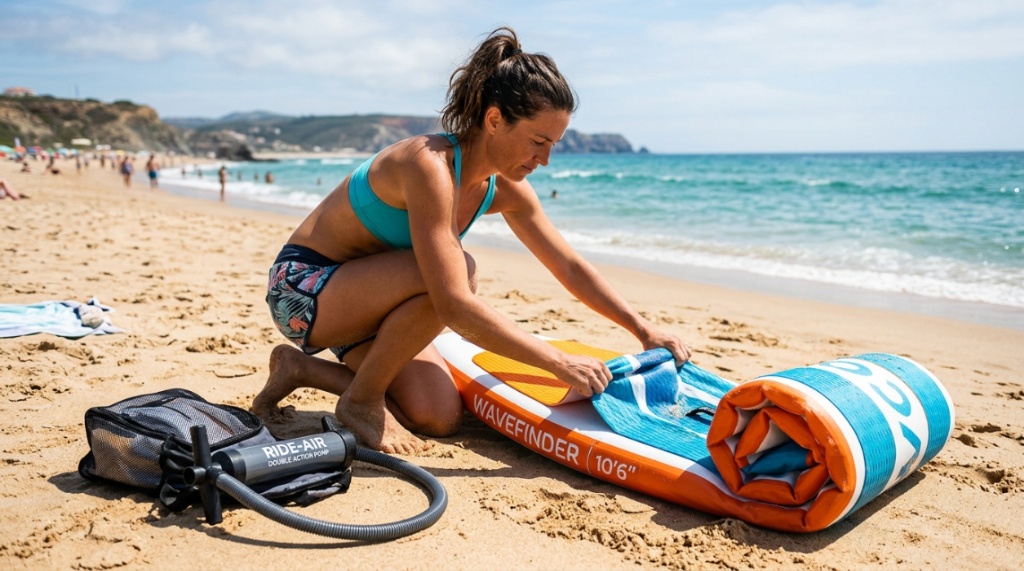
First, fully unroll your board and lay it flat on a clean surface. Attach the pump hose to the valve, ensuring the pin is pushed down for the open position (if using a Halkey-Roberts valve). Pump until you reach the maximum PSI rating, not just “firm.” Use a pressure gauge—guessing “firm” is unreliable. A board at 14 PSI will feel drastically more rigid than one at 10 PSI.
Drying and Cleaning After Saltwater Use
After paddling in Puget Sound or the Pacific Ocean, rinse the board thoroughly with fresh water, including the valve area and fin box. Salt crystals can corrode valves and weaken glue over time. Dry the board completely with a towel before deflating and rolling it up. In Washington’s humid environment, trapping moisture inside the rolled board promotes mold and mildew growth.
Storage Best Practices for Gray Skies
Store your board partially inflated (about 5 PSI) if keeping it in a garage or shed during the winter. Avoid storing it fully inflated due to temperature changes that can stress the seams. Keep it away from direct sunlight, rodents, and sharp tools. A laundry bag or pillowcase around the board prevents abrasion inside the carry bag.
Which Accessories Should You Budget For Immediately?
An affordable board often comes with a basic accessory kit, but certain upgrades are practically mandatory for safety and comfort in Washington. Budget an extra $50–$100 for these essentials to ensure your first experiences are positive.
A Reliable Personal Flotation Device (PFD)
Washington state law requires a wearable PFD for SUP paddlers when not in a surf zone. A comfortable, low-profile inflatable belt pack or a high-back life jacket is a must. Avoid the cheap orange foam vests found at big-box stores; they restrict arm movement and are uncomfortable for paddling. Dedicated paddle life jackets cost around $40–$70.
A Quality Leash
The leash that comes with many budget boards is a coiled ankle leash that drags in the water. For Washington’s variable conditions, a straight, uncoiled leash is better. It doesn’t create drag and is less likely to get tangled in floating debris. A 10-foot leash is a good all-around length. Ensure it attaches securely to the D-ring on your board.
An Electric Pump (Optional but Highly Recommended)
Manually pumping a board to 15 PSI takes 8–12 minutes and can be exhausting, especially after a long paddle. A $50–$80 electric pump from a brand like Bravo or Outdoor Master can inflate your board automatically to your desired pressure in under 5 minutes. You can plug it into your car’s 12V outlet. This single upgrade removes one of the biggest barriers to spontaneous paddling. For a curated list of top-performing models that meet the specific quality and price thresholds discussed above, review the latest recommendations for affordable inflatable paddle boards Washington locals are currently using and recommending.
How to Test Your Board Before Buying (Even Online)
You can evaluate an affordable inflatable paddle board before buying it, even if you purchase online. Look for specific user reviews that mention local conditions, manufacturing consistency, and customer service responsiveness. This research prevents costly mistakes.
Analyzing Reviews for Local Context
Don’t just read the star rating. Search the comments for keywords like “wind,” “Lake Washington,” “rafting,” or “Puget Sound.” A board that works great on a flat lake in Kansas might underperform in a windy Pacific Northwest bay. Look for reviewers who mention similar body weight and experience level to your own.
Video Reviews and Deflation Tests
YouTube is your best resource. Watch video reviews where the reviewer inflates the board fully, shows the drop-stitch pattern up close, and measures the board’s actual weight. Search for “pressure tank test” videos where users leave boards inflated for 24 hours to see if they hold air. A board that loses more than 2 PSI overnight likely has a manufacturing defect.
Return Policies and Customer Service
Before clicking “buy,” confirm the return policy. Many online brands offer a 30-day “paddley test” period. If you don’t like it, you can return it (often you pay return shipping). Also, test customer service responsiveness by emailing a question before buying. A company that takes 48 hours to reply to a simple question might take weeks to process a warranty claim.
Is an Inflatable Board Better Than a Hard Board for Washington Beginners?
For most beginners in Washington, an inflatable board is the better choice due to storage convenience, transportability, and durability. Hard boards offer better speed and performance but are impractical for apartment dwellers and car owners without roof racks.
Pros of Inflatable Boards for Washington
- Storage: Fits in a closet or car trunk, ideal for condo living in Seattle or apartments in Bellevue.
- Durability: Bounces off rocks, docks, and concrete boat ramps without damage.
- Portability: Can be carried on a bus, in an Uber, or on a ferry without needing a roof rack.
- Forgiveness: Softer surface is more comfortable for falls and kneeling.
Cons of Inflatable Boards for Washington
- Speed: Slower than a comparable hard board by about 10–15%.
- Wind Resistance: Higher profile catches the wind more easily, making paddling into a headwind harder.
- Setup Time: Requires pumping and deflating, which takes 5–10 minutes per session.
- Flexibility: High-end hard boards track better in rough water, though budget iSUPs have improved significantly.
When to Choose a Hard Board Instead
If you have a dedicated storage space (garage or shed) and a roof rack, and you primarily paddle on flat, calm lakes like Lake Chelan or Lake Crescent, a hard board can be a better investment. Hard boards excel in speed and glide. However, for the majority of Washington paddlers who value convenience and storage, a quality inflatable is the superior choice.
Frequently Asked Questions
What is the best affordable inflatable paddle board for a beginner in Washington?
For a beginner, look for a board specifically rated for your weight class (at least +30 lbs of extra capacity). The iRocker Nautical 10’6″ or the SereneLife 10′ are reliable options. They offer good stability, 15 PSI rigidity, and come with decent accessories for around $400–$500.
How much should I spend on a first paddle board in Washington?
Budget between $350 and $600 for your first board. Boards below $300 often lack the rigidity and durability needed for Washington’s cooler, sometimes choppy waters. A board in the $400–$600 range will hold its value better and provide a more enjoyable experience.
Can I use a cheap inflatable paddle board in the ocean in Washington?
Using a $300 board in the open ocean (outside bays or harbors) is not recommended due to lack of stability and low PSI. For protected bays like Alki Beach or Dash Point, a quality $500+ board with a 4.5-inch fin is acceptable if you stay close to shore and watch wind conditions.
How do I store an inflatable paddle board in a small apartment?
Deflate the board completely, clean it, and roll it up from the nose to the tail. Store it in its pump bag in a closet or under a bed. Keeping it partially inflated (5 PSI) can help maintain the shape but requires more space. Avoid storing near radiators or direct sunlight.
Are cheap inflatable paddle boards safe for kids or light adults?
Yes, for light individuals (under 150 lbs), a cheaper board can be perfectly safe on calm, flat water. The key is ensuring the board is rated for the user’s weight and is inflated to its maximum PSI. Always supervise children and use a properly fitting PFD.
What is the average lifespan of an affordable inflatable paddle board?
With proper care, an affordable inflatable paddle board (under $500) can last 3 to 5 years. Key factors include avoiding prolonged UV exposure, proper storage, and not over-inflating beyond the rated PSI. Many budget boards fail due to glue separation or valve damage.
Do I need a special pump for an inflatable paddle board?
Yes, standard bike pumps or car tire pumps are not recommended as they cannot usually reach the 15-20 PSI requirement without immense effort. Most affordable boards come with a manual dual-action pump. An electric pump is a recommended upgrade for convenience.

You May Like
How to Improve Back Comfort with Your Office Chair in WA