
You have a pile of plywood, a dream project list, and a bank account that says “be smart.” The problem? Cutting curves without a cord feels impossible, and you do not want to waste money on a tool that dies after one shelf. You need a budget cordless jig saw DIY solution that actually delivers smooth cuts without breaking your wallet. The market is flooded with cheap options that promise power and deliver frustration. This guide cuts through the noise to help you choose a reliable, affordable tool that makes your weekend projects successful, not stressful.
What Exactly Makes a Cordless Jig Saw Suitable for Budget DIY Projects?
A budget cordless jig saw for DIY is a battery-powered cutting tool that balances affordability with essential features for hobbyists and home improvers. It must provide enough power for common materials like plywood, MDF, and thin hardwood without the premium price tag of professional models.
Defining the “Budget” Category in 2025
The budget category typically covers jig saws priced between $40 and $90 (tool only or with a basic battery). These tools often come from reputable brands like Ryobi, Black+Decker, Skil, or Worx. They sacrifice brushless motors and long battery runtimes to keep costs low, but they retain crucial features like variable speed triggers and tool-free blade changes.
Must-Have Features vs. Nice-to-Have Gimmicks
For DIY work, prioritize tool-free blade change systems and a variable speed trigger. A LED light and a dust blower are very helpful. Skip expensive extras like orbital action settings with multiple stages (two stages are plenty) or Bluetooth battery tracking. These add cost without improving cut quality for a beginner.
Battery Compatibility and Cost Considerations
If you already own tools from a specific brand (like DeWalt or Makita), stick with that battery platform. This saves you the cost of buying a new charger and battery. If you are starting fresh, budget kits that include a battery and charger are usually the best value. Look for at least a 2.0 Ah battery for reasonable runtime.
Why Should a DIYer Choose a Cordless Jig Saw Over a Corded Model?
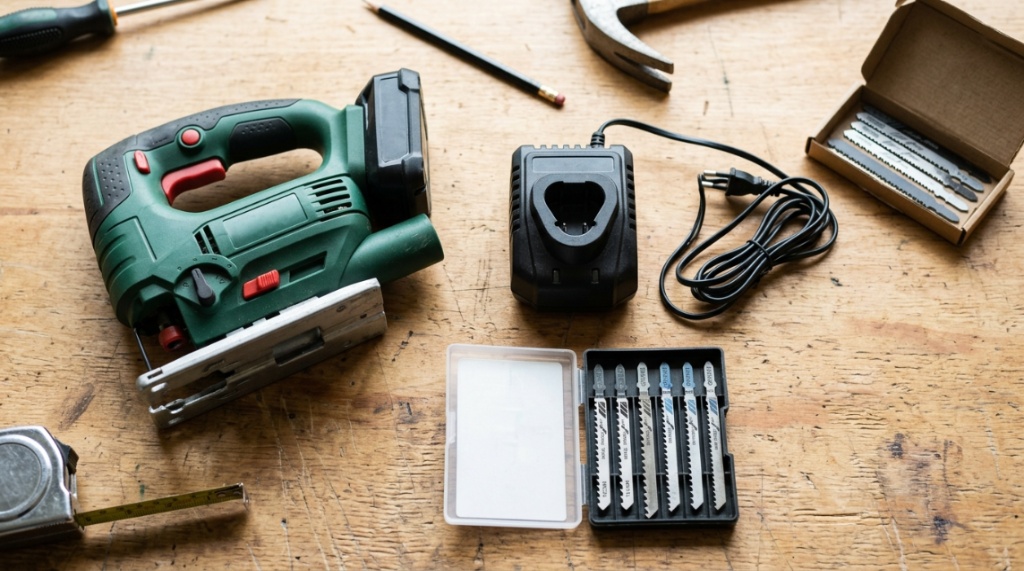
A cordless jig saw offers superior maneuverability and convenience for most DIY tasks. You can take it up a ladder, work in the backyard, or cut inside a closet without fighting an extension cord. For project-based work, the slight trade-off in raw power is worth the freedom of movement.
Portability and Workspace Freedom
Corded jig saws are anchored to an outlet. If your workspace is a driveway or a small apartment balcony, cords become a tripping hazard and a limitation. A cordless model lets you walk around your material, flip it over, and test cuts without unplugging. This freedom reduces setup time and frustration, especially for circular or complex patterns.
Power Comparison for Common DIY Materials
Entry-level cordless jig saws typically produce 2,500 to 3,000 strokes per minute (SPM). This is sufficient for cutting 3/4-inch plywood, 2×4 lumber, and PVC pipe up to 1.5 inches thick. They struggle with thick hardwood like oak or dense metals. If your primary material is hardwood, a corded model is better. For general DIY, cordless power is more than adequate.
Managing Runtime on a Budget Tool
Budget jig saws often use brushed motors, which draw more power and generate more heat. Expect about 15–25 minutes of continuous cutting time with a standard 2.0 Ah battery. For weekend projects, this is fine. Always buy an extra battery if you plan on cutting large sheets of material or working for more than an hour.
How Do You Evaluate Cutting Performance on a Limited Budget?
Evaluating cutting performance on a budget cordless jig saw requires focusing on stroke length, blade clamping quality, and vibration control. Do not rely solely on manufacturer “max cut” claims. Look for real-world feedback on how the tool handles curves and straight lines.
Stroke Length and Blade Speed
A stroke length of 3/4 inch is standard for budget models. A longer stroke (1 inch) is better for thicker materials, while a shorter stroke is fine for thin plywood. Variable speed is critical. You want a tool that offers a low speed (around 1,000 SPM) for starting cuts in delicate materials and high speed (3,000 SPM) for ripping through softwoods.
Orbital Action Settings Explained
Orbital action pulls the blade forward during the cutting stroke, clearing dust and speeding up the cut. Most budget jig saws offer 2 or 3 settings. Setting 1 (no orbit) is for tight curves and clean cuts. Setting 3 (max orbit) is for rough, fast cuts in thick wood. Use this feature wisely; aggressive orbit can tear out edges on plywood.
Vibration and User Comfort
Budget jig saws vibrate more than premium models. Look for a tool with a rubberized grip and a tool-less blade clamp that feels secure. A loose blade clamp amplifies vibration and leads to inaccurate cuts. Read reviews mentioning “hand fatigue” – this is the number one complaint for low-end jig saws.
Which Battery System Offers the Best Value for a DIY Budget Jig Saw?
The battery system is often more important than the jig saw itself. A good battery platform allows you to expand your tool collection later. For budget DIY, the best value comes from brands that offer high-performance batteries at reasonable prices.
Ryobi 18V One+ System
Ryobi is the king of budget DIY tools. Their 18V One+ series has been around for decades and offers hundreds of tools. The jig saws are reliable, and batteries are affordable. A 2.0 Ah starter kit is very cheap. The downside? The batteries are larger and heavier than premium brands, but for occasional use, this is a non-issue.
Black+Decker 20V MAX System
Black+Decker is another excellent choice for beginners. Their 20V MAX jig saws are lightweight and inexpensive. Batteries are easy to find at hardware stores. The main trade-off is lower power and shorter runtime compared to Ryobi. They are perfect for quick trim cuts and crafting tasks, not heavy framing.
Skil PWR Core 12/20V Options
Skil offers a unique PWR Core platform with both 12V and 20V options. Their 20V jig saw is surprisingly powerful for the price. The PWR Core 2020 battery is compact and charges quickly. This is a great option if you want a tool that feels more premium than a Black+Decker but still stays under budget.
How Can You Identify a Durable Budget Cordless Jig Saw?
Durability on a budget tool is not about metal gears or magnesium housings. It is about solid construction, reliable electronics, and a warranty that covers defects. You can identify a durable model by examining the shoe, the blade guide, and the trigger mechanism.
Shoe Material and Angle Adjustment
The base (shoe) of the jig saw should be stamped steel or aluminum. Avoid plastic shoes, as they flex and cause angled cuts. The shoe must lock securely at 45 degrees for bevel cuts. A wobbly shoe ruins accuracy. Check if the angle adjustment uses a lever or a screwdriver – lever is better for quick adjustments.
Blade Guide Rollers
A budget jig saw that uses a simple steel rod for a blade guide will wear out quickly and cause blade deflection. Look for a tool that has replaceable carbide guide rollers or at least a hardened steel guide. This small component dramatically affects cut accuracy over time.
Warranty and Customer Support
Major brands like Ryobi, Skil, and DeWalt offer 3-year limited warranties on their budget models. Black+Decker typically offers a 2-year warranty. Avoid generic “budget” brands from online marketplaces that offer no warranty or support. A warranty is your insurance against a defective motor or switch.
Which Blade Types Should You Use with a Budget Cordless Jig Saw?
Using the correct blade is more important than the tool itself. A poor blade will make even the best budget cordless jig saw DIY model perform terribly. For budget tools, focus on T-shank blades, which are universal and easy to find.
T-Shank vs. U-Shank Compatibility
Almost all modern budget cordless jig saws use T-shank blades. U-shank blades (old style) are hard to find. Ensure your saw has a T-shank clamping system. Most budget tools now come with a tool-less T-shank clamp, which is a huge convenience upgrade.
Recommended Blade Types for Common DIY Materials
- Plywood and MDF: Use a 10 TPI (teeth per inch) down-cut blade for clean top surfaces. A standard 6 TPI blade works for rough cuts.
- Softwood (Pine, Fir): Use a 6 TPI blade with a medium set. This removes material fast without binding.
- PVC and Plastic: Use a fine-tooth blade (10–12 TPI) with a universal tooth grind. Cut at low speed to avoid melting.
- Thin Metal (up to 1/8 inch): Use a 14–18 TPI bi-metal blade. Use cutting oil or wax for smoother cuts.
How to Install Blades Correctly
Always insert the blade fully into the clamp until it clicks. Then, gently pull on the blade to confirm it is locked. A loose blade will break or cause kickback. When changing blades, ensure the saw is unplugged or the battery is removed. Hold the blade by its shank, not the teeth, to avoid cuts.
Can a Budget Cordless Jig Saw Make Precise Cuts?
Yes, with the right technique and blade, a budget cordless jig saw can make very precise cuts in plywood and softwood. It will not match the precision of a track saw or a CNC machine, but for DIY furniture and shelving, it is more than adequate. Precision relies on blade selection, speed control, and user technique.
Techniques for Straight Cuts
For straight cuts, use a fence or a straight edge guide. Clamp a piece of straight lumber or a level to your workpiece. Run the jig saw’s shoe against this guide. Keep the blade perpendicular to the material. Go slow. Rushing a straight line with a jig saw results in a wavy edge.
Techniques for Curved and Circle Cuts
For curves, use a narrow blade (3/8 inch width) with a higher TPI count. Drill a starter hole inside the waste area for interior cuts. Cut on the waste side of your line. For circles, use a jig saw circle cutting jig (a simple bar that attaches to the shoe). This gives you perfect radius cuts every time.
Managing Tear-Out on Plywood
Plywood tear-out is a common issue. To minimize it, put masking tape along the cut line. Use a fine-tooth blade (10 TPI or more). Cut with the good side facing down, because the blade cuts on the upstroke, which causes tear-out on the top surface. If you cannot flip the material, use a down-cut blade.
If you are looking for a curated list of models that perform well for the price, check out this guide on the budget cordless jig saw DIY options available today. It covers specific models tested for real-world conditions.
How Do You Maintain a Budget Cordless Jig Saw for Longevity?
Maintenance is simple but critical. A budget tool that is neglected will fail faster than a premium one. Focus on cleaning, lubrication, and battery care. These steps ensure your tool lasts through many projects.
Cleaning the Blade Guide and Air Vents
After each use, blow out sawdust from the blade guide and the motor vents. Compressed air works best. Sawdust buildup in the guide prevents the blade from retracting and can overheat the motor. Also, clean the battery terminals with a dry cloth to prevent connection issues.
Lubrication Points
Budget jig saws often lack sealed bearings. Apply a drop of light machine oil (like 3-in-1) to the blade guide roller and the pivot point at the base of the saw blade. Do this every 10 hours of use. Do not over-lubricate, as excess oil attracts dust.
Battery Storage and Charging Tips
Store batteries in a cool, dry place. Avoid leaving them in a hot garage or freezing shed. Do not drain the battery completely before recharging. Lithium-ion batteries last longer if kept between 30% and 80% charge. If you store the tool for months, charge the battery to 50% first.
When Should You Upgrade from a Budget Cordless Jig Saw?
You should upgrade when your budget jig saw consistently fails to perform tasks you do regularly. Signs include frequent blade breakage, inability to cut hardwood without bogging down, or excessive vibration that makes cuts inaccurate. Upgrading is a sign of growing skill, not failure of the budget tool.
Discover how to choose the best budget cordless jig saw for DIY projects. Compare top affordable features, battery power, and cutting precision for your workshop.
Signs the Tool is Holding Back Your Work
If you find yourself fighting the tool to keep a straight line, or if the motor stalls on every cut in 1-inch pine, it is time to upgrade. Another clear sign is if the shoe cannot stay flat or the bevel adjustment slips mid-cut. These mechanical failures cannot be fixed easily on budget models.
What to Look for in an Upgrade
An upgraded jig saw should have a brushless motor for more power and longer battery life. Look for a constant speed circuit that maintains RPMs under load. A steel or magnesium shoe and a longer stroke (1 inch) are also key advantages. Brands like Makita, DeWalt, and Festool offer these features at higher prices.
When to Keep Using Your Budget Tool
Keep your budget jig saw for specific tasks like cutting plastic, drywall, or metal. It is also great for rough cuts where precision does not matter. Dedicate it to tasks that damage blades or clog up the tool. This saves your high-end tool for fine woodworking.
Frequently Asked Questions
What is the best budget cordless jig saw for a beginner?
For a beginner, the Ryobi P5230 or the Black+Decker BDCJS20 are excellent choices. They are affordable, widely available, and use common battery platforms. Both feature tool-less blade changes and variable speed, which are essential for learning.
Can I use a budget cordless jig saw to cut thick hardwood?
Yes, but with limitations. A budget jig saw can cut hardwood up to 1.5 inches thick, but it will be slow and may bog down. Use a sharp, coarse blade (6 TPI) and cut at full speed with minimal orbital action. Expect more vibration and fatigue than with a premium tool.
How long does a battery last on a budget cordless jig saw?
With a standard 2.0 Ah battery, expect 15–25 minutes of continuous cutting. If you are doing intermittent cuts (like framing a shelf), the battery may last for several hours of light use. Always buy a second battery for all-day projects.
Is orbital action necessary on a budget jig saw?
Yes, orbital action is very helpful for faster cuts in wood. Most budget models include 2 or 3 orbital settings. You want at least two settings: one for clean cuts (no orbit) and one for fast cuts (maximum orbit). It is not a gimmick; it genuinely speeds up work.
What safety gear should I use with a jig saw?
Always wear safety glasses to protect from flying sawdust and blade fragments. Wear a dust mask when cutting wood, MDF, or plastic. Hearing protection is advisable for long cutting sessions. Use a push stick for small pieces and clamp your workpiece down securely.
Why does my jig saw blade keep breaking?
Blade breakage is usually caused by using the wrong blade for the material, cutting too fast, or forcing the saw around a tight curve. Ensure you are using a blade with the correct TPI for the material thickness. Avoid twisting the saw during the cut.
Can I cut metal with a budget cordless jig saw?
Yes, but you need a bi-metal blade with 14–18 TPI. Cut at a low speed (slow trigger). Apply cutting oil or wax to the cut line to reduce friction and heat. Budget jig saws can handle thin metal like steel up to 1/8 inch and aluminum up to 3/16 inch.
Conclusion
Finding the best budget cordless jig saw for your DIY needs is not about hunting for the cheapest price tag. It is about understanding your specific projects, prioritizing essential features, and investing in a tool that matches your skill level. You now know to look for a solid battery platform, a T-shank blade clamp, variable speed, and a comfortable grip. You also know that technique and blade selection are just as important as the tool itself. Stop overthinking and start cutting. Pick a reliable budget model from a known brand, grab some quality blades, and finally complete that shelving unit, planter box, or custom sign you have been putting off. Your projects deserve a tool that helps, not hinders.

You May Like

How to Improve Back Comfort with Your Office Chair in WA