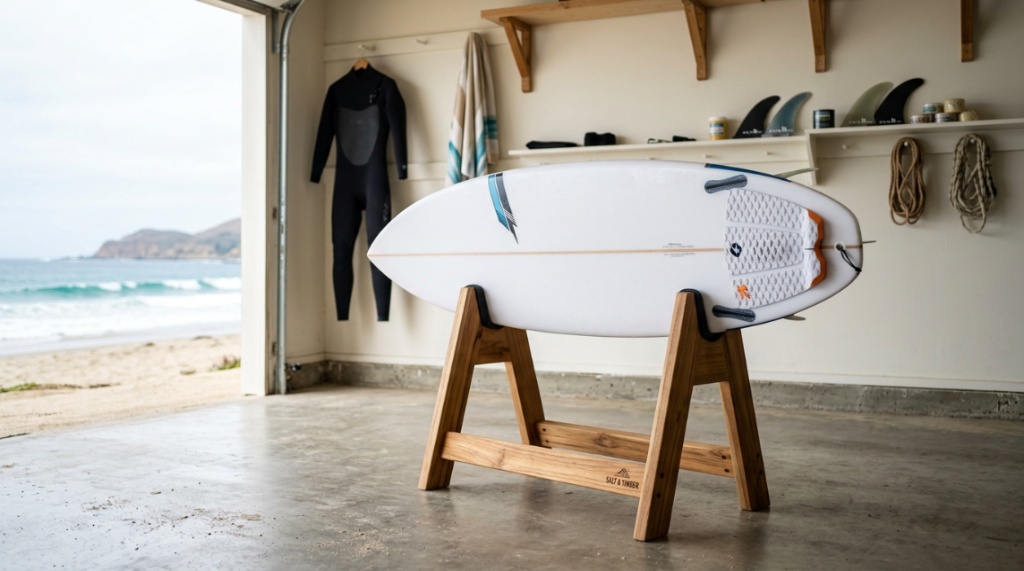
You just finished an incredible session at Pipeline, rinsed off your gear, and leaned your prized shortboard against the garage wall. The next morning, you find a dull, white patch spreading across the deck. Delamination. That expensive board is now a wall decoration, all because you chose the wrong stand. Moisture is the silent assassin of surfboards, and in a high-humidity environment, your storage solution is your board’s only line of defense. Choosing a humidity-resistant surfboard stand isn’t just about convenience; it is about protecting a significant financial investment. This guide walks you through every material, design, and placement factor to ensure your quiver stays dry, true, and ready for the next swell.
What Exactly Makes a Surfboard Stand “Humidity Resistant”?
A humidity-resistant stand is engineered with materials and coatings that repel moisture, prevent mold growth, and stop corrosion, unlike standard wooden or metal racks that wick dampness directly into your board’s core. It is the difference between a dry storage environment and a breeding ground for bacteria.
The Core Enemy: Capillary Action in Wood
Standard plywood or pine stands act like a sponge. When the air is humid, the wood absorbs moisture. If your wet surfboard touches that damp wood, water transfers into the foam core through the stringer or glassing. A true humidity-resistant surfboard stand uses kiln-dried, sealed hardwood, marine-grade plywood, or non-porous synthetics to break this path.
Metal vs. Composite Frames
Stainless steel (304 grade) or powder-coated aluminum are the gold standards. Raw steel rusts, creating pits that hold water. High-density polyethylene (HDPE) or reinforced nylon is entirely impervious to moisture but can become brittle in extreme heat. Look for stands with drainage holes in the base or crossbars, allowing any accidental drips to escape rather than pool.
The Foam Contact Point Matters Most
The rubber, neoprene, or felt pads that cradle the board must be closed-cell foam. Open-cell foam holds water for days, creating a localized humidity zone against the wax and glass. True resistant stands use Santoprene or silicone grips that are inherently antimicrobial and hydrophobic.
Why Is Wood a Common But Dangerous Choice for Humid Climates?
Wood is cheap, easy to build, and aesthetically pleasing, but in tropical or coastal environments, it is one of the most dangerous materials for long-term board storage. The risk of hidden moisture damage far outweighs the initial cost savings.
How Warping Destroys Rail Alignment
When a wooden stand warps, it changes the support angle. Your heavy longboard no longer sits evenly. This uneven pressure can create “banana” bends in the foam core over weeks. A humidity-resistant stand made from rigid polymer or marine aluminum maintains its exact geometry for years, preserving your board’s rocker.
Mold and Mildew Growth Inside the Garage
Wooden racks in a humid garage are a mycologist’s dream. Mold spores transfer from the wood into the surfboard’s wax and leash string. This is not just unsightly; it degrades the wax’s grip and can cause respiratory irritation. Synthetic stands do not provide a cellulose food source for mold.
Why “Treated” Wood Isn’t a Solution
Pressure-treated lumber is soaked with chemicals that can leech onto your board’s foam rail tape. These chemicals are often corrosive to fiberglass resin over a 6–12 month period. A dedicated humidity-resistant surfboard stand uses food-grade plastics or medical-grade silicone, ensuring zero chemical migration.
Which Materials Offer the Best Humidity Protection?
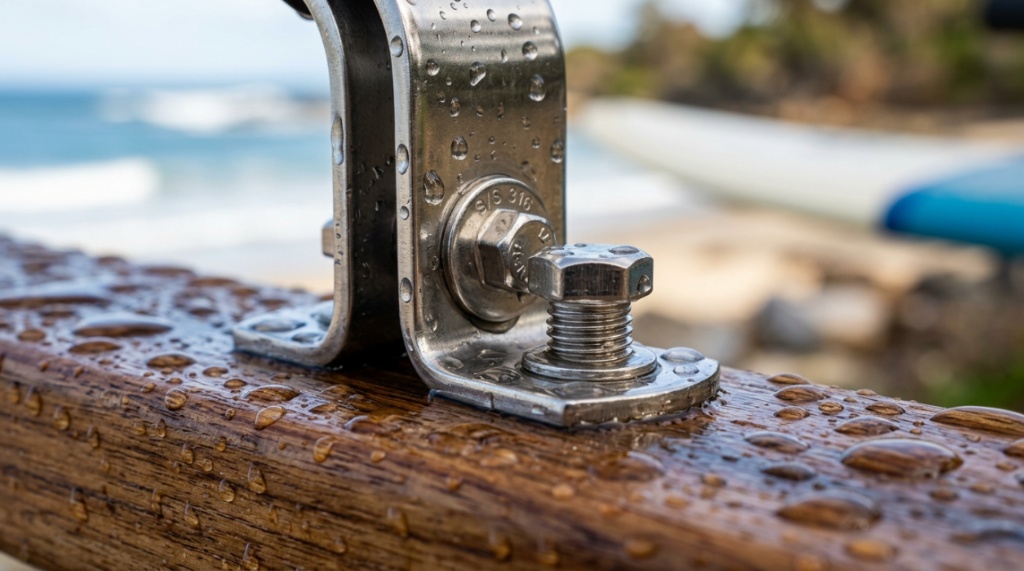
Aluminum (marine-grade 6061-T6) and heavy-duty polypropylene are the top performers. They offer zero porosity, complete UV resistance (if placed near a window), and can be hosed down directly without damage. Wood simply cannot compete on these metrics.
Aluminum: The Professional’s Choice
| Feature | Performance |
|---|---|
| Corrosion Resistance | Excellent (with powder coat) |
| Weight | Lightweight (easy to move) |
| Durability | High (impact resistant) |
| Cost | Moderate-High |
Recycled Plastic / HDPE: The Practical Survivor
This material is effectively waterproof. It will never rot, splinter, or rust. It is also slightly flexible, which absorbs shock if you accidentally bump the rack. The downside is aesthetic; it can look somewhat industrial. However, for a garage or outdoor shed, function triumphs over form.
Stainless Steel Tubing
While costlier, thin-gauge stainless steel resists rust even in the salt-laden air of coastal homes. Look for welded joints rather than bolted ones, as the holes in bolted stands can trap moisture and eventually corrode the internal threads. Welded frames offer a fully sealed water barrier.
How Do Design Features Prevent Moisture Trapping?
Clever engineering turns a simple rack into a climate-controlled storage system. Features like open backs, slotted cradles, and elevated feet create airflow and prevent condensation from settling on your board at night.
Elevated Crossbars for Air Circulation
Never place a board directly on a solid shelf. You want the board elevated on padded brackets, allowing air to flow under the entire length of the stringer. This dramatically reduces the chance of bottom delamination, which is the most common failure point in humid climates.
Drainage Slots in the Base
If you store a wet board, water will run off. A good stand has slotted or grated bases. A flat base acts like a bucket. Water sits, evaporates, and condenses back onto the board every 12 hours. Passive drainage is a critical feature of a truly humidity-resistant surfboard stand.
Adjustable Arm Angles
Some stands allow you to tilt the board. Slightly tilting the nose upward after a wipe-down ensures water runs off the tail rather than pooling in the center of the deck. This simple gravity trick prevents the “soft spot” that forms in the middle of many stored boards.
Can a Wall Rack Be More Humidity Resistant Than a Freestanding Stand?
Yes, wall racks are often superior for humidity control because they keep the board completely off the floor, where moisture and cold air settle. However, they require proper installation to avoid damaging the wall or the board’s rails.
Wall Mounts: Getting Air Flow Above the Concrete Slab
In Hawaii or Florida, concrete floors sweat. That moisture wicks up into wood stands. A wall-mounted system with insulated hooks keeps the board in drier air. The key is using rubber grommets that are open-celled only on the outside, preventing moisture from being trapped against the rail band.
The Risk of Unbalanced Vertical Storage
Storing a board vertically (nose down) is great for drainage, but it concentrates all the weight on the nose block. If the floor is damp, that foam tip can absorb moisture like a wick. Ensure the base of the wall rack has a drip tray or stands on a ceramic tile to break the capillary contact with the wet floor. Before selecting materials designed to withstand coastal moisture, make sure you have the right surfboard repair stand for beginners to handle your everyday maintenance tasks safely.
How Should You Position a Stand Inside a Garage or Lanai?
Placement is 50% of the battle. Even the best stand fails if you put it in a direct condensation zone. Airflow, orientation, and proximity to hot water heaters or dryers matter enormously.
Zone 1: The Dry Corner
- Keep 18 inches from exterior walls: Walls undergo thermal cycling, causing condensation.
- Avoid direct sunlight: UV degrades foam and catalyzed resin, even if the stand is resistant.
- Use a dehumidifier: A cheap humidistat-focused dehumidifier running at 50% RH will extend the life of your boards and your stand significantly.
The Cement Floor Sponge Problem
Do not place a freestanding stand directly on bare concrete. Use a rubber horse stall mat underneath. The mat prevents ground moisture from rising into the metal legs of the stand. This simple step alone can prevent rust on the legs and butt rot on the bottom of your boards.
How to Recognize a Low-Quality “Humidity Resistant” Stand
Marketing claims can be misleading. Many budget stands boast “waterproof” stickers but use materials that fail within six months. Learning to spot the flaws will save you money and a ruined board.
The False Rubber Indicator
Cheap stands use thin, dark foam that feels like neoprene. Squeeze it. If it doesn’t snap back instantly or feels sticky, it is likely open-cell foam that will hold water. A quality stand uses solid rubber tubing (like surgical tubing) or dense silicone that repels water.
Rust on Unseen Fasteners
Look at the nuts and bolts. Is there zinc plating? That will corrode. Are they stainless steel? Good. Are they nylon lock nuts? Even better. The hardware is often the first point of failure. A truly resistant stand uses all stainless or nylon hardware.
Fingerprint Marks on Wood
If you can leave a fingerprint on the wood finish, the sealant is not marine-grade. It is likely a thin lacquer. Marine-grade stands use multiple coats of spar urethane or a full epoxy seal. If you can dent the wood with your fingernail, moisture will find it.
Which Stand Is Best for a Quiver of 5+ Boards?
For large quivers, modular aluminum racks or heavy-duty polypropylene wall systems win. Freestanding wood racks for multiple boards become heavy, wobbly, and trap moisture between boards. You need a system that allows each board to breathe independently.
Diamond Pattern Storage
Stands that stagger the boards (like a diamond pattern) allow maximum airflow between each board. This prevents the condensation sandwich that occurs when two wet boards are stored face-to-face. A good humidity-resistant surfboard stand will space boards at least four inches apart.
Casters for Garage Mobility
If you move your car in and out, a stand on locking casters is essential. Ensure the casters are solid rubber or urethane, not hard plastic that cracks. Locking wheels also prevent the stand from sliding on a wet garage floor, which is a common cause of dings.
How to Maintain Your Stand for Long-Term Performance
Even the best materials need a bit of care. A simple monthly cleaning routine can extend the life of your stand by five to ten years, preventing the insidious buildup of salt and grime that attracts moisture.
Monthly Rinse and Dry
Hose down the entire stand (if metal or plastic) every month. Scrub the cradles with a mild bleach solution (1:10 ratio) to kill any mold spores. Dry it completely with a towel. This prevents “stand funk,” which is a real thing that transfers to boards.
Check Fastener Tension
Micro-vibrations from wind or household activity can loosen bolts over time. A loose stand wobbles, creating friction points that wear down the protective coating. Tighten all hardware twice a year. Apply a drop of marine-grade grease to threads to maintain corrosion resistance.
Is the Investment in a Premium Stand Worth It?
Absolutely. A high-end aluminum or polymer stand costs $100–$200. A single surfboard repair for delamination costs $150–$300. One repair pays for the stand. When you consider a quiver of three or four boards, the math is undeniable. Prevention is cheaper than repair.
The Hidden Cost of a Wet Board
A waterlogged board loses its flex and pop. It becomes sluggish. If you are a competitive surfer or even a dedicated weekend warrior, a degraded board negatively impacts your performance. Keeping your board dry maintains its designed performance characteristics for years.
For surfers living in humid zones like Hawaii, Florida, or the Gulf Coast, skimping on storage is a false economy. Finding a dedicated humidity-resistant surfboard stand from a trusted retailer ensures you are buying a product designed for the specific challenges of your climate.
Frequently Asked Questions
Can I leave my surfboard on the stand with wax on it?
Yes, but place a wax comb or a piece of craft paper between the board and the pad. Hot wax can melt and stick to rubber pads in high temperatures. Most stands use paraffin-safe rubber, but it is better to be safe.
Will a humidity-resistant stand prevent pressure dings?
No. Humidity resistance prevents delamination and rot, not impact damage. Pressure dings come from poor handling or tight strap storage. A good stand has wide, soft cradles to distribute weight, but it does not protect against dropping the board.
How often should I replace the foam pads on my stand?
Inspect them every six months. If they feel brittle, sticky, or show cracks, replace them. UV light degrades rubber. Many manufacturers sell replacement pad kits. Do not ignore fraying pads; they will scratch your board’s gloss coat.
Can I use a humidity-resistant stand outdoors?
Yes, but with caution. Choose a location under a roof or overhang. Direct rain and sun will degrade even the best materials over time. Aluminum stands hold up best outdoors, but expect to replace foam pads annually if exposed to full sun.
Is there a difference between a “surfboard rack” and a “humidity-resistant stand”?
Yes. A generic rack is designed just to hold the board. A humidity-resistant stand is specifically engineered with materials that prevent moisture transfer, mold growth, and corrosion. The “rack” is the category; the “humidity resistant” describes the protective engineering.
Do I need a dehumidifier with my stand?
It is highly recommended. A stand cannot fight the ambient air. If your storage room has 80% humidity, the stand helps, but a dehumidifier dropping the room to 40% is the ultimate protection. The stand and dehumidifier work as a team.
Can I build my own humidity-resistant stand?
You can, but it is difficult to match factory tolerances for drainage and pad mounting. DIY stands often fail because hobbyists use non-marine wood or standard hardware. If you build one, use only stainless steel hardware, marine-grade plywood, and closed-cell neoprene.
Conclusion
Your surfboard is your vessel to the ocean. It deserves a storage system that fights against the elements just as hard as you ride the waves. Humidity is a constant threat, whether you live in a tropical paradise or a coastal city. Choosing the right materials—aluminum, HDPE, or properly sealed marine plywood—and understanding the importance of airflow, drainage, and placement will keep your quiver safe for seasons to come. Do not let a few dollars saved on a cheap rack ruin a thousand-dollar board. Invest in a solution that prioritizes dryness, durability, and peace of mind. Your next perfect session starts with how you store your gear today.

You May Like

How to Improve Back Comfort with Your Office Chair in WA