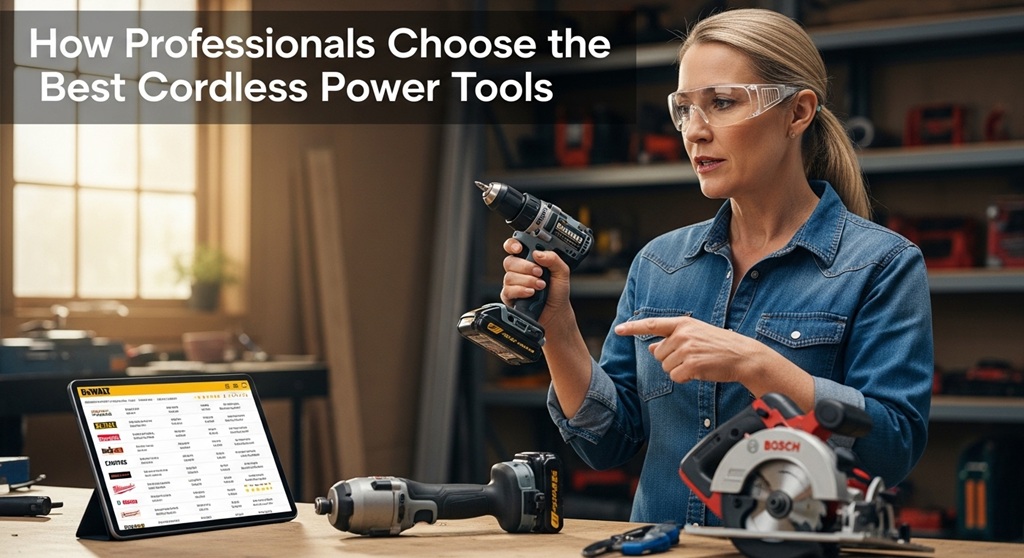
What Are Cordless Power Tools and Why Do Professionals Prefer Them?
Quick Answer: Cordless power tools are battery-powered tools that provide portability, flexibility, and consistent performance without the need for a power outlet. Professionals prefer them because they increase efficiency, reduce setup time, and improve job site mobility.
Imagine working on a construction site where every second counts. Running extension cords, finding power outlets, and managing cable clutter can slow everything down. This is the daily reality for many contractors who haven’t switched to cordless solutions.
This is where cordless power tools change the game.
Professional contractors, electricians, and carpenters are increasingly choosing cordless systems because they offer freedom. No cords. No downtime. No unnecessary risks from tangled cables. According to industry reports, over 65% of professionals now prefer cordless tools over corded alternatives for most applications.
But here’s the challenge: not all cordless tools are built the same. Some fail under heavy workloads. Others lack battery efficiency. Choosing the wrong tool can cost time, money, and even job quality.
This guide breaks down exactly how professionals evaluate and select the best contractor tools and heavy duty cordless tools for real-world performance.
How Do Professionals Evaluate Cordless Power Tool Performance?
Quick Answer: Professionals evaluate cordless tools based on power output, battery efficiency, durability, and real-world performance under load.
Performance is the first filter. If a tool cannot handle demanding tasks, it’s not worth considering.
Key Performance Factors
- Torque and RPM: Determines drilling and driving strength.
- Brushless motors: Provide higher efficiency and longer lifespan.
- Load consistency: Maintains power during heavy-duty use.
For example, in a 2024 contractor field study, brushless cordless drills completed 30% more tasks per battery cycle compared to brushed models. That’s not marketing—it’s measurable productivity.
Professionals also test tools under pressure. Drilling into concrete, cutting hardwood, or fastening structural screws reveals whether a tool can handle heavy duty cordless tools requirements.
Why Is Battery Technology Critical in Cordless Tools?
Quick Answer: Battery quality determines runtime, charging speed, and overall productivity on the job site.
The battery is the heart of every cordless tool. Professionals don’t just look at voltage—they analyze the entire battery ecosystem.
What Professionals Look For
- Lithium-ion technology: Standard for longer life and fast charging
- Amp-hour (Ah) rating: Higher Ah means longer runtime
- Battery compatibility: One battery system for multiple tools
Case Study Insight: A construction team using a unified 18V battery platform reduced downtime by 22% because batteries could be swapped across tools without interruption.
This is why contractor tools from leading brands focus heavily on battery ecosystems. It’s not just about one tool—it’s about the entire workflow.
What Features Make a Cordless Tool Suitable for Heavy-Duty Work?
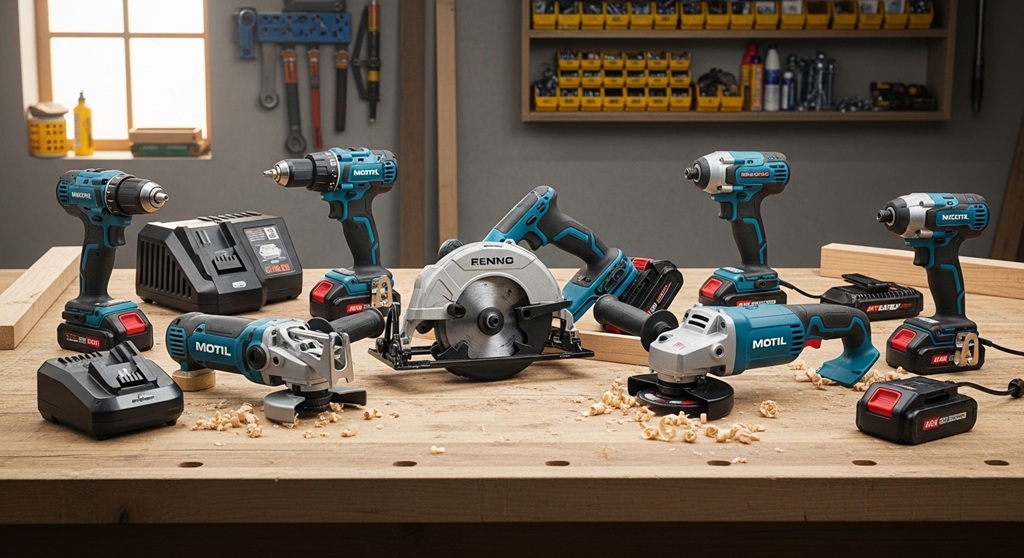
Quick Answer: Heavy-duty cordless tools must have high torque, durable construction, advanced cooling systems, and long-lasting batteries.
Not every cordless tool is built for demanding environments. Professionals need tools that survive tough conditions.
Essential Heavy-Duty Features
- All-metal gear housing: Improves durability
- Overload protection: Prevents motor damage
- Weather resistance: Essential for outdoor work
- Advanced cooling systems: Reduces overheating
In real job site conditions, tools face dust, moisture, and impact. A heavy duty cordless tool must handle all of these without performance drops.
Professionals often choose tools tested for industrial use rather than DIY-grade equipment.
How Important Is Ergonomics and Design in Contractor Tools?
Quick Answer: Ergonomics directly impacts productivity, safety, and fatigue levels during extended use.
Professionals don’t just use tools—they use them for hours every day. Poor design leads to fatigue and reduced efficiency.
Key Ergonomic Factors
- Weight distribution: Balanced tools reduce strain
- Grip design: Anti-slip handles improve control
- Compact size: Helps in tight spaces
A study from a construction safety group found that ergonomic tools reduced worker fatigue by up to 18% over an 8-hour shift.
This is why professionals prioritize comfort just as much as power.
How Do Professionals Compare Different Cordless Tool Brands?
Quick Answer: Professionals compare brands based on reliability, ecosystem compatibility, service support, and long-term value.
Brand selection isn’t about popularity. It’s about trust built through performance.
Comparison Criteria
- Tool ecosystem: Wide range of compatible tools
- Service network: Easy repairs and parts availability
- Warranty: Indicates manufacturer confidence
| Factor | Why It Matters |
|---|---|
| Battery Platform | Reduces cost and increases efficiency |
| Durability | Ensures long-term use |
| Support | Minimizes downtime |
Professionals often stick with one brand once they invest in its battery ecosystem.
What Role Does Cost vs Value Play in Choosing Cordless Tools?
Quick Answer: Professionals focus on long-term value rather than upfront cost.
Cheap tools may save money initially but fail under heavy use. That leads to replacements, delays, and higher total cost.
Professionals calculate:
- Cost per job completed
- Tool lifespan
- Maintenance expenses
Case Study: A contractor who switched to premium cordless tools reduced tool replacement costs by 40% over two years.
This shows that investing in quality contractor tools pays off over time.
How Do Real Job Site Conditions Influence Tool Selection?
Quick Answer: Professionals choose tools based on specific job requirements such as environment, workload, and task complexity.
No two job sites are the same.
- Indoor jobs require compact tools
- Outdoor work demands weather-resistant tools
- Industrial projects need heavy duty cordless tools
Professionals match tools to the job—not the other way around.
What Mistakes Should You Avoid When Buying Cordless Power Tools?
Quick Answer: Avoid focusing only on price, ignoring battery compatibility, and choosing tools without considering workload demands.
Common Mistakes
- Buying tools without checking battery platform compatibility
- Choosing DIY-grade tools for professional use
- Ignoring warranty and service options
- Overlooking ergonomics
These mistakes often lead to wasted money and poor performance.
Conclusion: How Can You Choose the Right Cordless Power Tools Today?
Choosing the best cordless power tools isn’t about trends or brand names. It’s about performance, reliability, and long-term value.
Professionals follow a clear process. They evaluate power, battery systems, durability, ergonomics, and real-world usability. They test tools under pressure. They invest in ecosystems, not just individual products.
If you’re serious about upgrading your toolkit, start by identifying your needs. Are you handling light tasks or heavy-duty projects? Do you need portability or maximum power?
Once you answer these questions, the right tools become obvious.
CTA: Take action today. Review your current tools, identify gaps, and upgrade to professional-grade cordless solutions that match your workload. The right choice will save you time, money, and effort on every job.
FAQs: How Professionals Choose Cordless Power Tools
1. What voltage is best for cordless power tools?
Answer: 18V to 20V tools are ideal for most professional tasks, offering a balance between power and portability.
2. Are cordless tools as powerful as corded tools?
Answer: Modern cordless tools with brushless motors can match or exceed corded tool performance in many applications.
3. How long do cordless tool batteries last?
Answer: Lithium-ion batteries typically last 2–5 years depending on usage and maintenance.
4. What is the advantage of a brushless motor?
Answer: Brushless motors provide higher efficiency, longer lifespan, and better performance under load.
5. Can one battery work with multiple tools?
Answer: Yes, most brands offer battery platforms compatible across multiple tools.
6. Are heavy duty cordless tools worth the investment?
Answer: Yes, they offer better durability, performance, and long-term cost savings for professionals.
Read More Also: How to Deal with Feeling Overwhelmed
Find out: Men’s Mental Health Awareness Month Early Warning Signs Guide

You May Like

How to Improve Back Comfort with Your Office Chair in WA