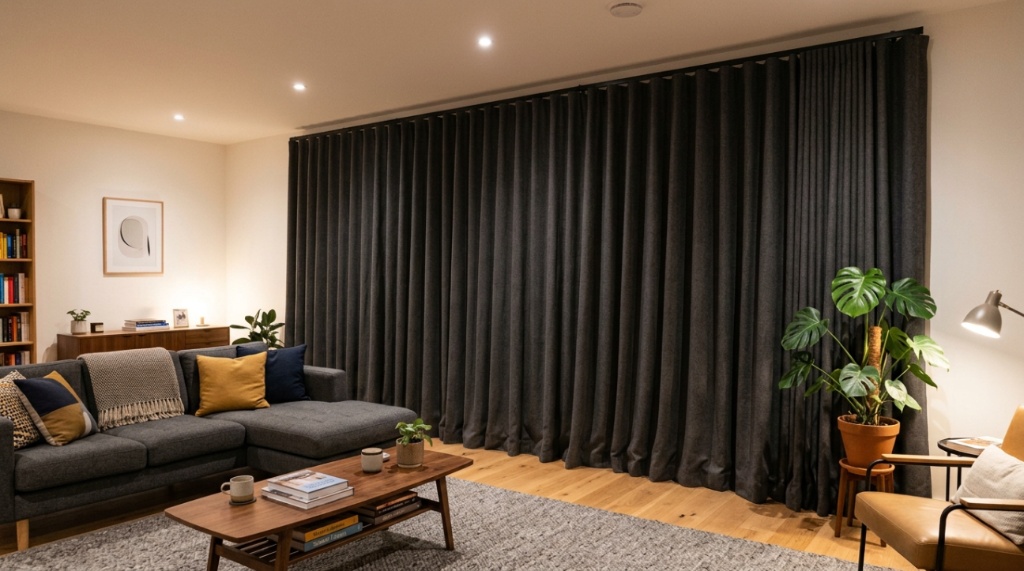
If you have a sliding glass door or a patio door, you already know the struggle. They flood your room with natural light, but they also let heat pour in during summer and cold seep through in winter. Your HVAC system works harder, your energy bills climb, and that beautiful glass becomes the weakest link in your home’s insulation. The good news? You don’t have to replace the door to fix the problem. Choosing the right energy efficient curtains for patio doors can significantly reduce heat transfer, protect your flooring from UV damage, and make your living space far more comfortable year-round. This guide walks you through exactly what to look for, why it matters, and how to get the best performance from your window treatments.
Key Takeaways
- Not all curtains are created equal: thermal insulation, fabric weight, and weave density determine energy performance.
- Layering is your best strategy: combining thermal curtains with blinds or sheers dramatically improves insulation and versatility.
- Proper installation matters more than you think: ceiling-mounted tracks and floor-length panels eliminate the air gaps that reduce efficiency.
- Color and lining play distinct roles: light colors reflect heat, dark colors absorb it, and quality linings block both heat and cold.
- Look for specific construction features like interlining, thermal backing, and grommet or rod-pocket styles that seal better against the wall.
Why Patio Door Curtains Need Special Consideration
Patio doors present a unique challenge that standard windows don’t. You’re dealing with a massive expanse of glass that can be six, eight, or even twelve feet wide. This means the curtain must cover a much larger surface area, handle daily opening and closing, and actually seal off airflow when closed. A flimsy decorative curtain simply won’t cut it. The physics are straightforward: heat moves from warm to cold spaces, and glass is a poor insulator. Without a proper thermal barrier, your room loses heat in winter through radiation and conduction, and gains excessive heat in summer through solar radiation.
The primary goal of energy efficient curtains is to create a stagnant air pocket between the fabric and the glass. This buffer zone acts as an additional layer of insulation. Air is a poor conductor of heat, so trapping a layer of it against the door’s surface slows down the heat exchange process significantly. Therefore, the construction of the curtain, how it hangs, and how well it seals along the edges determine its real-world effectiveness. When you start comparing options, look for the ones that specifically address these physical requirements.
What Makes a Curtain Actually Energy Efficient?
It is easy to assume that any heavy curtain will insulate well, but the reality is more specific. Several factors work together to determine whether a curtain will genuinely save you energy or simply look the part.
Fabric Weight and Weave Density
The fabric’s weight, measured in grams per square meter (GSM), is a good starting point. Heavier fabrics generally trap more air and block more light. However, weight alone isn’t enough. The tightness of the weave matters equally. A tightly woven fabric, like heavy cotton twill, velvet, or a specialized polyester blend, blocks airflow more effectively than a loosely woven fabric that might weigh the same. Hold the fabric up to a bright light. If you can see pinpricks of light coming through, air is also passing through those gaps, and the insulation value is reduced.
Thermal Lining and Interlining
The most effective energy efficient curtains for patio doors almost always contain a specialized lining. There are two main types to understand:
Thermal lining (foam-backed): This is a layer of acrylic foam applied to the back of the main fabric. It acts as a barrier to both heat loss and heat gain. It also blocks incoming sunlight and provides privacy. This is a common and cost-effective option for improving insulation.
Interlining (felt or flannel): This is a separate, soft layer of fabric, typically cotton flannel or wool, sandwiched between the face fabric and the back lining. Interlining is the hallmark of high-quality drapes. It creates multiple layers of dead air space within the curtain itself, providing a higher level of insulation and also giving the face fabric a beautiful, full drape. While more expensive, interlined curtains are the most functional option for temperature control.
Color and Reflectivity
Color plays a dual role. A curtain with a white or light-colored back lining reflects solar heat away from the room, keeping the space cooler in summer. In contrast, a dark-colored face fabric absorbs heat. During winter, this can be an advantage. If the sun is shining, a dark curtain with a dark lining will absorb the sun’s warmth and radiate it into the room. For those who want the best of both worlds, consider curtains with a light reflective backing and a dark face fabric, allowing you to reverse the hang or simply rely on the backing for summer performance.
Critical Features That Make a Big Difference
Beyond the fabric, the way the curtain is constructed and hung affects its performance as much as the material itself. A well-insulated fabric that hangs loosely with gaps will still let air circulate, undermining its efficiency.
Full Coverage and Stacking
Measure your door width and choose a curtain that is at least 1.5 to 2 times wider than the glass. This allows the fabric to gather into pleats rather than hanging flat. The pleats create natural air pockets that add a layer of insulation. More importantly, the extra width ensures the fabric fully covers the edge-to-edge span of the door, preventing light and air leaks along the sides.
Length and Floor Contact
Curtains must extend all the way to the floor and ideally “puddle” just slightly on the ground. This is crucial because it prevents drafts from moving up from the floor. Short curtains that stop at the sill leave a significant gap where cold air can roll in. Aim for a length that reaches the floor, or extends a few inches past the bottom of the door frame if mounted inside the opening. For maximum seal, some homeowners opt for curtains that extend several inches onto the floor, though this can be a hazard if the door is frequently used.
How You Hang Them Matters
The mounting type is more important than most people realize. A standard rod installed above the window still allows air to flow up and over the top. To create a tight seal, the curtain rod should be mounted as high as possible, leaving just a narrow gap between the top of the fabric and the ceiling. Consider these options:
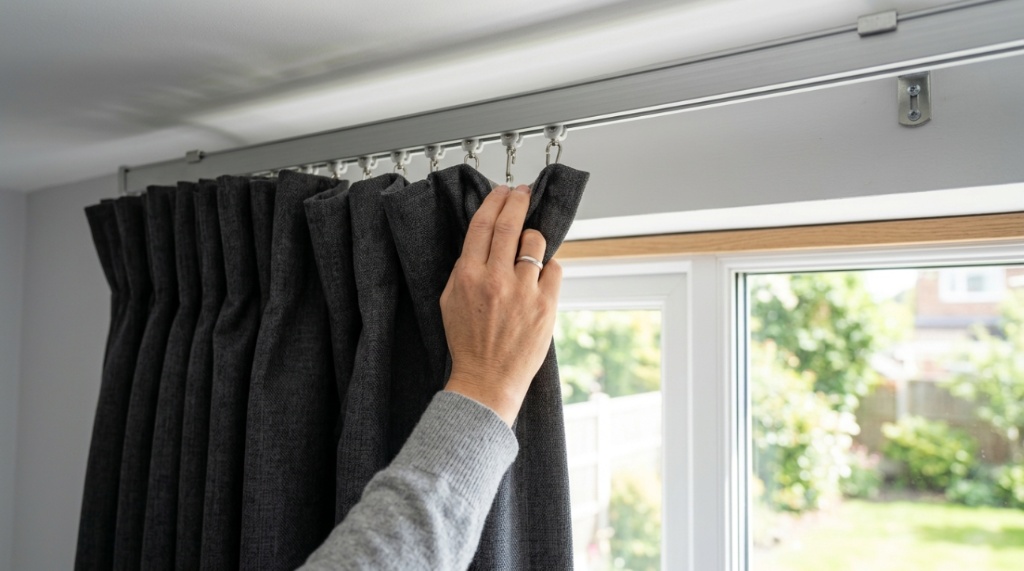
- Ceiling-mounted tracks: These are the best choice for a tight seal. They cover the top completely and allow the curtain to glide smoothly.
- Wall-mounted rods: Install these 4–6 inches above the window frame to reduce top airflow. Be sure the rod extends 4–8 inches past each side of the frame to allow the entire glass to be covered with minimal side gaps.
- Grommet or eyelet curtains: These offer a straight, clean stack but allow more light and air leakage around the metal rings. Consider a velcro strip or a valance over the top to block that gap.
- Rod pocket curtains: The fabric slips over the rod, pinched tight at the top. While they are harder to draw open and close, they provide a superior seal at the top edge.
Best Curtain Styles and Configurations for Sliding Doors
Patio doors are typically wide, so handling the curtain panels is a practical concern. You will likely need two or more panels to maintain functionality while keeping the door accessible. The most effective configuration involves a two-panel system that draws to both sides, leaving a clear opening in the middle.
Single Panel vs. Double Panels
A single, large panel that pulls to one side is elegant but leaves one side glassy and exposed, which eliminates the insulation benefit when you want to enjoy the view and still have some protection. Two panels are more functional. You can close both for maximum thermal efficiency, or open them fully for the best view. When searching for options, many homeowners review specialized resources and specific product lines that are designed for this exact purpose, looking for quality energy efficient curtains patio doors to ensure they are getting construction that holds up to daily use.
Layering: The Smartest Approach
If you want optimal performance, do not rely on a single layer. Layering your window coverings offers the highest level of efficiency and control. You can create a system that adapts to the time of day and season.
Start with a cellular shade or a blackout roller shade mounted close to the glass. Cellular shades have a honeycomb construction that creates multiple cells of trapped air, making them an exceptional insulator. Then, hang your decorative thermal curtains over the top. This setup provides a double air barrier. In the winter, leave the cellular shade down during the night and open it during the day to let sunlight warm the room. In the summer, keep the cellular shade down and use the curtain to reflect solar heat away. This combination is more practical than a single ultra-heavy curtain, as you can adjust each layer independently,
While securing your home aesthetics and window treatments, structural integrity matters just as much; learn about common causes of cracks in commercial glass doors in Athens AL to protect your property’s exterior features.
Seasonal Strategies: Adjusting Your Curtains
Owning energy efficient curtains is not a “set it and forget it” situation. To truly maximize your savings, you must change how you use them based on the season.
Winter – Trapping Heat
During the day, make sure to open your curtains to allow sunlight to pass through the glass and warm up the room’s thermal mass (floors, walls, furniture). Close the curtains as soon as the sun sets. Once the sun is gone, the glass loses heat rapidly. Your thermal curtains will create a buffer that prevents the warmth inside from escaping to the cold night air outside. Remember to close them tightly before the inside temperature starts to drop.
Summer – Reflecting Heat
Reverse the strategy for summer. Close the curtains during the peak sunlight hours, generally from mid-morning to late afternoon. This blocks solar radiation before it enters the room. Curtains with a light-colored back lining are especially effective here, as they reflect a significant portion of solar energy away from the glass. Open the curtains in the evening if the outside temperature drops, allowing your room to naturally vent heat.
Choosing the Right Fabric for Your Climate
Your specific climate should dictate the fabric you choose.
| Climate | Fabric Choice | Lining | Reasoning |
|---|---|---|---|
| Hot and Sunny | Tightly woven cotton, linen (medium-heavy), or reflective polyester blends | Light-colored, foam-backed thermal lining | Reflects solar heat, blocks UV rays, reduces cooling costs |
| Cold and Winter-Heavy | Velvet, heavy cotton twill, wool blends | Interlined (flannel layer) plus a foam backing | Traps maximum air, blocks drafts, holds warmth inside |
| Mixed/Transitional | Polyester/cotton blends with a smooth texture | Triple-weave or foam-backed lining | Balances insulation with easy operation, adapts to both seasons |
Keep in mind that heavier fabrics are more difficult to pull open and closed daily. If you have a wide, heavy door, consider a motorized track system to make the curtains easy to use. If you struggle to operate them, you will be less likely to close them, negating their energy benefits entirely.
Common Mistakes to Avoid
Many people invest in expensive thermal curtains only to see minimal savings because of installation errors or poor habits. Avoid these pitfalls:
- Hanging the curtain below the window frame: This leaves a significant gap that allows warm air to rise above the curtain and cold air to sink down. Always mount as high as possible.
- Using curtains just slightly wider than the glass: This misses the critical 6–8 inches of wall on either side, which are big sources of air leakage.
- Buying a light, unlined curtain: A single layer of fabric does little to stop conduction. You need multiple layers to create the air-pockets that actually insulate.
- Closing the curtains before the sun hits the glass in winter: You want to let the natural light in first. Blocking it too early prevents the free solar heat gain.
- Forgetting the top gap: If the top of the curtain is open, it creates a chimney effect where warm air escapes upwards. Use a cornice, valance, or ceiling track to seal this.
Frequently Asked Questions
Can I just buy any blackout curtains and get energy efficiency?
Not necessarily. While most blackout curtains offer some thermal benefit because they are thick and block light, not all are created equal. A true energy efficient curtain uses a specific thermal lining or interlining to provide insulation. Standard blackout linings primarily block light, while thermal linings are specifically designed to reduce heat transfer. Check the product specifications for “thermal” or “insulated” rather than just “blackout.”
What is the best way to measure for patio door curtains?
Measure the full width of the glass and frame. Add at least 8 inches (4 on each side) to your rod width. The curtain panel width itself should be at least 1.5 times the width of the glass to allow for proper stacking and pleating. For length, measure from the top of your rod to the floor. Add 1–2 inches if you want them to just touch the ground, or more for a puddle effect.
Do I need to use both a curtain and a blind on my patio door?
Using both is highly recommended. A cellular blind acts as a primary insulator close to the glass, while your curtains provide a second layer of defense and a finished aesthetic. This dual-layer system is far more effective than any single treatment. For example, a blind can block most light while the curtain handles drafts and aesthetics.
How much will I save on my energy bills with thermal curtains?
The savings vary widely based on your climate, home size, and the quality of the curtains. Some studies suggest that window coverings can reduce heat loss by up to 25% in winter and heat gain by up to 33% in summer. However, the most significant savings come from installing floor-length curtains that are mounted close to the ceiling to eliminate drafts. Look at them as a worthwhile addition to, rather than a replacement for, good insulation.
Are white or dark colored curtains better for energy efficiency?
It depends on the season. Light-colored curtains reflect sunlight, which is great for keeping hot rooms cool in summer. Dark-colored curtains absorb sunlight and heat, which is beneficial in winter. The best solution is to have curtains with a light back-lining (for summer reflection) and a dark face fabric (for winter absorption). If you can’t find that, choose based on your climate’s most dominant season.
How do I stop cold air from coming in around my sliding door glass?
Curtains, no matter how good, work best alongside a door that is sealed. Check the weatherstripping around your sliding door. If you feel a draft, replace the weatherstripping. If the door is old and leaky, a curtain won’t fully solve the problem. Install the curtain so that it extends at least 2 inches beyond the edges of the frame and touches the floor to create a seal that disrupts the draft.
Conclusion
Selecting energy efficient curtains for your patio doors is a smart investment in your home’s comfort and your monthly budget. The right decision goes beyond simply picking a heavy fabric. You need to focus on the lining, the weave, and the installation method to create effective thermal barriers. Remember the core principles: mount high, cover wide, and aim for multiple layers of fabric and air. Whether you choose a thick interlined drape or a combination of cellular shades and thermal panels, the effort you put into this selection will pay off in a more consistent indoor temperature and lower energy consumption. Take the measurements of your door, assess your climate’s primary challenges, and choose a curtain system that you will actually use every day.

You May Like