
Every driver should know the basics of car jacks. Whether you are dealing with a flat tire on a quiet road or doing routine maintenance in your driveway, the right jack makes the job safer and easier. However, walking into an auto parts store can feel overwhelming. There are so many options, and they all look different.
The good news is that once you understand the main types, choosing the right one becomes simple. This guide breaks down each type clearly so you can make a confident decision.
Why Knowing Your Car Jack Types Matters
Using the wrong jack for a job can be dangerous. A jack that is too small for your vehicle may buckle under the weight. One that is not designed for your situation may tip or slide. Therefore, knowing which tool fits which task is not just helpful — it is essential for your safety.
Additionally, understanding the differences helps you get better value for your money. You will not overspend on features you do not need, and you will not underbuy and end up with something that fails you.
The Three Main Types of Car Jacks
Most car jacks fall into three categories. Each one has a specific design, a specific purpose, and a set of situations where it works best. Let us look at each one in detail.
The Scissor Jack: Compact and Built for Emergencies
The scissor jack is the most common jack you will find in a new car. Manufacturers include it as standard equipment because it is lightweight and easy to store in a trunk.
It works using a simple screw mechanism. You turn a crank, and the two metal arms spread apart in a diamond shape, pushing the car upward. The motion looks like a pair of scissors opening — hence the name.
Scissor jacks are designed for emergencies. They are not built for extended use or heavy loads. However, they do their job well when you need to swap a flat tire by the side of the road. They are affordable, compact, and require no special knowledge to operate.
There are a few limitations worth knowing. Scissor jacks are slow to operate. Turning the crank manually takes time and effort. Additionally, they have a narrow footprint, which makes them less stable than other types on uneven surfaces. Therefore, always use them on flat, solid ground.
Best uses for a scissor jack:
- Changing a flat tire during an emergency
- Light vehicles like sedans and small crossovers
- Situations where space is limited
The Bottle Jack: Powerful and Perfect for Heavy Vehicles
The bottle jack gets its name from its shape. It is short, round, and upright — much like a metal bottle. Despite its compact form, it can lift an impressive amount of weight.
This type of jack uses hydraulic pressure to lift. You pump a handle, and hydraulic fluid pushes a ram upward. The result is a powerful, steady lift with relatively little physical effort. That makes it a great choice for anyone who needs to lift heavy trucks, vans, or SUVs.
Bottle jacks are affordable and easy to find. They come in a wide range of weight capacities, some going up to twenty tons or more. Therefore, they are popular on farms, construction sites, and with off-road enthusiasts who need serious lifting power.
However, bottle jacks do have one drawback. They have limited horizontal reach. This means they may not fit under vehicles with very low ground clearance. If your car sits close to the ground, a bottle jack may not be practical. Additionally, they are not as stable as floor jacks on very rough terrain.
Best uses for a bottle jack:
- Lifting trucks, SUVs, and heavy-duty vehicles
- Farm equipment and trailers
- Situations where vertical height is available under the vehicle
The Floor Jack: The Professional’s Choice for Garage Work
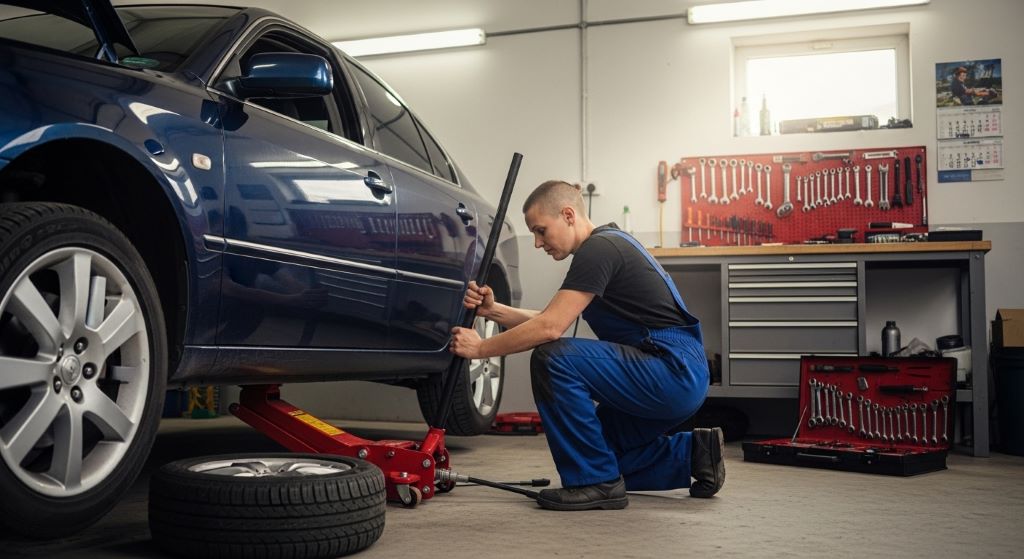
The floor jack is the tool you will find in most home garages and professional auto shops. It sits low to the ground, rolls on wheels, and uses a long handle to pump hydraulic pressure. The lift arm extends forward and upward to raise the vehicle.
Because the floor jack rolls, you can position it quickly and precisely. That makes it far faster and more convenient than the other types. Additionally, it offers a wide, stable base that keeps the load balanced during lifting.
Floor jacks come in different sizes and weight capacities. A standard two-ton model handles most passenger cars comfortably. Larger three-ton and above models are available for heavier vehicles. Many professional mechanics keep both sizes on hand.
The main downside of a floor jack is its size and weight. It is not something you throw in your trunk for roadside emergencies. It belongs in the garage. However, for regular maintenance tasks like oil changes, brake work, or inspecting the underside of your vehicle, it is simply the best tool available.
Floor jacks also work much faster than scissor jacks. A few pumps of the handle can raise a vehicle several inches in seconds. That efficiency adds up when you spend a lot of time working on cars.
Best uses for a floor jack:
- Home garage maintenance and repairs
- Quick and repeated lifting tasks
- Vehicles with standard or low ground clearance
Comparing the Three Types Side by Side
Each jack has its place. Here is a simple way to think about which one fits your needs.
If you want something for emergencies that you can keep in your car, the scissor jack is the right choice. It takes up almost no space and is easy to store.
If you need to lift something very heavy, like a truck or trailer, the bottle jack delivers serious power in a compact body. However, make sure your vehicle has enough clearance for it to fit underneath.
If you are doing regular work in a garage and want speed, stability, and convenience, the floor jack is the clear winner. It is an investment, but it pays off quickly in time and ease of use.
How to Use Any Car Jack Safely
No matter which type you use, safety always comes first. Here are some key rules that apply to all car jacks.
Always read the manufacturer’s instructions before using a new jack. Every model is slightly different, and knowing your specific tool prevents mistakes.
Never exceed the jack’s weight rating. Check your vehicle’s weight and compare it to the jack’s capacity. Going over that limit is dangerous.
Always place the jack under the vehicle’s designated jack points. These are reinforced areas on the frame designed to handle the weight. Using the wrong spot can damage your car and cause the jack to slip.
Additionally, never work under a vehicle supported only by a jack. Always use jack stands once the vehicle is raised. Jack stands hold the weight safely while you work underneath.
Finally, use the jack on flat, solid ground. Gravel, soft soil, and slopes increase the risk of tipping or slipping.
Choosing the Right Jack for Your Situation
Making the right choice comes down to three questions. First, what type of vehicle do you drive? Second, where will you be using the jack — on the road or in a garage? Third, how often will you need it?
Casual drivers who rarely do their own maintenance may only need a scissor jack for emergencies. Regular home mechanics should invest in a quality floor jack. Those who work with heavy trucks or off-road vehicles should consider adding a bottle jack to their toolkit.
Furthermore, there is nothing wrong with owning more than one type. Many experienced mechanics keep a floor jack for daily garage work and a smaller jack for travel.
Conclusion
Understanding the differences between a scissor jack, bottle jack, and floor jack helps you work smarter and stay safer. Each type has unique strengths. The scissor jack is your go-to for roadside emergencies. The bottle jack handles heavy loads with ease. The floor jack offers speed, stability, and versatility for garage work.
Therefore, think carefully about your needs before buying. Consider your vehicle type, where you will use the jack, and how often you need it. With the right tool in hand, every lifting job becomes safer and more manageable. A small amount of knowledge upfront saves you a lot of trouble down the road.
Frequently Asked Questions
Can I use a scissor jack for regular garage maintenance?
It is not recommended. Scissor jacks are designed for emergency roadside use only. For regular garage work, a floor jack with jack stands is much safer and more efficient.
What size bottle jack do I need for a pickup truck?
Most full-size pickup trucks weigh between four and seven thousand pounds. A three-ton bottle jack gives you enough capacity with a comfortable safety margin for most models.
How do I know where to place a car jack under my vehicle?
Check your owner’s manual. It will show the exact jack points on your vehicle’s frame. These are reinforced spots specifically designed for safe lifting.
Are floor jacks hard to store at home?
They take up more space than other types, but most floor jacks fit easily under a workbench or in a corner of a garage. Many models also have handles that make them easy to roll and position.
How often should I inspect my car jack?
Inspect it before each use. Look for leaks, cracks, or signs of rust. Test the pump action before you put the vehicle on it. A quick check takes under a minute and can prevent a serious accident.
Related Topics:
Home Or Abroad, Invest In Comprehensive Car Hire Excess Insurance.
Dealing with Car Hail Damage: Effective Strategies and Tips

You May Like