
Key Takeaways
- Conducting regular inspections and following a proactive maintenance plan helps prevent costly repairs and extend roof longevity.
- Facility managers should distinguish between common roofing myths and factual best practices to optimize decision-making.
- Partnering with professionals and utilizing modern technologies streamlines maintenance and ensures better overall results.
Maintaining a commercial roof is an essential responsibility for facility managers. Regular maintenance not only safeguards the building and its occupants but also extends the roof’s lifespan and minimizes long-term repair costs. Implementing a well-structured approach to commercial roofing maintenance ensures the continued health of the facility and helps prevent unexpected disruptions.
Effective roof management requires understanding best practices, conducting frequent inspections, promptly repairing issues, and thoughtful budgeting. Facility managers who embrace a proactive strategy can ensure the safety, efficiency, and longevity of their buildings while keeping costs under control.
Because roofing maintenance is an ongoing effort, involving professional support and leveraging new tools will make a significant difference. Recognizing common maintenance myths and relying on factual guidance allows managers to make well-informed decisions and avoid costly mistakes.
One of the most effective strategies for maintaining a commercial roof is to develop an organized plan. Collaborating with a qualified commercial roofer provides expertise in assessment and repair, enabling facility managers to maximize the roof’s lifespan and minimize costly issues.
Understanding the Importance of Proactive Roof Maintenance
Proactive maintenance is crucial to the durability and performance of commercial roofing systems. According to the National Roofing Contractors Association, roofs that receive regular maintenance can last up to 21 years, while those that receive reactive maintenance may only last about 13 years. This difference highlights the lasting benefits of early detection and intervention, underscoring how proactive attention translates to significant cost savings in repair and replacement over time.
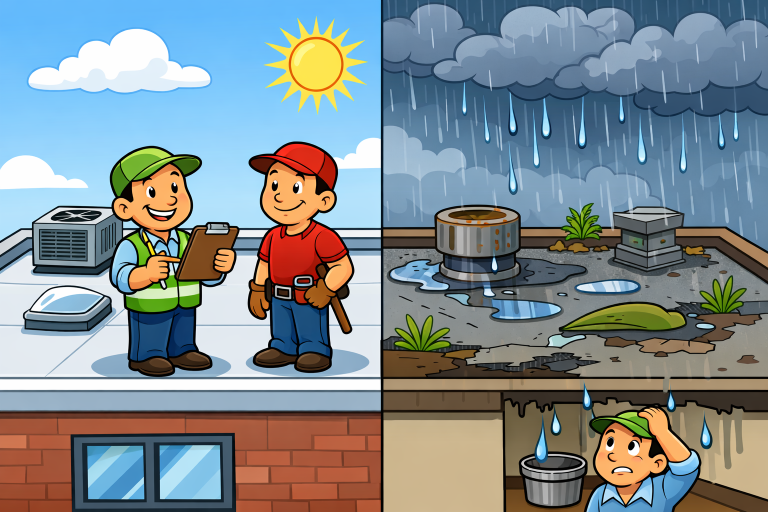
When facility managers adopt proactive measures, such as scheduling routine inspections and promptly addressing minor issues, they foster a safer and more resilient facility. Focusing on prevention rather than waiting for visible problems helps avoid major disruptions from leaks, structural issues, or interior water damage.
Common Myths About Commercial Roof Maintenance
Misinformation about roofing maintenance can result in costly mistakes and premature roof deterioration. Some persistent myths include:
- Myth 1: “The roof is fine unless it’s leaking.” Visible leaks often indicate that significant damage has already occurred. Routine inspections are necessary to catch issues before they escalate.
- Myth 2: “All roofing materials need the same type of maintenance.” Commercial roofs are constructed from various materials, each with specific care and maintenance requirements. Customizing your plan to these differences is vital.
- Myth 3: “Regular maintenance is an unnecessary expense.” Investing in regular maintenance reduces the risk of unexpected repairs and extends the roof’s service life.
Dispelling these myths with factual knowledge allows for informed maintenance practices and greater protection for the facility.
Developing a Comprehensive Roof Maintenance Plan
A robust maintenance plan is fundamental to effective commercial roof management. The following steps can guide facility managers in creating and implementing an organized approach:
- Schedule Routine Inspections: Plan bi-annual inspections, ideally before and after severe weather seasons, to identify potential issues early.
- Keep Gutters and Drains Clear: Reducing blockages and ensuring proper water flow prevents ponding and water-related damage.
- Perform Minor Repairs Promptly: Issues such as small leaks, punctures, or loose seams should be fixed immediately to avoid more extensive damage.
- Verify Insulation and Drainage: Proper insulation and efficient drainage systems maintain energy performance and reduce moisture buildup.
- Document Maintenance Activities: Keeping comprehensive records provides insight into the roof’s condition and helps plan future work.
Incorporating guidance from the Nations Roof can further assist in structuring a tailored maintenance plan.
Leveraging Technology in Roof Maintenance
Technology has transformed the ways facility managers monitor and maintain commercial roofs. Two technologies that have become increasingly vital are drone-assisted inspections and infrared thermal imaging. Drones enable efficient, safe inspection of hard-to-reach rooftops, reducing the risks associated with manual surveys. Infrared scanning uncovers hidden moisture, insulation weaknesses, and potential leak risks not visible to the naked eye.
These tools support early detection, more accurate assessments, and more targeted repairs, ultimately contributing to better outcomes and reduced overall expenses. Facility managers can learn more about roofing technologies through Procore’s resources, ensuring they stay up to date on industry advancements.
Partnering with Professional Roofing Contractors
Working with a skilled commercial roofing contractor is essential for expert guidance in inspection, maintenance, and repair. Professionals bring experience, knowledge of material-specific care, and access to advanced equipment, ensuring thorough and efficient service. Establishing a partnership with an accredited contractor will yield long-term benefits in roof management and reduce the potential for costly breakdowns.
Facility managers should vet contractors for licensing, insurance, and relevant experience with commercial properties to avoid common pitfalls and ensure quality work.
Budgeting for Roof Maintenance
Effective budgeting for roofing maintenance is a smart, long-term strategy. Allocating funds for regular maintenance avoids the pitfalls of delayed repairs and prepares organizations to manage the natural wear and tear common to large facilities. By including roof maintenance in annual budgets, facility managers ensure that repairs and upgrades are timely, thereby maximizing their investment in the building’s infrastructure.
Conclusion
Commercial roofing maintenance requires a disciplined, proactive approach grounded in industry best practices and the willingness to dispel pervasive myths. By developing a comprehensive maintenance plan, leveraging technology, budgeting thoughtfully, and working with trained professionals, facility managers can protect their buildings and optimize the lifespan of their roofing systems. With the right approach, regular maintenance will not only preserve the facility’s structural integrity but also promote safety and operational efficiency for years to come.
