A colleague bought four bamboo pillows from four different brands in two months — returning three of them — before finding one that actually delivered on its promises. She wasted $140 in shipping fees and six weeks of poor sleep because every pillow looked identical online but performed completely differently in practice. The best bamboo pillows share specific construction details that separate genuine performers from marketing-driven disappointments, but these details hide behind identical-looking product photos and similar-sounding descriptions. This bamboo pillow buying guide exposes the mistakes that cost buyers money and sleep quality — from falling for misleading bamboo percentages to ignoring fill type specifications that determine whether a pillow actually cools, supports, and lasts. Learn these pitfalls before you buy, and your first bamboo pillow purchase becomes your only bamboo pillow purchase.
Mistake #1: Trusting the “Bamboo” Label Without Checking the Percentage — How Much Bamboo Is Enough?
A bamboo pillow needs at minimum 40% bamboo viscose in the cover to deliver meaningful cooling and moisture-wicking benefits — anything below this threshold provides negligible performance improvement over standard polyester covers.
The labeling problem is widespread. Current regulations allow manufacturers to market a pillow as “bamboo” even with minimal bamboo content. What you actually find on store shelves:
- 100% bamboo viscose: Maximum cooling and wicking performance. Premium pricing. Rare in budget options.
- 60–70% bamboo / 30–40% polyester: Excellent performance with added durability from polyester. The sweet spot for most buyers.
- 40–50% bamboo / 50–60% polyester: Acceptable minimum. Noticeable cooling improvement over pure polyester but less dramatic than higher percentages.
- 20–30% bamboo / 70–80% polyester: Minimal bamboo benefit. Essentially a polyester pillow with bamboo marketing. Not worth the premium price.
- “Bamboo-derived” with no percentage: Red flag. Often means trace bamboo content used to justify the label.
How to verify: check the fabric content tag (legally required on all textile products), not the marketing description. The tag lists exact fiber percentages. If a product does not display this information clearly, assume the bamboo content is minimal.
Mistake #2: Ignoring Fill Type and Assuming All Bamboo Pillows Feel the Same — What Fill Options Exist?
The fill inside a bamboo pillow determines 70% of how it feels, supports, and performs — two pillows with identical bamboo covers but different fills provide completely different sleep experiences.
Fill types you will encounter:
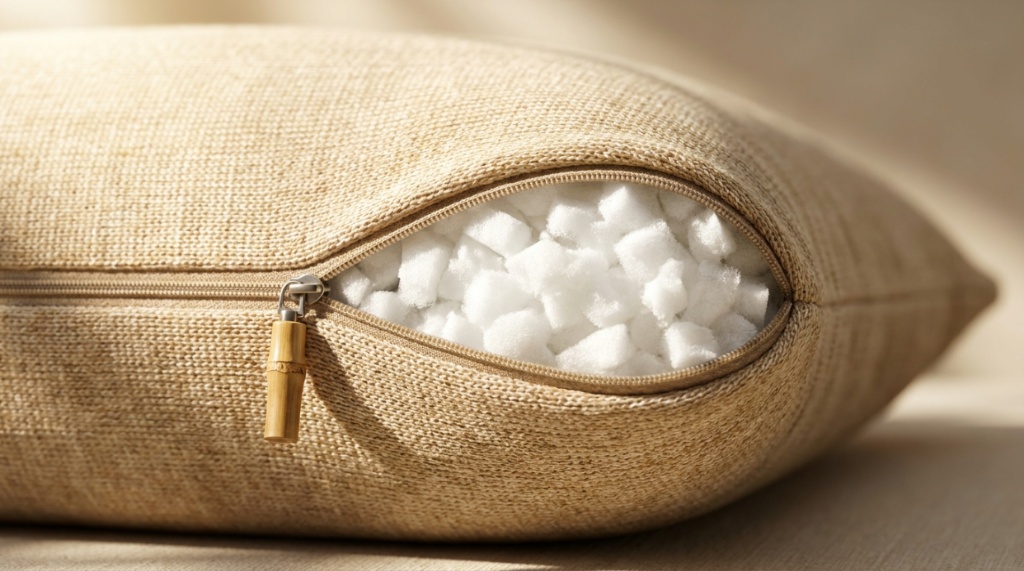
- Shredded memory foam: Most common. Adjustable, conforming, moderate cooling. Feels slightly lumpy to some sleepers. Best all-around choice for most buyers.
- Shredded gel memory foam: Same as above with gel infusion for enhanced initial cooling. Slightly better thermal performance. Worth the small price premium.
- Shredded latex: Firmer, more responsive, naturally cooler than foam. Does not have the “sinking” feel of memory foam. Better for sleepers who prefer bounce and firm support.
- Solid memory foam block: Smooth, uniform surface. Not adjustable. Better contouring but worse airflow. Choose this only if you hate the shredded texture.
- Bamboo fiber fill: Soft, lightweight, naturally breathable. Compresses quickly and provides minimal support. Only suitable for soft-pillow lovers who do not need firm support.
- Down alternative polyester: Cheap fill that provides no cooling benefit. If a “bamboo pillow” uses polyester fill, you are paying for a bamboo cover on a standard cheap pillow.
The mistake: buying based on the cover material alone without checking what is inside. A bamboo cover over polyester fill is a $15 pillow in a $50 package. Always verify fill type before purchasing.
Mistake #3: Buying Non-Adjustable When You Need Custom Loft — Why Does Adjustability Matter?
Non-adjustable bamboo pillows force you to accept a generic height that statistically fits only 30–40% of sleepers correctly — adjustable fill lets you match the pillow to your exact anatomy, eliminating the most common cause of pillow dissatisfaction.
Why this matters:
- Ideal pillow height varies by 2–4 inches between different body types
- Side sleepers need 4–6 inches; back sleepers need 3–5 inches; stomach sleepers need 1–3 inches
- Shoulder width, head size, and mattress firmness all affect ideal height
- A fixed-height pillow that is wrong by even 1 inch causes neck strain over time
Adjustable bamboo pillows include a zippered inner liner that lets you add or remove shredded fill. This feature costs manufacturers almost nothing extra but provides enormous value to the buyer. If two bamboo pillows are similar in price and one is adjustable while the other is not, always choose adjustable.
The exception: if you already know your exact ideal pillow height from previous experience and a fixed-height option matches perfectly, non-adjustable is fine. But for first-time bamboo pillow buyers, adjustability eliminates the guesswork that causes returns.
Mistake #4: Choosing Based on Price Alone — What Does Each Price Tier Actually Deliver?
Budget bamboo pillows ($15–$25) consistently underperform on cooling, support, and durability — the $35–$65 mid-range delivers full bamboo benefits without the diminishing returns of premium pricing above $80.
What your money actually buys at each tier:
- $15–$25 (Budget): Low bamboo percentage (often under 30%), basic polyester or low-density foam fill, thin covers that pill quickly, no adjustability, minimal quality control. These pillows give bamboo a bad reputation because they do not actually deliver bamboo benefits.
- $35–$50 (Value mid-range): 50–60% bamboo covers, decent shredded memory foam fill, adjustable loft, adequate construction. Solid performers that deliver genuine cooling and support improvement.
- $50–$65 (Quality mid-range): 60–70% bamboo covers, gel-infused or quality shredded foam, gusseted construction, durable zippers, extra fill included. The sweet spot where you get full bamboo benefits with quality construction.
- $70–$100 (Premium): 80–100% bamboo, premium foam or latex fill, superior construction details, longer warranties. Genuine improvement in materials but marginal performance gain over quality mid-range.
- $100+ (Luxury): Organic certifications, natural latex, handcrafted details, premium branding. Excellent products but cooling and support performance plateaus — you are paying for certifications and brand prestige.
The buying mistake: assuming the cheapest option provides the same bamboo benefits as mid-range options. It does not. The $20 difference between a $25 budget pillow and a $50 quality option represents a completely different product category in terms of actual performance.One of the biggest mistakes buyers make is ignoring the local climate and how much moisture a pillow traps over time. Bamboo rayon is naturally breathable, but if you pair it with a cheap, non-vented protector or leave it in a damp room, you run a high risk of ruining the core. Taking proactive steps for preventing mold and mildew in pillows with simple tips like proper air circulation and regular sunning will protect your investment and keep your sleep environment completely hygienic.
Mistake #5: Not Checking Return Policy and Trial Period — Why Is This Critical for Pillows?
Pillows require 7–14 nights of adjustment before you can accurately assess their performance — a 30-day return window is the minimum acceptable trial period, and any brand offering less than this lacks confidence in their product.
Why trial periods matter specifically for bamboo pillows:
- Fill adjustment takes time: Finding your ideal loft requires 3–5 nights of experimentation
- Body adaptation period: Neck muscles need 5–7 nights to adjust to new support heights
- Cooling assessment needs warm nights: You cannot evaluate cooling performance on a cool night — you need to test during warm sleeping conditions
- Texture adaptation: The shredded fill texture that feels “lumpy” on night 1 often becomes unnoticeable by night 7 as you adapt
Return policy red flags:
- No return policy listed (assume no returns)
- “Satisfaction guaranteed” without specifying timeframe or process
- Return window under 30 days
- Restocking fees that make returns financially punitive
- Requirement to return in original packaging (difficult after 2+ weeks of use)
Trustworthy brands offer 30–100 night trials with free returns. This confidence signals that the manufacturer expects most buyers to keep the product after proper adjustment — a strong quality indicator.
Mistake #6: Overlooking Certifications That Indicate Quality — Which Certifications Matter?
CertiPUR-US (for foam safety), OEKO-TEX Standard 100 (for fabric safety), and specific bamboo content verification are the three certifications that reliably indicate a bamboo pillow meets quality and safety standards.
Certification guide:
- CertiPUR-US: Confirms memory foam is made without harmful chemicals (formaldehyde, heavy metals, phthalates, PBDE flame retardants). Essential for any foam-filled pillow. If a bamboo pillow with foam fill lacks this certification, question what is in the foam.
- OEKO-TEX Standard 100: Tests the finished textile product for harmful substances. Confirms the bamboo cover is safe for skin contact. Particularly important because bamboo viscose processing involves chemical solvents — OEKO-TEX verifies no harmful residues remain.
- GOTS (Global Organic Textile Standard): Certifies organic fiber content and ethical manufacturing. Premium certification found on higher-end bamboo pillows. Nice to have but not essential for performance.
- Hypoallergenic testing: Some brands conduct independent allergen testing. Useful for severe allergy sufferers but not a standardized certification.
Certifications that mean less than they appear:
- “Eco-friendly” — no standardized definition or verification
- “Natural” — bamboo viscose is chemically processed; calling it “natural” is misleading
- “Doctor recommended” — often paid endorsements without clinical testing
- “Premium quality” — subjective marketing term with no verification standard
Mistake #7: Buying Without Reading Construction Details — What Separates Good From Bad Construction?
Quality bamboo pillow construction includes double-stitched seams, metal zippers (not plastic), gusseted side panels for consistent height, an inner liner for fill access, and a removable outer cover for washing — budget pillows skip most of these details.
Construction checklist before buying:
- Zipper quality: Metal YKK-style zippers last years. Cheap plastic zippers break within months, making the pillow non-adjustable and non-washable.
- Double-stitched seams: Prevents seam splitting when the pillow is compressed or washed. Single-stitched seams fail under stress.
- Gusseted construction: Side panels (2–3 inches) maintain consistent height across the pillow surface. Non-gusseted pillows bulge in the center and thin at edges.
- Inner liner: A separate zippered liner contains the fill, allowing the outer bamboo cover to be removed and washed independently. Without this, you cannot wash the cover without fill spilling everywhere.
- Extra fill included: Quality brands include a bag of extra fill for future loft restoration as the pillow compresses over time. This extends usable lifespan by 6–12 months.
- Piping or edge reinforcement: Prevents edge deformation and maintains pillow shape during use and washing.
These details are rarely visible in product photos. Read the product description carefully or check detailed reviews that photograph construction elements. For thorough construction analysis of popular bamboo pillows, detailed bamboo pillow reviews and buying comparisons examines build quality, materials, and construction details that product listings often obscure — helping you identify well-built options before purchasing.
Conclusion
Avoiding bamboo pillow buying mistakes comes down to seven checks: verify bamboo percentage (40%+ minimum), confirm fill type matches your preference, choose adjustable over fixed, buy in the $35–$65 quality range, ensure 30+ day return policy, look for CertiPUR-US and OEKO-TEX certifications, and examine construction details before purchasing. These seven factors predict satisfaction more reliably than star ratings, brand names, or marketing claims.
The best bamboo pillows deliver genuine cooling, customizable support, and hypoallergenic sleep surfaces — but only when you buy the right one for your needs. Armed with this guide, you can evaluate any bamboo pillow listing in 60 seconds and determine whether it is a quality product or a marketing exercise. Skip the trial-and-error cycle that wastes money and sleep. Check these seven factors, buy once, adjust the fill over your first week, and enjoy the bamboo pillow benefits that made you interested in the first place.
What was your biggest bamboo pillow buying mistake — and what did you learn from it? Share below to save someone else from the same experience.
Frequently Asked Questions
What is the single most important thing to check before buying a bamboo pillow?
Fill type. The fill determines 70% of how the pillow feels, supports, and performs. A bamboo cover over cheap polyester fill delivers none of the benefits you are paying for. Verify the fill is shredded memory foam, gel-infused foam, or latex — not down alternative polyester or unspecified “fiber fill.” This single check eliminates most disappointing purchases.
Should I buy a bamboo pillow from Amazon or directly from the brand?
Both work, but buying directly from the brand often provides longer trial periods (60–100 nights vs Amazon’s 30-day window), better customer support for fill adjustment questions, and confidence that you are receiving an authentic product rather than a counterfeit. Amazon offers convenience and easy returns but shorter evaluation windows for a product that needs 14+ nights to assess properly.
How can I tell if a bamboo pillow review is fake?
Red flags for fake reviews: all 5-star ratings with no detailed negatives, reviews posted within a narrow date range (bulk-purchased reviews), generic language that could apply to any pillow, no mention of specific features or adjustment experience, and reviewer history showing only reviews for products from one brand. Trustworthy reviews mention specific pros AND cons, describe the adjustment period, and reference personal sleep details.
Is it worth paying extra for organic bamboo pillows?
Organic certification (GOTS) confirms sustainable farming and ethical manufacturing but does not improve cooling or support performance. If environmental ethics matter to your purchasing decisions, the premium ($20–$40 extra) supports better practices. If you are buying purely for sleep performance, standard certified bamboo (OEKO-TEX) delivers identical cooling and comfort at lower cost.
Can I try a bamboo pillow in a store before buying?
Few physical stores stock quality bamboo pillows — most sales happen online. If you find one in-store, pressing it for 10 seconds tells you almost nothing about 8-hour performance. The 30–100 night home trial offered by online brands provides far more useful evaluation than a store squeeze test. Buy online with a good return policy rather than settling for whatever a store stocks.
What should I do if my bamboo pillow arrives and smells bad?
Remove from packaging immediately and place in a well-ventilated area (near an open window or fan) for 24–48 hours. The smell is standard memory foam off-gassing — non-toxic but unpleasant. Do not sleep on it until the odor dissipates. If smell persists beyond 72 hours, contact the manufacturer — extended off-gassing may indicate lower-quality foam that was not properly cured during manufacturing.
How do I know when my bamboo pillow needs replacing?
Replace when: the pillow no longer returns to full loft after fluffing (permanent compression), you wake with neck stiffness that adding fill does not resolve, the bamboo cover feels less cool despite washing (fiber degradation), or the fill develops a persistent odor that washing cannot remove. Most quality bamboo pillows reach this point at 2–3 years of regular use.

You May Like
How to Improve Back Comfort with Your Office Chair in WA