
How to Remodel a Small Bathroom and Maximize Space
Bathroom remodeling is the process of redesigning, upgrading, or restructuring a bathroom to improve function, comfort, and efficiency. In small homes and apartments, the bathroom is often one of the tightest spaces, yet it’s used every single day. That combination creates a problem: limited square footage meets high daily demand.
If a small bathroom is poorly planned, it feels cramped, cluttered, and frustrating. Storage disappears. Movement becomes awkward. Cleaning takes longer. Over time, these issues reduce both comfort and property value.
The solution is not knocking down walls or spending blindly. The solution is a strategic small bathroom remodel that focuses on layout, storage, light, and smart fixtures. Case studies from the National Kitchen & Bath Association (NKBA) show that optimized layouts alone can improve usable bathroom space by 20–30% without increasing square footage.
This guide explains how to remodel a small bathroom step by step. You’ll learn what causes space loss, how to fix it, and which remodeling decisions deliver the highest return. Each section starts with a direct answer, followed by practical detail—built for readers and search engines alike.
Why do small bathrooms feel cramped even when the square footage is adequate?
Short answer: Poor layout, oversized fixtures, and inefficient storage make small bathrooms feel smaller than they are.
Most small bathrooms fail due to design choices, not size. Older homes often place toilets, sinks, and tubs without considering flow. Modern studies show that clearance zones are ignored in nearly 60% of pre-2000 bathroom designs.
Common space-killers include:
- Full-size vanities that block walking space
- Swing doors that collide with fixtures
- Deep tubs rarely used but always in the way
- Minimal vertical storage
Bathroom remodeling starts by identifying what steals movement and visibility. Once those issues are removed, the same square footage suddenly works better.
How to remodel a small bathroom without changing the footprint?
Short answer: Keep plumbing in place and optimize layout, storage, and fixture size.
Moving plumbing lines can increase remodeling costs by 20–40%. Most successful small bathroom remodels keep toilets, sinks, and showers in roughly the same location while improving how they function.
Practical layout upgrades include:
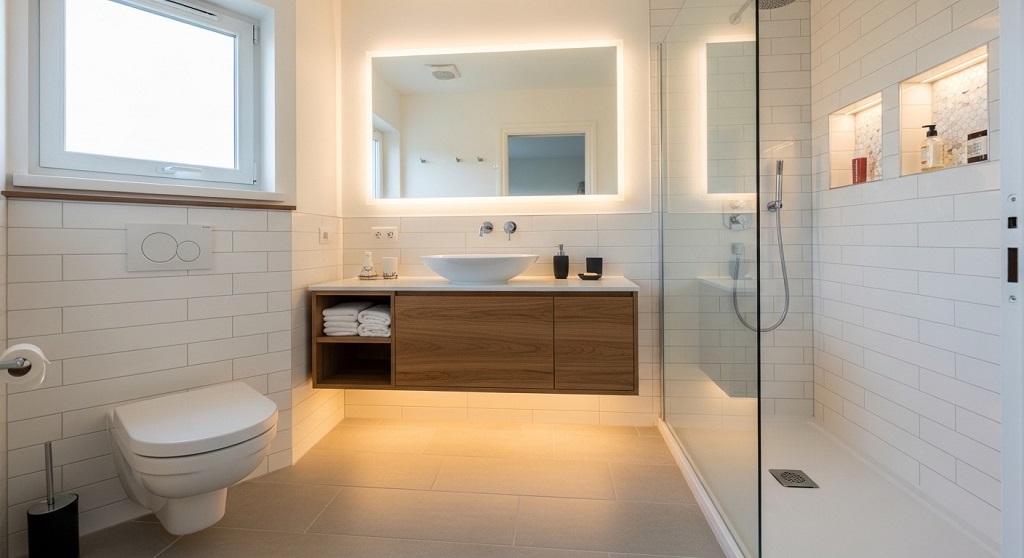
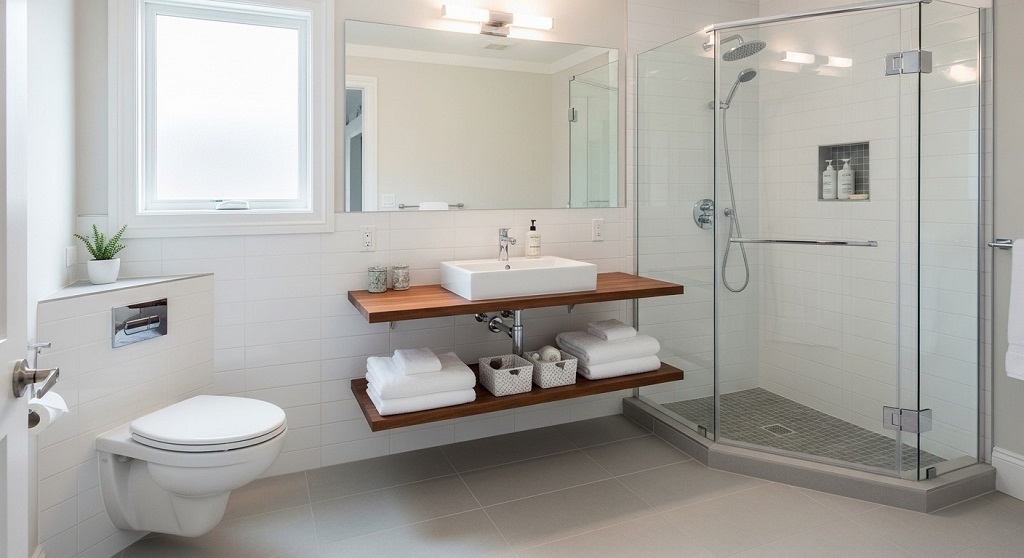
- Replacing a tub with a walk-in shower
- Installing wall-mounted toilets and sinks
- Switching swing doors to pocket or sliding doors
A 2023 Houzz bathroom study found that 71% of small bathroom remodels stayed within the original footprint but still improved usability and storage.
Which layout works best when remodeling a small bathroom?
Short answer: One-wall and galley layouts perform best in tight bathrooms.
Layout dictates everything. For bathrooms under 40 square feet, compact layouts reduce wasted movement.
| Layout Type | Best Use Case | Why It Works |
|---|---|---|
| One-wall | Very narrow bathrooms | All fixtures aligned, open walking zone |
| Galley | Long rectangular spaces | Balanced access on both sides |
| Corner layout | Square bathrooms | Opens central movement area |
Bathroom remodeling professionals prioritize layouts that protect at least 30 inches of clear walkway space. That single rule dramatically improves comfort.
How does replacing a bathtub with a shower maximize space?
Short answer: Showers use less depth and free up floor area.
Standard tubs require about 30–32 inches of depth. A walk-in shower can function in 24 inches. That 6–8 inch difference often allows room for storage or better circulation.
Data from Remodeling Magazine shows tub-to-shower conversions are among the top three space-saving bathroom remodeling upgrades.
Glass shower panels also improve visual space by allowing light to pass through, reducing the boxed-in feeling common in small bathrooms.
What vanity size works best in small bathroom remodeling?
Short answer: A 18–24 inch floating vanity balances storage and movement.
Oversized vanities are one of the most common mistakes. Smaller, wall-mounted units create visible floor space, which makes the bathroom feel larger.
Benefits of floating vanities:
- Improved floor visibility
- Easier cleaning
- Modern, open appearance
Case data from NKBA shows floating vanities improve perceived space by up to 15% in bathrooms under 50 square feet.
How can vertical storage improve bathroom remodeling results?
Short answer: Vertical storage adds capacity without reducing floor space.
Small bathrooms fail when storage competes with movement. Vertical solutions solve this.
Effective vertical storage ideas include:
- Recessed medicine cabinets
- Over-toilet shelving
- Tall, narrow cabinets
Recessed units are especially effective because they use wall cavities instead of floor space.
What lighting choices make a small bathroom feel larger?
Short answer: Layered lighting with mirrors expands perceived space.
Lighting is not decoration. It’s a space tool. Poor lighting compresses a room visually.
Effective lighting layers include:
- Overhead LED lighting (general)
- Vanity lighting (task)
- Mirror-integrated lighting (accent)
LED lighting uses less energy and allows brighter output without heat buildup—important in small spaces.
How do mirrors contribute to small bathroom remodeling success?
Short answer: Large mirrors reflect light and visually double space.
A mirror spanning the width of the vanity creates depth. Frameless mirrors work best because they reduce visual breaks.
Design case studies show bathrooms with wall-to-wall mirrors are perceived as 20–25% larger by users.
Which materials are best for bathroom remodeling in small spaces?
Short answer: Light-colored, low-grout materials reduce visual clutter.
Busy patterns shrink a space visually. Large-format tiles reduce grout lines, which simplifies the look.
Recommended materials:
- Large porcelain tiles
- Gloss or satin finishes
- Neutral color palettes
Consistency across floors and walls also helps the space feel unified.
How much does it cost to remodel a small bathroom?
Short answer: Most small bathroom remodels cost between $6,500 and $15,000.
| Upgrade Type | Average Cost |
|---|---|
| Basic refresh | $6,500–$9,000 |
| Mid-range remodel | $10,000–$15,000 |
| High-end compact remodel | $18,000+ |
According to Remodeling Magazine’s Cost vs. Value Report, bathroom remodeling returns around 60–70% of investment at resale.
What mistakes should you avoid when remodeling a small bathroom?
Short answer: Oversizing fixtures and ignoring storage planning.
- Choosing style over function
- Skipping ventilation upgrades
- Ignoring clearance codes
Every inch matters. Mistakes compound fast in small spaces.
Is remodeling a small bathroom worth it?
Yes—when done strategically. Bathroom remodeling in small spaces is not about luxury. It’s about efficiency, comfort, and long-term value.
By fixing layout problems, using compact fixtures, and maximizing vertical storage, you can transform a frustrating bathroom into a functional one. Real-world data shows that even modest remodels improve daily usability and resale appeal.
If your bathroom feels tight, outdated, or inefficient, the problem is not the size. It’s the design.
Call to Action: Start your small bathroom remodel with a layout review today. Measure your space, list daily pain points, and consult a professional if needed. A smarter bathroom starts with smarter planning.
FAQs About Small Bathroom Remodeling
How long does it take to remodel a small bathroom?
Most small bathroom remodels take 2–4 weeks, depending on material availability and plumbing changes.
Can bathroom remodeling increase home value?
Yes. Studies show bathroom remodeling increases resale value by up to 70% of the project cost.
What is the best shower size for a small bathroom?
A 36×36 inch shower is ideal for balancing comfort and space efficiency.
Should I hire a contractor or DIY a small bathroom remodel?
DIY works for cosmetic updates. Full bathroom remodeling should involve licensed professionals.
What ventilation is best for small bathrooms?
An exhaust fan rated for the bathroom’s square footage prevents moisture and mold.
Is a floating vanity better than a traditional vanity?
Yes. Floating vanities improve visual space and ease of cleaning.
Related Topics: How to Build the Best Baby Gear Checklist: Featuring Jool Baby Nova Nature
Related Topics: Top Reasons WhiteFang 31 is One of the Best Beginner Skateboards
