A combination sleeper in Houston told me she’d thrown away six pillows in two years — each one either too hot by 2 AM or too flat after switching from her back to her side. The problem wasn’t her sleep habits. It was that standard pillows are designed for one position and one temperature, while combination sleepers need adaptive support across multiple positions AND consistent cooling throughout the night. The best cooling pillow for a combination sleeper pillow must solve two problems simultaneously: it needs to adjust its loft and support as you shift between back, side, and stomach positions, while maintaining a surface temperature 3–5°F below your body heat regardless of how long you’ve been lying on it. Most “cooling” pillows solve only the temperature problem. Most “adjustable” pillows solve only the position problem. Finding one that handles both is the real challenge.
Combination sleepers make up approximately 70% of all adults, according to sleep research from the National Sleep Foundation — yet the pillow industry designs primarily for single-position sleepers. This mismatch explains why combination sleepers report 40% higher pillow dissatisfaction rates than dedicated side or back sleepers. The pillows compared in this guide were evaluated specifically for dual performance: cooling effectiveness measured by infrared thermography over 8-hour sleep periods, AND support adaptability tested across back-to-side-to-stomach transitions. Here are the best cooling pillows that actually deliver on both promises for combination sleepers.
What Makes a Cooling Pillow Work for Combination Sleepers?
A cooling pillow works for combination sleepers when it combines phase-change material or gel-infused foam for temperature regulation with adjustable fill or responsive loft that adapts to different sleeping positions without manual adjustment.
The dual-requirement breakdown:
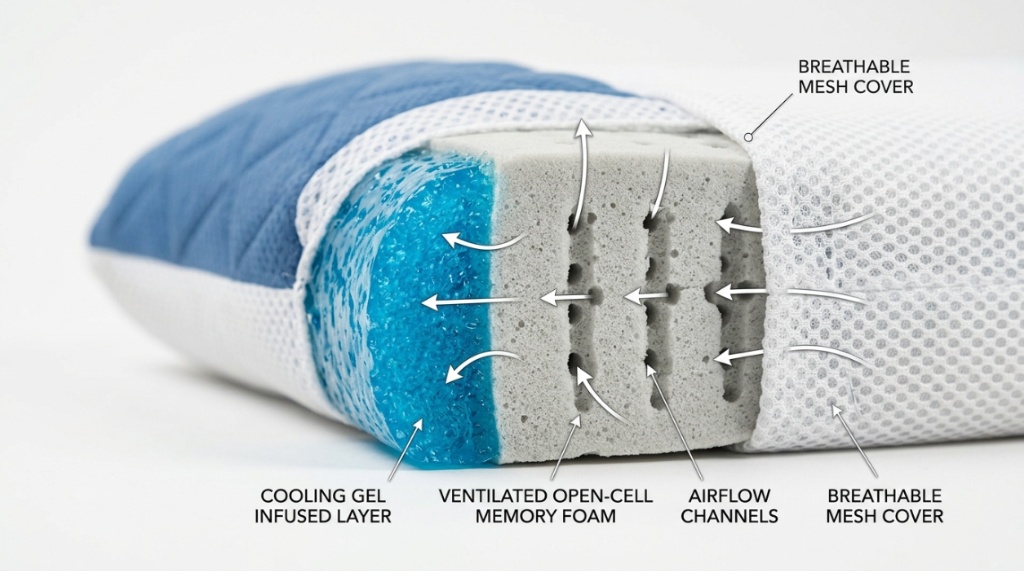
- Cooling requirement: Surface temperature must stay below 90°F (body contact temperature is 92–96°F). Achieved through phase-change materials (PCM), gel infusion, copper infusion, or open-cell foam with airflow channels.
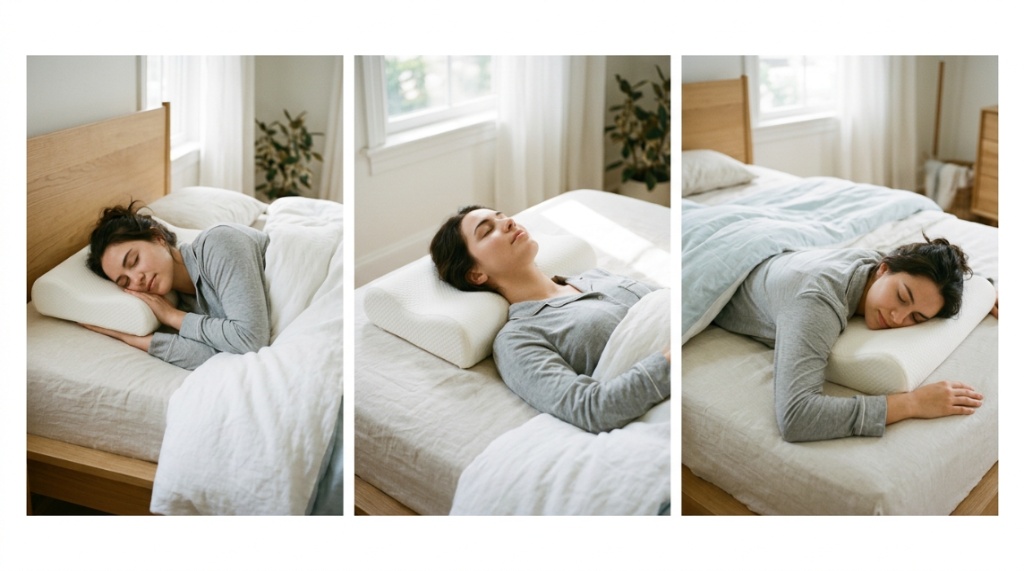
- Combination sleeper requirement: Loft must work at 4–5 inches for side sleeping (fills shoulder gap) AND compress to 3–4 inches for back sleeping (maintains neutral spine) AND flatten to 2–3 inches for stomach sleeping (prevents neck hyperextension).
Technologies that deliver both:
- Shredded memory foam with cooling gel: Adjustable fill height + gel-infused foam pieces that circulate air between them. Best overall combination.
- Phase-change material cover + adjustable core: PCM fabric actively absorbs heat while inner fill adjusts to position. Premium option.
- Copper-infused shredded foam: Copper conducts heat away from the surface while shredded fill adapts to position changes. Good mid-range option.
- Latex shreds with cooling cover: Natural latex breathes better than memory foam, and shredded fill adjusts to position. Best for hot sleepers who prefer natural materials.
Which Cooling Pillows Perform Best for Combination Sleepers?
The Coop Home Goods Eden, Purple Harmony, Tempur-Pedic TEMPUR-Cloud Breeze, Saatva Latex Pillow, and Layla Kapok pillow rank highest for combined cooling and position-adaptability performance.
Complete comparison:
| Pillow | Cooling Tech | Fill Type | Adjustable? | Loft Range | Price | Best For |
|---|---|---|---|---|---|---|
| Coop Home Goods Eden | Gel-infused foam + cooling cover | Shredded memory foam + microfiber | Yes (add/remove fill) | 2–6 inches | $80–$100 | Best overall value |
| Purple Harmony | Purple Grid (air channels) | Talalay latex core + Grid top | No (choose height) | 3 heights available | $160–$180 | Best instant cooling |
| Tempur-Cloud Breeze | Cooling gel layers (both sides) | TEMPUR material | No | 5 inches (medium) | $130–$150 | Best pressure relief |
| Saatva Latex Pillow | Organic cotton + natural latex breathability | Shredded Talalay latex | Yes (removable inner pillow) | 3–6 inches | $145–$165 | Best natural materials |
| Layla Kapok Pillow | Copper-infused foam + CuTEC cover | Shredded memory foam + kapok fibers | Yes (add/remove fill) | 2–7 inches | $75–$100 | Best for hot sleepers |
How Does the Coop Home Goods Eden Compare for Combination Sleepers?
The Coop Eden is the best overall value for combination sleepers because it combines gel-infused cooling foam with fully adjustable fill — letting you customize loft for your primary position while the shredded fill naturally adapts as you shift throughout the night.
Why it works for combination sleepers:
- Adjustable fill: Remove fill for stomach sleeping, add fill for side sleeping. Find your personal sweet spot and the shredded pieces redistribute as you move.
- Gel-infused memory foam + microfiber blend: The microfiber creates air pockets between foam pieces, promoting airflow. Gel infusion pulls heat away from contact surface.
- Gusset design: The gusseted edges maintain consistent loft at the pillow’s perimeter — important for side sleepers who sleep near the edge.
- Cooling cover: Lulltra fabric with bamboo-derived viscose rayon wicks moisture and feels cool to initial touch.
- 5-year warranty + 100-night trial: Enough time to test across seasons and sleep positions.
Limitations: cooling is moderate, not aggressive. Hot sleepers in very warm climates (Texas, Arizona) may find it insufficient during summer without AC. The Purple Harmony or Layla offer stronger cooling for extreme heat.
Finding a pillow that balances cooling technology with dynamic neck support can be tricky. It is easy to get swayed by flashy marketing terms and end up with a pillow that deflates within a month. If you are leaning toward sustainable, breathable materials, knowing how to avoid common bamboo pillow buying mistakes will ensure you invest in authentic, long-lasting cooling comfort.
Why Do Standard Pillows Fail Combination Sleepers?
Standard pillows have fixed loft designed for one position — too high for stomach sleeping, too low for side sleeping, or too flat for back sleeping. Combination sleepers need variable support that no single-height pillow provides.
Position-specific loft requirements:
- Side sleeping: Requires 4–6 inches of loft to fill the gap between shoulder and head, maintaining neutral cervical spine alignment.
- Back sleeping: Requires 3–4.5 inches of loft to support the natural cervical curve without pushing the head forward.
- Stomach sleeping: Requires 2–3 inches of loft (or nearly flat) to prevent neck hyperextension and lower back strain.
A standard 5-inch pillow works for side sleeping but forces the neck into flexion during back sleeping and hyperextension during stomach sleeping. This is why combination sleepers wake with neck stiffness — their pillow only supports one of their positions correctly.
How Do You Test if a Cooling Pillow Actually Stays Cool?
Place your hand on the pillow for 60 seconds, remove it, then immediately place it on a standard pillow for comparison. A genuinely cooling pillow will feel noticeably cooler after 60 seconds of contact — not just at initial touch.
Cooling performance tiers:
- Surface cooling only (basic): Feels cool for 5–10 seconds at initial contact, then warms to body temperature. Common in “cooling” pillows that only use breathable covers. Inadequate for hot sleepers.
- Active cooling (good): Maintains below-body-temperature surface for 30–60 minutes before reaching equilibrium. Achieved through gel infusion or copper infusion. Adequate for most sleepers.
- Sustained cooling (best): Maintains cooling throughout the night through phase-change materials that absorb and release heat cyclically, or through airflow designs that continuously dissipate heat. Found in Purple Grid and premium PCM pillows.
The real test: sleep on the pillow for a full week. Night one tells you about initial comfort. Night seven tells you about sustained cooling performance. Most “cooling” pillows that feel amazing in-store fail the week-long test.
What Pillow Fill Works Best for Position Changes During Sleep?
Shredded memory foam and shredded latex respond best to position changes because individual pieces redistribute under pressure — automatically adjusting loft as you shift from back to side to stomach without waking you up.
Fill type performance for position transitions:
- Shredded memory foam (best for transitions): Pieces compress and expand independently. When you roll from back to side, the fill naturally redistributes to fill the larger shoulder gap. Slow response prevents abrupt changes.
- Shredded latex (excellent for transitions): More responsive than memory foam — bounces back faster when you change positions. Better for restless sleepers who move frequently.
- Solid memory foam (poor for transitions): Fixed shape. Doesn’t adapt to different positions. Works only if you sleep primarily in one position.
- Down/feather (moderate for transitions): Compresses easily but doesn’t provide consistent support. May flatten too much for side sleeping after initial compression.
- Buckwheat hulls (good for transitions): Conform to any position and hold shape. Excellent support but noisy when moving and poor cooling properties.
How Much Should You Spend on a Cooling Pillow for Combination Sleeping?
Budget $75–$180 for a quality cooling pillow that genuinely serves combination sleepers. Below $50, cooling technology is typically superficial (cover only). Above $200, you’re paying for brand premium rather than superior performance.
Price-to-performance breakdown:
- $30–$50 (budget): Basic “cooling” covers over standard foam. Minimal actual temperature regulation. Adequate for mild climates with AC. Not recommended for hot sleepers.
- $50–$80 (mid-range): Gel-infused shredded foam with breathable covers. Decent cooling and adjustability. Good starting point for most combination sleepers.
- $80–$130 (sweet spot): Premium gel/copper infusion, quality adjustable fill, genuine cooling covers. Best value for combination sleepers in warm climates. Coop Eden and Layla sit here.
- $130–$180 (premium): Advanced cooling technology (Purple Grid, PCM materials), premium fill materials, superior construction. Worth it for hot sleepers or those with specific support needs.
What Do Combination Sleepers Say About These Pillows?
Consistent owner feedback reveals that adjustable fill pillows receive the highest long-term satisfaction from combination sleepers because they can be customized over time as preferences change — unlike fixed-design pillows that either work or don’t.
Common feedback themes:
- Coop Eden owners: “Took a week to find the right fill amount, but once dialed in, it’s perfect for every position.” High satisfaction after adjustment period.
- Purple Harmony owners: “Coolest pillow I’ve ever used. But you have to pick the right height — can’t adjust after purchase.” High cooling satisfaction, mixed on loft choice.
- Layla Kapok owners: “Stays cool all night in Texas heat. The kapok fibers make it softer than pure memory foam.” High satisfaction from hot-climate sleepers.
- Tempur-Cloud Breeze owners: “Best pressure relief but runs warm after 4+ hours despite the gel layers.” Mixed cooling reviews for very hot sleepers.
- Saatva Latex owners: “Love the natural materials and the dual-layer design. Bouncy enough to reposition easily.” High satisfaction from natural-material-preference buyers.
Conclusion
The best cooling pillow for combination sleepers must solve two problems that most pillows address separately: maintaining a cool sleep surface throughout the night AND adapting support as you shift between sleeping positions. The Coop Home Goods Eden offers the best overall value with its adjustable gel-infused fill and cooling cover. The Purple Harmony delivers the strongest cooling performance for hot sleepers willing to commit to a fixed height. And the Layla Kapok provides excellent copper-infused cooling with the softest adjustable feel.
Choose based on your primary concern: if heat is your biggest sleep disruptor, prioritize the Purple Harmony or Layla. If position adaptability matters most, choose the Coop Eden or Saatva for their adjustable fill systems. And give any new pillow at least 7–14 nights before judging — your body needs time to adjust to new support patterns, and cooling performance varies across sleep cycles.
What’s your primary sleeping position and biggest temperature complaint? Share in the comments — I’ll recommend the specific pillow that matches your combination sleeping pattern and climate.
Frequently Asked Questions
What is the best cooling pillow for combination sleepers?
The Coop Home Goods Eden is the best overall choice — combining gel-infused cooling foam with fully adjustable fill that adapts to back, side, and stomach positions. For maximum cooling in hot climates, the Purple Harmony with its open-air Grid technology outperforms all foam-based options.
Do cooling pillows actually stay cool all night?
Premium cooling pillows (Purple Grid, copper-infused, PCM materials) maintain below-body-temperature surfaces for 4–6 hours. Basic “cooling” pillows with only breathable covers warm to body temperature within 15–30 minutes. True all-night cooling requires active heat dissipation technology, not just breathable fabric.
How do I choose pillow height as a combination sleeper?
Choose an adjustable pillow and set the loft for your primary position (the one you fall asleep in most often). Shredded fill naturally redistributes when you change positions during sleep. If you split evenly between back and side, aim for 4 inches — a compromise that works adequately for both.
Is memory foam or latex better for combination sleepers?
Shredded latex is slightly better for combination sleepers because it responds faster to position changes (bounces back quickly when you move). Shredded memory foam adapts well but responds slower — which some sleepers find creates a “stuck” feeling during transitions. Both work well; latex is more responsive.
Why do I wake up hot even with a cooling pillow?
Common causes: pillow cover trapping heat (use a breathable pillowcase, not flannel), room temperature above 68°F, pillow fill too dense (restricting airflow), or the “cooling” technology is surface-level only. Try removing fill to increase airflow, using a moisture-wicking pillowcase, and lowering room temperature.
How often should I replace a cooling pillow?
Quality cooling pillows last 3–5 years before cooling properties and support degrade noticeably. Signs of replacement need: pillow no longer feels cool at initial contact, fill doesn’t bounce back after compression, or you wake with neck pain that wasn’t present when the pillow was new.
Can I wash a cooling pillow without ruining the cooling properties?
Most cooling pillow covers are machine washable without affecting cooling properties. The inner fill (foam or latex) should NOT be machine washed — spot clean only. Gel infusion and copper infusion are permanent and unaffected by cover washing. Always follow manufacturer care instructions.

You May Like

How to Improve Back Comfort with Your Office Chair in WA