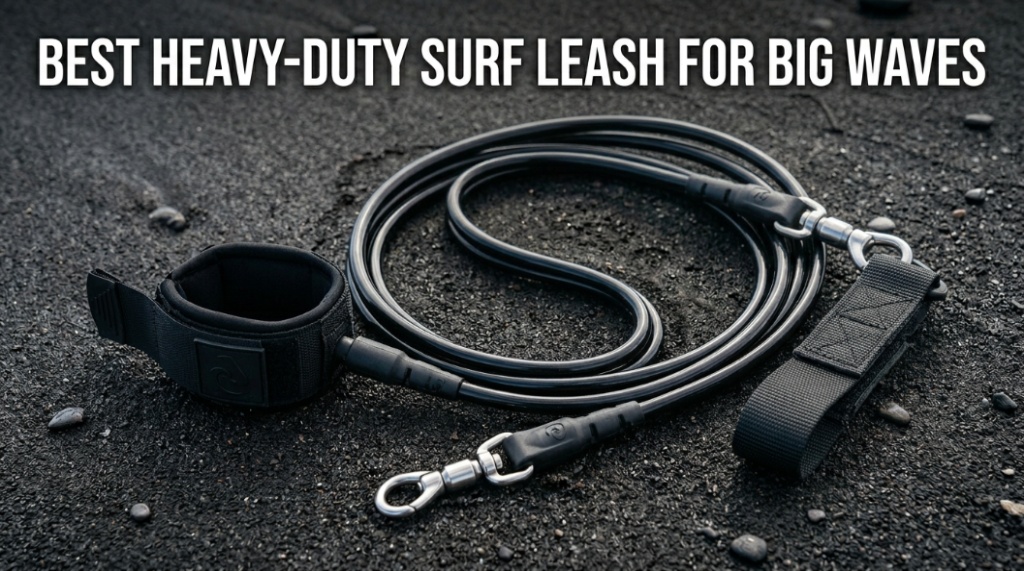
If you surf overhead waves, a standard leash is not enough. A heavy-duty surf leash is designed to handle the extreme force, hold-downs, and board pull that come with powerful surf. The best big wave leash combines thicker urethane cords, reinforced ankle cuffs, strong swivels, and reliable rail savers to prevent dangerous breakage when conditions get serious.
What Is a Heavy-Duty Surf Leash and Why Does It Matter in Big Waves?
A heavy-duty surf leash is a reinforced surfboard leash built specifically for powerful surf, larger boards, and high-impact wipeouts. It uses thicker materials and stronger connection points than a regular leash.
In small waves, a lightweight leash may work fine. But once waves move into overhead territory, the stress placed on your leash increases dramatically. A broken leash in heavy surf can leave you swimming long distances, taking multiple hold-downs, or losing your board into crowded lineups.
According to surf injury studies published through sports medicine and ocean safety research, leash failure is one of the most common equipment problems during heavy surf sessions. Big wave surfers often treat their leash as critical safety gear rather than a simple accessory.
A durable surfboard leash reduces:
- Risk of leash snapping during wipeouts
- Board loss in strong currents
- Danger to nearby surfers
- Excessive drag during paddle-outs
- Stress on ankle cuffs and rail savers
For surfers riding reef breaks, point breaks, or winter swell conditions, investing in a reliable big wave leash is often more important than upgrading fins or wax.
What Features Make the Best Big Wave Leash More Durable?
The best heavy-duty surf leash uses thicker urethane cords, marine-grade swivels, reinforced cuffs, and strong rail savers to survive extreme wave force.
Not all leashes are built equally. Many entry-level models are designed for waist-high surf and casual sessions. Heavy surf demands specialized construction.
Why Does Cord Thickness Matter in a Durable Surfboard Leash?
Thicker leash cords handle more tension and reduce snapping risk in powerful surf.
Most standard surf leashes use cords around 5mm to 6mm thick. Heavy-duty surf leash models often use:
- 7mm cords for overhead surf
- 8mm cords for double overhead waves
- Specialized comp-plus-big-wave hybrids for reduced drag with added strength
Thicker cords stretch less aggressively and absorb shock better during violent wipeouts.
Why Are Swivels Important in Big Wave Surfing?
High-quality swivels prevent tangling and reduce pressure on the cord during heavy turbulence.
Double stainless-steel swivels are preferred for big wave conditions because they:
- Reduce leash twisting
- Prevent weak stress points
- Increase mobility during turns
- Improve overall leash lifespan
Cheap swivels are often the first component to fail under pressure.
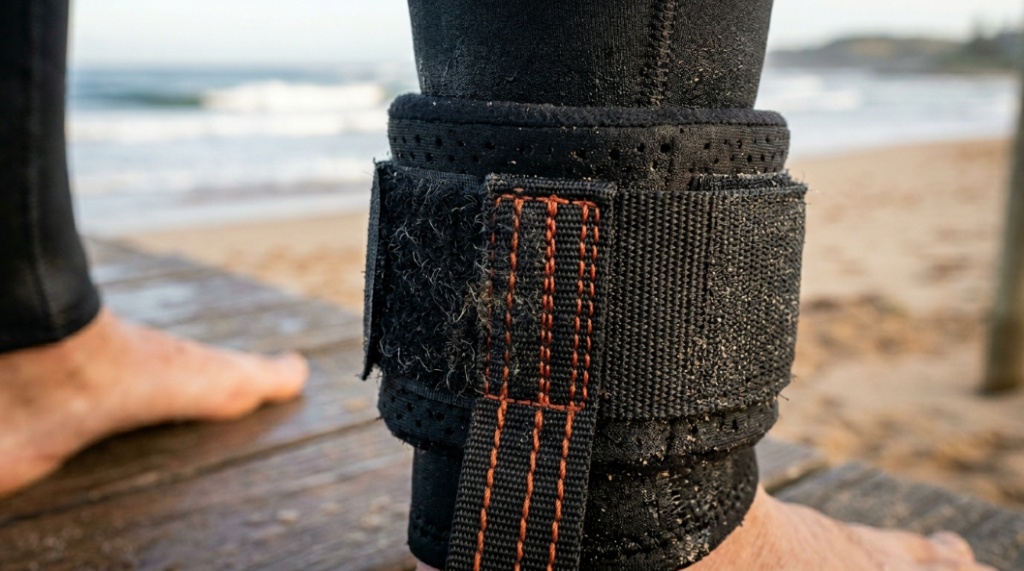
What Makes an Ankle Cuff Reliable?
A reliable ankle cuff stays secure without cutting circulation or slipping during hold-downs.
Look for:
- Neoprene padding
- Wide Velcro fastening systems
- Reinforced stitching
- Quick-release tabs
Some big wave surfers prefer calf leashes for guns and tow boards because they reduce drag and improve mobility while paddling.
How Do You Choose the Right Heavy-Duty Surf Leash Length?
The ideal leash length usually matches the length of your surfboard or is slightly longer for heavy surf conditions.
Leash length affects safety, recoil, and board control.
| Board Type | Recommended Leash Length | Wave Size |
|---|---|---|
| Shortboard | 6′ – 7′ | Chest-high to overhead |
| Step-Up Board | 7′ – 8′ | Overhead to double overhead |
| Gun | 8′ – 10′ | Big wave surfing |
| Tow Board | Specialized calf leash | Extreme surf |
A leash that is too short increases recoil risk. A leash that is too long creates drag and tangling.
Should Your Leash Be Longer Than Your Board?
In big waves, many surfers choose a leash slightly longer than the board for added safety and reduced snap-back risk.
For example:
- 7’6″ board → 8′ leash
- 8’0″ gun → 9′ leash
This extra length creates more distance between surfer and board during violent wipeouts.
What Is the Difference Between a Standard Leash and a Big Wave Leash?
A big wave leash is thicker, stronger, and built to handle significantly more force than a regular surf leash.
Many surfers underestimate how different heavy surf equipment actually is.
| Feature | Standard Surf Leash | Heavy-Duty Big Wave Leash |
|---|---|---|
| Cord Thickness | 5mm – 6mm | 7mm – 8mm+ |
| Wave Conditions | Small to medium surf | Overhead to XXL surf |
| Swivels | Basic | Marine-grade double swivels |
| Ankle Support | Lightweight cuff | Reinforced padded cuff |
| Stretch Resistance | Moderate | High tension resistance |
| Durability | Average | Extreme impact durability |
Heavy-duty surf leashes also tend to use premium molded connection points to prevent tearing around the rail saver area.
Which Surf Conditions Require a Durable Surfboard Leash?
Any surf condition with strong currents, heavy lip impact, reef breaks, or overhead waves requires a more durable surfboard leash.
Wave power matters more than wave height alone.
Do Reef Breaks Need Stronger Leashes?
Yes. Reef breaks increase the risk of leash abrasion and violent wipeouts.
Sharp coral and shallow reef sections can quickly damage standard urethane cords. Heavy-duty models are better equipped for:
- Pipeline-style reef breaks
- Indo reef trips
- Volcanic rock breaks
- Heavy slab waves
Are Point Breaks Easier on Leashes?
Not always. Long paddle-outs and powerful winter swell conditions can still create huge leash tension.
Popular big-wave point breaks generate enormous board pull during cleanup sets.
How Often Should You Replace a Heavy-Duty Surf Leash?
Most heavy-duty surf leashes should be replaced every 6–12 months if surfed regularly in powerful conditions.
Even premium leashes wear down over time due to:
- UV exposure
- Saltwater corrosion
- Cord stretching
- Velcro weakening
- Swivel fatigue
Professional surfers often replace leashes more frequently before major swell events.
What Are the Warning Signs of Leash Failure?
Visible wear usually appears before a leash snaps.
Watch for:
- Cloudy or yellowed urethane
- Cracks near swivels
- Loose rail saver stitching
- Weak Velcro grip
- Flattened cord sections
If you notice any of these problems, replace the leash immediately.
What Leash Thickness Works Best for Different Wave Sizes?
Leash thickness should increase with wave power and board size.
Choosing the wrong thickness is one of the most common equipment mistakes among progressing surfers.
| Wave Size | Recommended Thickness | Best Use |
|---|---|---|
| Waist to chest high | 5mm | Performance surfing |
| Head-high to overhead | 6mm – 7mm | Daily surf |
| Double overhead | 7mm – 8mm | Heavy surf |
| Big wave guns | 8mm+ | Extreme surf conditions |
Thicker cords create slightly more drag but dramatically improve reliability.
Can a Big Wave Leash Improve Surf Safety?
Yes. A heavy-duty surf leash significantly improves safety by reducing board separation and minimizing dangerous swims.
In large surf, losing your board creates multiple risks:
- Long hold-downs
- Exhaustion during swim-ins
- Collision danger for other surfers
- Board damage on rocks or reef
Ocean safety instructors often recommend upgrading leash quality before attempting bigger surf.
Why Do Big Wave Surfers Use Backup Safety Systems?
In extremely large surf, some surfers use dual leash systems or inflatable flotation vests for added safety.
At breaks like:
- Peʻahi (Jaws)
- Nazaré
- Mavericks
- Teahupoʻo
equipment reliability becomes critical survival gear.
What Materials Are Used in Modern Durable Surfboard Leashes?
Modern heavy-duty surf leashes use premium urethane, stainless steel, neoprene, and reinforced webbing materials.
Each component affects durability differently.
Why Is Urethane Common in Surf Leashes?
Urethane provides the best balance of flexibility, stretch, and strength in saltwater conditions.
Premium urethane formulas improve:
- Tensile strength
- UV resistance
- Elastic memory
- Cold-water performance
Why Does Stainless Steel Matter?
Marine-grade stainless steel resists corrosion and maintains swivel performance in harsh saltwater environments.
Inferior metal components corrode quickly and become failure points.
How Can You Make Your Heavy-Duty Surf Leash Last Longer?
Proper maintenance can dramatically extend the lifespan of a durable surfboard leash.
Many surfers destroy expensive leashes through poor storage habits.
What Is the Best Way to Store a Surf Leash?
Store your leash out of direct sunlight and rinse it with fresh water after every session.
Simple maintenance steps include:
- Rinse saltwater after use
- Avoid leaving it in hot cars
- Keep Velcro clean
- Check swivels regularly
- Do not wrap tightly around fins
Heat and UV exposure are major causes of urethane degradation.
Can Sand Damage Your Surf Leash?
Yes. Sand inside swivel joints and Velcro reduces performance over time.
Cleaning your leash after beach sessions helps maintain smooth swivel movement.
Which Surfers Need a Heavy-Duty Surf Leash Most?
Intermediate and advanced surfers riding overhead surf benefit the most from heavy-duty surf leashes.
However, skill level alone is not the deciding factor.
You should strongly consider a big wave leash if you:
- Surf reef breaks regularly
- Ride step-up boards or guns
- Surf winter swell destinations
- Weigh more than average
- Surf crowded heavy lineups
- Travel for surf trips with unpredictable conditions
Even experienced surfers sometimes underestimate how quickly leash failure can escalate into a dangerous situation.

Are Expensive Big Wave Leashes Worth It?
Yes. Premium heavy-duty surf leashes often last longer and perform more reliably in serious surf conditions.
The price difference between budget and premium models is small compared to:
- The cost of surfboards
- Travel expenses
- Medical risk
- Lost water time
Many high-end surf leashes undergo extensive tension testing and use stronger materials throughout the entire construction process.
For surfers chasing bigger waves, reliability matters more than saving a few dollars.
Conclusion: What Is the Best Heavy-Duty Surf Leash for Big Waves?
The best heavy-duty surf leash is one that matches your board size, wave conditions, and surfing style while delivering consistent reliability under pressure. In powerful surf, your leash becomes essential safety equipment—not just an accessory.
A quality durable surfboard leash should include thick urethane construction, corrosion-resistant swivels, reinforced cuffs, and reliable rail savers. Choosing the correct length and thickness matters just as much as buying a premium model.
If you regularly surf overhead waves, reef breaks, or winter swell conditions, upgrading to a proper big wave leash is one of the smartest equipment decisions you can make. It improves safety, protects your board, and reduces the risk of dangerous leash failure during critical moments.
Before your next heavy surf session, inspect your current leash carefully. Replacing a worn leash costs far less than dealing with a snapped cord in serious conditions.
Invest in durability before you paddle out.
FAQ: Heavy-Duty Surf Leash Questions Answered
What size heavy-duty surf leash should I use?
Use a leash that matches your board length or is slightly longer. For big waves, many surfers add an extra foot for reduced recoil and better safety.
Can I use a regular leash in overhead waves?
You can, but it increases the risk of snapping during heavy wipeouts. A dedicated big wave leash is designed specifically for higher tension and stronger surf impact.
What thickness leash is best for big waves?
Most surfers use 7mm to 8mm leash cords for overhead to double overhead surf. Larger waves and heavier boards may require even thicker specialized leashes.
How long does a durable surfboard leash last?
With regular heavy use, most surf leashes last around 6–12 months. Sun exposure, saltwater, and repeated tension gradually weaken the materials.
Should beginners buy a heavy-duty surf leash?
Beginners surfing small waves usually do not need one. However, surfers progressing into larger conditions should upgrade before surfing powerful overhead waves.
Why do surf leashes snap?
Surf leashes usually fail due to worn urethane, damaged swivels, weak rail savers, UV degradation, or extreme tension from heavy wipeouts.
Is a calf leash better for big waves?
Many big wave surfers prefer calf leashes because they reduce drag and improve movement while paddling larger boards or guns.
SEO-Optimized ALT Texts
- Heavy-duty surf leash attached to a big wave surfboard on the beach
- Durable surfboard leash with thick urethane cord for overhead waves
- Big wave surfer using reinforced surf leash in powerful ocean conditions
📌 Related Reads
Discover: How to Discover Top Budget Perfumes Trending Right Now
Explore: Small business packaging ideas

You May Like
How to Choose the Best Foldable Beach Wagon in Florida