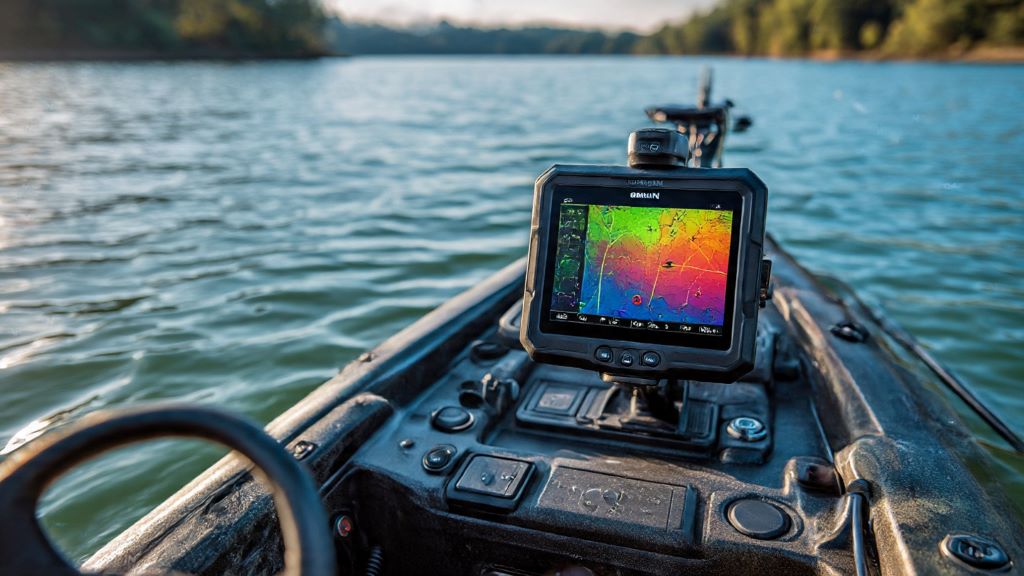
Kayak fishing continues to grow rapidly among anglers who want access to remote fishing spots without the expense of a full-size boat. Modern kayak anglers demand the same advanced electronics as traditional boaters, and Garmin has responded with an impressive lineup of compact, powerful fish finders designed specifically for kayak use. Whether you’re a tournament angler or weekend warrior, the right fish finder can transform your fishing experience. According to Crazy Fishing Gear, having quality electronics on your kayak is now essential for consistent success on the water.
The 2025 season brings exciting updates to Garmin’s kayak-focused lineup. These units combine portability with professional-grade features that were once available only on large boats. Additionally, these fish finders are built to withstand the harsh conditions of kayak cockpits while maintaining exceptional performance.
For kayakers looking to invest in quality electronics, Garmin fish finders 2025 models include the ECHOMAP UHD2 series, which was released in winter 2024 and offers solid performance. These units provide the perfect balance of features, size, and price for serious kayak anglers.
Why Garmin Dominates the Kayak Fish Finder Market
Garmin has established itself as the leader in kayak fish finder technology through continuous innovation and attention to detail. Their units offer several key advantages that make them ideal for kayak applications.
Garmin combines sonar, navigation, and user-friendly design into one powerful package. Their ClearVü and SideVü sonar technologies provide high-resolution images of structure and fish that rival units costing twice as much. Furthermore, the company’s reputation for durability means these units can handle constant exposure to water, sun, and rough handling.
The ECHOMAP UHD2 fishfinders feature user-friendly keyed assist touchscreen displays that are easy to read with vivid high-contrast sonar color palettes. This combination of touchscreen and physical buttons proves invaluable when wearing gloves or dealing with wet hands on the water.
Battery efficiency represents another crucial factor for kayak anglers. Unlike boat-mounted units with unlimited power, kayak fish finders must run on portable batteries. Consequently, power consumption becomes a critical specification when selecting equipment.
ECHOMAP UHD2 Series: The Flagship for Kayak Anglers
The ECHOMAP UHD2 series represents Garmin’s latest advancement in kayak-friendly fish finding technology. These units pack premium features into compact packages designed specifically for space-limited applications.
The ECHOMAP UHD2 series offers anglers premium features like Ultra High-Definition sonar, preloaded Garmin Navionics+ mapping with an included one-year subscription to daily map updates, and wireless networking for data sharing. Moreover, these chartplotters support Garmin’s award-winning LiveScope live-scanning sonar for anglers who demand the ultimate in fish-finding capability.
Available with a 6-inch, 7-inch or 9-inch bright, sunlight-readable touchscreen display with keyed assist, anglers can easily control and operate the functions they depend on for a successful day on the water. The 6-inch and 7-inch models prove particularly popular with kayak anglers due to their compact footprint.
Technical Specifications
The Garmin ECHOMAP UHD2 chartplotter has a display resolution of 1024 x 600 pixels. This high-resolution display ensures crisp, clear imagery even in bright sunlight conditions that plague many cheaper units.
The ECHOMAP UHD2 features built-in sonar including ClearVü, SideVü, and traditional dual frequency CHIRP. These three sonar types work together to provide complete coverage of the water column and surrounding areas. Traditional CHIRP sonar excels at marking fish in the water column, while ClearVü provides photo-like images directly below your kayak. SideVü scans up to hundreds of feet on either side, allowing you to cover vast areas of water efficiently.
The ECHOMAP UHD2 chartplotters are available bundled with an Ultra High-Definition GT54UHD or GT56UHD transducer that provides brilliant ClearVü and SideVü scanning sonar images. These transducers deliver exceptional clarity and target separation that helps distinguish between fish, structure, and bottom composition.
However, one consideration for kayak anglers involves power consumption. The new UHD2 series units use up to 3.5 AMPS, which is significantly higher than previous models. Therefore, kayak anglers need to plan for larger capacity batteries or extended fishing trips may require backup power sources.
STRIKER Series: Budget-Friendly Performance
For anglers seeking excellent performance without breaking the bank, Garmin’s STRIKER series delivers impressive value. These units sacrifice some advanced features but maintain the core capabilities that catch fish.
The Garmin STRIKER 4 is the epitome of portable, affordable fish finders and has been for quite some time. This unit proves ideal for beginners and casual anglers who want reliable fish-finding capability without complexity.
The STRIKER 4 comes in two models with a traditional CHIRP option, including the STRIKER 4 with dual beam transducer, and the STRIKER 4 portable bundle with a cover for ice fishing. This versatility means your investment serves multiple fishing styles throughout the year.
STRIKER Vivid 4cv Upgrades
The STRIKER Vivid series improves upon the classic STRIKER 4 with enhanced color palettes and better image quality. The Striker Vivid 4cv at $199 introduces game-changing color palettes that make fish and structure pop off the screen like never before, with seven color schemes that let you optimize display for different conditions.
The included GT20 transducer combines traditional CHIRP with ClearVü scanning, eliminating the need for expensive upgrades. Additionally, high-sensitivity GPS marks waypoints accurately, which proves crucial for returning to productive fishing spots.
Installation simplicity represents another advantage of STRIKER units. Installation on a kayak takes about 30 minutes, and learning the features and navigating to the different pages takes another 30 minutes or so. Even first-time users find these units intuitive and straightforward.
STRIKER Cast: Ultimate Portability
The STRIKER Cast represents Garmin’s most portable solution for kayak and shore anglers. The STRIKER Cast is a portable, castable sonar device that wirelessly streams sonar to your smartphone or tablet. This innovative approach eliminates the need for mounting hardware and complex installation.
The Striker Cast at $129 works perfectly for kayaks with no installation required. Simply cast the floating sonar pod, and it transmits data wirelessly to your mobile device. However, this convenience comes with some limitations in features and reliability compared to permanently mounted units.
The STRIKER Cast app provides free access to basic mapping features and automatic FishID technology. Nevertheless, the biggest concern is how unreliable it is when the conditions are not perfect. Wind, waves, and distance from the pod can interfere with the wireless signal.
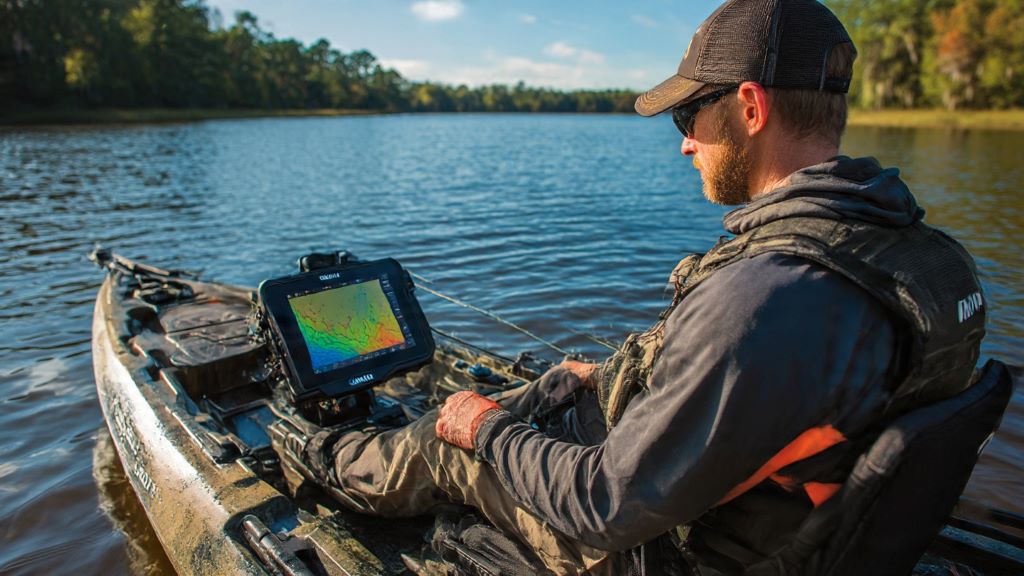
LiveScope Integration for Serious Anglers
Forward-facing sonar has revolutionized fishing, and Garmin’s LiveScope system leads the industry. For kayak tournament anglers and those seeking the ultimate fish-finding capability, LiveScope integration proves worth the investment.
The ECHOMAP Ultra 2 processor combined with a large, bright 12-inch hybrid touchscreen and LiveScope Plus sonar provides an unparalleled ability to hunt down and target individual fish. While 12-inch screens exceed practical size limits for most kayaks, 9-inch units paired with LiveScope offer excellent performance in more compact packages.
The Garmin LiveScope Plus bundle utilizes the ECHOMAP UHD 95sv or 93sv models with excellent 9-inch displays, clear imaging, and intuitive interfaces. The bundle includes mounting hardware, batteries, and everything needed for ice fishing applications, but the components work equally well on kayaks during open water season.
LiveScope provides video-like, real-time imaging up to 200 feet around or beneath your position. This allows anglers to watch fish react to their presentations in real time and adjust techniques accordingly. Moreover, the perspective view helps identify structure, cover, and fish-holding areas before ever making a cast.
Choosing Screen Size for Kayak Applications
Screen size represents one of the most important decisions when selecting a kayak fish finder. Larger screens display more information and prove easier to read, but they consume more space and power.
Because you sit down in a kayak, you are a lot closer to your units which means screen size doesn’t have to be as huge like on the front deck of a bass boat where you are standing and several feet from your units. Most kayak anglers position their fish finders 18 to 30 inches from their seated position.
For kayaks and boats under 16 feet, 4-inch screens work fine, while boats 17-22 feet benefit from 7-inch displays that remain visible from the console. Seven-inch screens represent the sweet spot for most kayak applications, offering excellent readability without excessive space requirements.
Serious anglers will love that the screen is just as easy to see on bright sunny days as it is when it’s overcast. Garmin’s displays feature anti-glare coatings and high brightness levels that maintain visibility in challenging lighting conditions.
Installation and Mounting Considerations
Proper installation ensures optimal performance and longevity from your kayak fish finder. Modern fishing kayaks often include pre-installed mounting points and cable routing channels designed specifically for electronics.
Mount the transducer using a suction cup, arm mount, or in-hull kit, attach the display to a gear track, base plate, or handlebar, and use a portable power source like a 12V sealed battery. Most portable kits include these components and make kayak installation simple even for beginners.
Professional installation costs $200-500 but prevents 70% of common problems, while DIY installation takes 4-6 hours for first-timers. Transducer placement affects everything, as mounting too close to motors creates interference that ruins images. Therefore, careful attention to transducer positioning pays dividends in image quality.
Garmin’s new quick-release brackets represent a significant improvement for kayak anglers. The newly redesigned quick release brackets make it simple to remove the unit from the boat at the end of the day. This security feature prevents theft and allows anglers to store expensive electronics safely when not in use.
Mapping and Navigation Features
Quality mapping transforms fish finders from simple depth sounders into comprehensive fishing tools. Garmin’s mapping solutions provide both preloaded cartography and the ability to create custom maps.
The built-in Garmin Navionics+ U.S. inland mapping or coastal charts feature vibrant colors and a streamlined interface, plus a one-year subscription to daily map updates. These detailed maps show contour lines, depth ranges, and points of interest that help anglers locate productive fishing areas.
Built-in Wi-Fi connectivity pairs with the free all-in-one ActiveCaptain app on your compatible smartphone for access to the OneChart feature, smart notifications, software updates, and Garmin Quickdraw Community data. The ActiveCaptain ecosystem allows anglers to share waypoints, routes, and custom maps with other Garmin users.
Auto Guidance+ technology provides another valuable navigation tool. After selecting departure and arrival points, Auto Guidance+ considers a variety of factors—overhead clearance, chart data, popular routes and desired depth—then creates a suggested route. This feature helps kayak anglers navigate safely through unfamiliar waters and avoid obstacles.
Power Management for Extended Trips
Battery life concerns every kayak angler, as running out of power miles from the launch ramp creates serious problems. Understanding power consumption and planning accordingly ensures electronics perform throughout your fishing day.
STRIKER models offer basic fish finding with GPS marking for under $500, while ECHOMAP units add touchscreens, preloaded maps, and networking capabilities starting at $1,000. However, ECHOMAP displays consume more power due to their brighter screens and more powerful processors.
Lithium batteries provide the best solution for kayak fish finder power needs. They deliver consistent voltage throughout discharge cycles, weigh significantly less than lead-acid batteries, and tolerate deep discharge cycles better. However, they cost more initially than traditional marine batteries.
For full-day fishing trips with power-hungry units like the ECHOMAP UHD2 series, plan for at least 10 amp-hour capacity. LiveScope systems require even larger batteries, typically 20 amp-hours or more, depending on usage patterns. Therefore, serious anglers often carry backup batteries or solar charging solutions.
Durability and Weather Resistance
Kayak fishing exposes electronics to harsh conditions including spray, rain, and occasional submersion. Garmin builds its marine electronics to withstand these challenges.
Most models, including the Garmin STRIKER 4, are IPX7-rated—waterproof up to 1 meter for 30 minutes. This rating ensures the unit survives accidental dunking and operates normally in heavy rain. Additionally, sealed connectors prevent moisture intrusion through cable connections.
The units operate in temperatures from -20° to 55°C (from -4° to 131°F). This wide temperature range means your fish finder functions reliably in both summer heat and winter cold when used for ice fishing.
The housing construction also contributes to longevity. Polycarbonate plastic provides excellent impact resistance while maintaining reasonable weight. Furthermore, the units resist fading and degradation from constant UV exposure.
Comparing Garmin to Competitors
While Garmin dominates the kayak fish finder market, competitors offer viable alternatives worth considering. Understanding the competitive landscape helps anglers make informed decisions.
Humminbird’s HELIX series provides strong competition, particularly for anglers prioritizing down and side imaging. The Humminbird Helix 7-inch units have all the robust features of the big units in a smaller form factor, with preloaded mapping and the ability to add Mega Live system. These units offer comparable performance to Garmin’s ECHOMAP series at similar price points.
Lowrance also competes effectively in the kayak market. The Lowrance Hook Reveal units provide good coverage with their SolarMax displays, and you can get the 5-inch model for around $199. However, these units lack some of the advanced features and mapping capabilities found in Garmin products.
Garmin makes the best units on the market with better images out of the box than Humminbird, according to experienced users who have tested multiple brands. The combination of image quality, reliability, and ecosystem integration gives Garmin an edge for most applications.
Making the Right Choice for Your Needs
Selecting the perfect kayak fish finder requires honest assessment of your fishing style, budget, and technical comfort level. Different anglers have vastly different requirements.
Tournament anglers and serious enthusiasts should strongly consider ECHOMAP UHD2 units with LiveScope integration. The investment pays dividends through increased catch rates and the ability to learn fish behavior more effectively. These systems excel at locating fish in open water and watching their reactions to presentations.
Weekend warriors and casual anglers find excellent value in STRIKER Vivid units. These fish finders provide all the essential capabilities needed to locate fish and structure without overwhelming complexity or expense. The straightforward interface allows you to focus on fishing rather than operating electronics.
Bank and shore anglers should explore the STRIKER Cast as an entry-level option. While limited compared to mounted units, the Cast provides valuable information about depth, structure, and fish location without requiring installation. Additionally, its portability means you can fish anywhere without hauling mounting hardware.
Conclusion
Garmin’s 2025 lineup of kayak-specific fish finders offers something for every angler, from budget-conscious beginners to technology-driven tournament competitors. The ECHOMAP UHD2 series leads the pack with premium features, crystal-clear sonar, and comprehensive mapping that rivals units designed for full-size boats. Meanwhile, the STRIKER series maintains Garmin’s reputation for delivering reliable, affordable fish-finding performance in compact packages.
Key considerations when choosing include screen size appropriate for your kayak’s available space, power consumption relative to your battery capacity, and feature sets that match your fishing style. Professional installation ensures optimal performance, though modern units simplify DIY installation significantly. Additionally, the robust construction and weather resistance of Garmin products ensure years of reliable service in harsh kayak fishing conditions.
The integration of advanced technologies like LiveScope, wireless networking, and premium mapping has transformed kayak fishing from a budget alternative into a legitimate competitive platform. Consequently, kayak anglers now access the same fish-finding capabilities once reserved for expensive bass boats. Whether you’re exploring hidden backwaters or competing in tournaments, the right Garmin fish finder empowers you to find and catch more fish consistently.
Frequently Asked Questions
What is the best Garmin fish finder for kayak fishing in 2025?
The ECHOMAP UHD2 series in 6-inch or 7-inch sizes provides the best combination of features, performance, and kayak-appropriate sizing. These units offer premium sonar, preloaded mapping, and LiveScope compatibility while maintaining compact dimensions. For budget-conscious anglers, the STRIKER Vivid 4cv delivers excellent value with clear imaging and essential features at a fraction of the cost.
How much power do Garmin kayak fish finders consume?
Power consumption varies significantly by model. Basic STRIKER units draw approximately 0.5 to 0.7 amps, allowing all-day operation on small batteries. However, ECHOMAP UHD2 units consume up to 3.5 amps, requiring larger capacity batteries for extended trips. LiveScope systems add substantial power draw, often necessitating 20+ amp-hour batteries for full-day use. Therefore, match your battery capacity to your specific unit and expected usage.
Can I use my Garmin fish finder for ice fishing?
Yes, most Garmin fish finders work excellently for ice fishing. The STRIKER 4 portable bundle specifically includes an ice fishing kit with protective cover and float. Additionally, all units feature built-in flasher modes designed for vertical jigging applications. The wide operating temperature range ensures reliable performance in frigid conditions. Many kayak anglers use the same fish finder year-round by simply moving it between their kayak and ice fishing shelter.
Do I need professional installation for my kayak fish finder?
Professional installation is not required but offers advantages including proper transducer placement, clean cable routing, and interference-free operation. Most kayak anglers successfully complete DIY installations in 4-6 hours using basic tools. Modern fishing kayaks often include pre-drilled mounting points and cable channels that simplify installation. However, professional installation prevents common mistakes that degrade performance and typically costs $200-500.
What transducer should I choose for kayak fishing?
Transducer selection depends on your desired sonar capabilities and fishing style. For general fishing, a traditional CHIRP transducer provides excellent fish-finding performance at the lowest cost. Anglers targeting specific structure should consider ClearVü-capable transducers for detailed bottom imaging. Serious anglers benefit from SideVü transducers that scan hundreds of feet to either side, dramatically increasing the water area covered. Finally, tournament anglers often add LiveScope transducers for real-time forward-facing sonar capabilities.
Related Topics:
Best Sunsets Of Honeymoon In Asia
Seychelles Islands: Journey to Paradise