

Running a plumbing business means you need customers in your area to find you fast. When someone’s pipe bursts at midnight or their water heater fails, they search online for help nearby. Therefore, local search engine optimization becomes your most powerful tool for getting found by customers who need your services right now.
Local SEO helps your plumbing business appear in search results when people in your service area look for plumbers. This guide walks you through every step you need to take, even if you’ve never done SEO before.
Understanding Local SEO for Plumbing Businesses
Local SEO differs from regular SEO because it focuses on geographic searches. When someone types “plumber near me” or “emergency plumber in Dallas,” search engines show businesses close to that person. Your goal is to make sure your plumbing company appears in those results.
Search engines like Google use three main factors to rank local businesses. First, they look at relevance, which means how well your business matches what someone searches for. Second, they consider distance from the searcher. Third, they evaluate prominence, which includes your reputation and how well-known your business is online.
Additionally, local searches often lead to immediate action. People searching for plumbers usually need help quickly, making them highly motivated customers. This makes local SEO incredibly valuable for your bottom line.
Step One: Claim and Optimize Your Google Business Profile
Your Google Business Profile serves as your most important local SEO asset. This free tool from Google lets you manage how your business appears in Google Search and Maps. Many plumbers overlook this step, which gives you an advantage if you do it right.
Start by searching for your business name on Google. You might already have a profile that Google created automatically. If so, claim it by clicking the option to own or manage the business. If no profile exists, create one at Google Business Profile.
When setting up your profile, accuracy matters enormously. Enter your business name exactly as it appears on your storefront and official documents. Add your complete address, phone number, and website. Choose the correct business categories, with “Plumber” as your primary category. You can add secondary categories like “Emergency Plumbing Service” or “Drain Cleaning Service” if they apply.
However, optimization doesn’t stop at basic information. Upload high-quality photos of your team, trucks, completed work, and service area. Add your business hours, including emergency hours if you offer 24/7 service. Write a compelling business description that includes your service area and specialties.
Furthermore, select your service areas carefully. List all cities, neighborhoods, and zip codes where you work. This tells Google where to show your business in search results.
Step Two: Build Citations Across Online Directories
Citations are mentions of your business name, address, and phone number on other websites. Search engines use these citations to verify your business exists and serves a specific area. Consistency across all citations strengthens your local SEO significantly.
Start with major directories that matter most for local SEO. Create profiles on Yelp, Yellow Pages, Angi, HomeAdvisor, and Thumbtack. Additionally, look for plumbing-specific directories and local business directories for your city or state.
Keep your information identical across all platforms. Even small differences in how you write your address can confuse search engines. If your Google profile says “123 Main Street,” don’t write “123 Main St.” on Yelp.
Moreover, some directories carry more weight than others. Focus your energy on established, authoritative directories rather than creating profiles on hundreds of low-quality sites. Quality beats quantity in citation building.
Step Three: Collect and Manage Customer Reviews
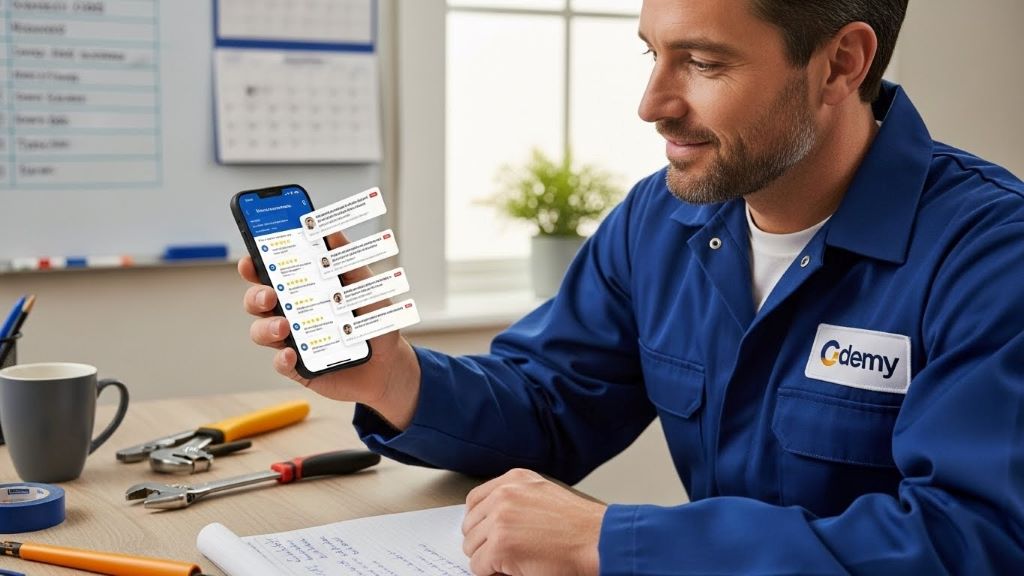
Reviews influence both search rankings and customer decisions. Google considers reviews when determining which businesses to show in local search results. Meanwhile, potential customers read reviews to decide which plumber to call.
Consequently, you need a systematic approach to getting reviews. Ask satisfied customers to leave reviews on your Google Business Profile immediately after completing a job. Send follow-up texts or emails with a direct link to your review page, making the process as easy as possible.
Respond to every review, positive or negative. Thank customers for positive reviews and address any concerns raised in negative reviews professionally. This shows potential customers that you care about service quality and take feedback seriously.
However, never buy fake reviews or offer incentives for positive reviews. These practices violate platform guidelines and can result in penalties. Authentic reviews from real customers carry far more value anyway.
According to research from BrightLocal, 98% of consumers read online reviews for local businesses, and reviews are a top factor in local search ranking.
Step Four: Optimize Your Website for Local Search
Your website needs to clearly communicate where you operate and what services you offer. Search engines and customers both need this information to find you for relevant searches.
Start with your homepage. Include your city or service area in your main headline and page title. Add your phone number prominently at the top of every page. Create a dedicated service area page listing all locations you serve with descriptions of each area.
Additionally, create individual pages for each major service you offer. Write detailed content about drain cleaning, water heater repair, pipe installation, and other services. Use natural language that mentions your location, such as “our drain cleaning service helps Chicago homeowners solve clogs quickly.”
Include your business name, address, and phone number in your website footer on every page. This information should match what appears on your Google Business Profile and directory listings exactly.
Moreover, make sure your website loads quickly and works perfectly on mobile phones. Most local searches happen on mobile devices, and Google prioritizes mobile-friendly websites in search results.
Step Five: Create Location-Specific Content
Content marketing helps you rank for more search terms and demonstrates expertise to potential customers. Focus on creating content that addresses common plumbing problems in your area.
Write blog posts about seasonal plumbing issues your local customers face. For example, if you serve an area with cold winters, create content about preventing frozen pipes. If you work in an older city, write about common problems in historic homes.
Furthermore, create content about your service areas. Write neighborhood guides that discuss local plumbing concerns, regulations, and your experience working in each area. This helps you rank when people search for plumbers in specific neighborhoods.
Share your content on social media and encourage customers to engage with it. While social signals don’t directly impact SEO rankings, they increase visibility and can lead to more website traffic and backlinks.
Step Six: Build Local Backlinks
Backlinks from other websites tell search engines your business is credible and relevant. Local backlinks from other businesses and organizations in your area carry extra weight for local SEO.
Join your local chamber of commerce, which typically provides a profile with a link back to your website. Sponsor local sports teams, charity events, or community organizations. These sponsorships often come with website mentions and links.
Additionally, partner with complementary local businesses. Real estate agents, property managers, and home builders often need reliable plumbers to recommend. Building these relationships can result in referrals and website links.
Look for opportunities to get featured in local news. Offer expert commentary on plumbing issues affecting your community, or get involved in newsworthy community service projects.
Step Seven: Track Your Results and Adjust
Local SEO requires ongoing attention and adjustment. Track your performance to understand what works and where you need improvement.
Use Google Business Profile insights to see how people find your profile and what actions they take. Monitor which search terms lead people to your business. Check how many people call you, visit your website, or request directions from your profile.
Set up Google Analytics on your website to track traffic sources and user behavior. Look for increases in organic traffic from local searches. Furthermore, track which pages get the most visits and which ones lead to phone calls or contact form submissions.
Pay attention to your rankings for important search terms. Search for “plumber” plus your city name and see where you appear. Track your progress over time, understanding that local SEO results build gradually.
Therefore, make adjustments based on your data. If certain types of content perform well, create more of it. If some service areas generate more leads than others, focus additional efforts there.
Conclusion
Local SEO gives plumbing businesses a powerful way to connect with customers who need their services right now. By following this step-by-step blueprint, you can improve your visibility in local search results and attract more qualified leads.
Start with your Google Business Profile, build consistent citations, actively collect reviews, and optimize your website for local search. Create location-specific content, build local backlinks, and continuously track your results. Each step builds on the previous ones, creating a strong local SEO foundation for your plumbing business.
Remember that local SEO is not a one-time project but an ongoing process. However, the investment of time and effort pays off through increased visibility, more customer calls, and business growth. Start implementing these steps today, and you will see improvement in your local search presence over time.
Frequently Asked Questions
How long does it take to see results from local SEO?
Most plumbing businesses start seeing improvements in local search visibility within three to six months of implementing local SEO strategies. However, competitive markets may take longer, while less competitive areas might show results sooner.
Do I need to hire an SEO expert or can I do local SEO myself?
You can definitely handle local SEO yourself, especially the foundational steps like claiming your Google Business Profile and building citations. The strategies in this guide are designed for beginners. However, hiring an expert can accelerate results if you have the budget.
How many reviews do I need to rank well in local search?
There is no specific number, but more recent, positive reviews generally improve your rankings. Focus on consistently getting new reviews rather than reaching a specific target. Businesses with dozens of recent reviews typically perform better than those with just a few.
Should I target multiple cities or focus on one area?
If you legitimately serve multiple cities, you should target all of them through service area pages and location-specific content. However, spreading yourself too thin across too many areas can dilute your efforts. Focus on areas where you can realistically serve customers well.
What is the most important local SEO factor for plumbers?
Your Google Business Profile is the single most important factor because it directly impacts your visibility in Google’s local search results and Maps. However, all elements work together, so you cannot ignore citations, reviews, or website optimization.
Related Topics:
Do Really Need a Lasting Power of Attorney?
How to Avoid Dirty Data
